Key Takeaways
Successful event content relies on pre-event planning and a clear communication strategy. Consider the following core principles for better output:
- Define clear business objectives before the cameras start rolling.
- Prioritize professional audio capture to ensure your messaging remains audible.
- Create a flexible shot list that accounts for both planned sessions and spontaneous moments.
- Treat your post-production phase as a strategic opportunity to optimize content for specific platforms.
- Work with partners who understand that video production serves as a vehicle for brand growth.
Planning and goal setting for event videos
Strategic preparation serves as the foundation for high-quality outcomes. When teams neglect this early stage, the resulting footage often lacks the focus required to meet specific business outcomes. Effective pre-production demands a deep understanding of what you intend to accomplish with your events video production efforts.
Defining your primary video objectives
Before booking a crew, determine what the final content needs to do. Whether you are aiming to build internal recruitment pipelines or drive product awareness, your goals dictate your production style. Establishing specific KPIs early helps align the creative direction with your organization’s broader growth initiatives.
Identifying the target audience and platform
Different audiences consume information differently, and where your viewers spend their time influences your production decisions. Tailoring the narrative flow for a professional audience on a platform like LinkedIn requires a different approach than crafting short-form clips for mobile consumption. Understanding these nuances early allows for a more strategic video approach during the filming day.
Creating a detailed shot list and event itinerary
Creating a comprehensive itinerary prevents missed opportunities. A well-organized shot list acts as a roadmap for your team, ensuring that essential presentations and breakout sessions are captured without ambiguity. This level of organization is where teams like VG Creations provide significant value by ensuring no detail is overlooked amidst the live-event chaos.
Allocating budget for production requirements
Financial planning for video should account for both the immediate needs and the long-term potential of the assets. Treating production as an investment rather than an expense allows for better allocation of professional resources and expert video creation services.
Essential equipment for event videography
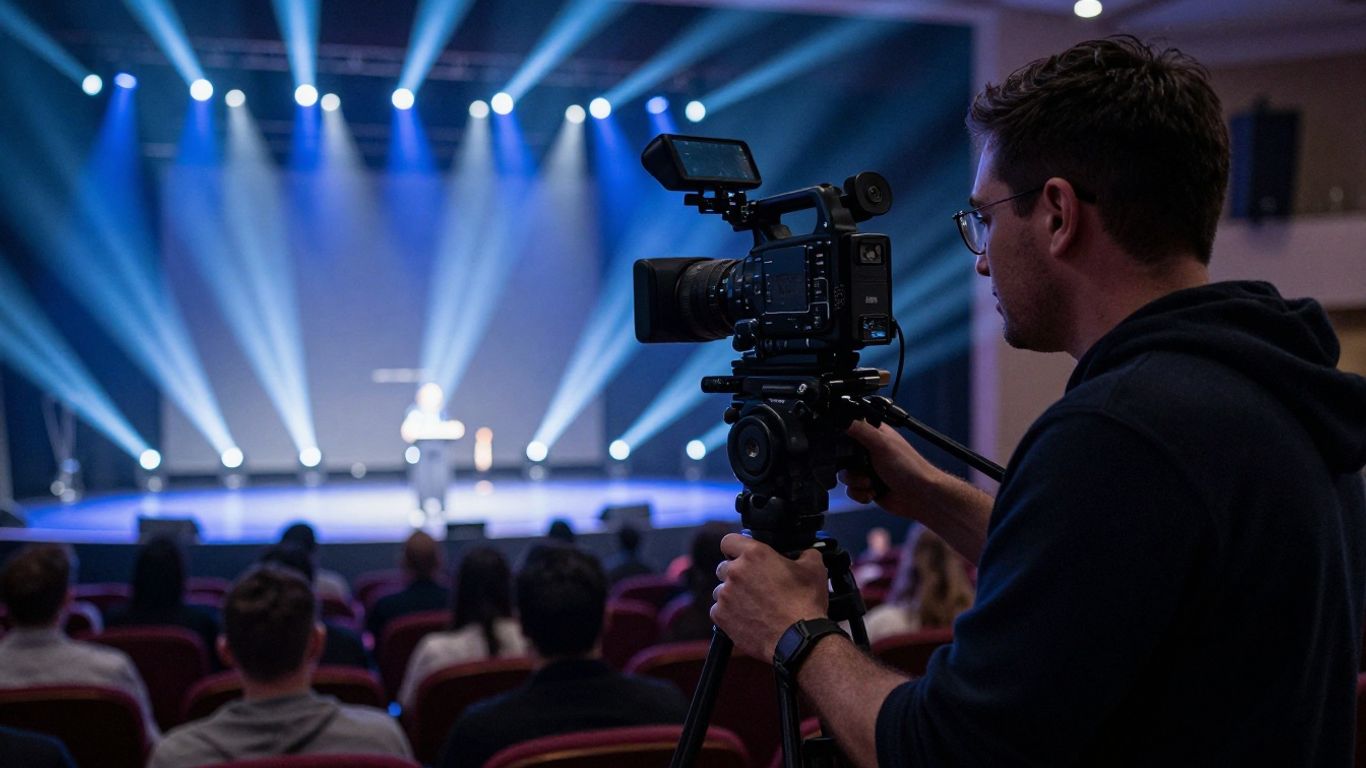
Selecting the right hardware transforms raw event chaos into a polished visual story. Professional tech ensures that the vibrant atmosphere you design is captured exactly as intended. Modern setups favor reliability and consistent quality over complex gadgetry that can fail during high-stakes presentations.
Choosing between 4K cameras and cinema-grade gear
High-resolution capture is essential for future-proofing your content, but cinematic grade tools offer superior dynamic range. Investing in gear that captures true-to-life color and depth helps your content stand out. Your chosen equipment must balance portability for roaming coverage with the stability required for long, stationary stage shots.
Optimal audio recording solutions for live environments
Clear audio remains the most critical, yet often ignored, element of effective production. Without professional audio setups at your venue, even the best visuals fail to convey your message. Utilizing direct feeds from house audio systems combined with localized microphones helps ensure every word from your keynote speakers is perfectly preserved.
Utilizing gimbals and stabilizers for smooth motion
Dynamic movement makes internal b-roll feel engaging. Using light-weight stabilizers allows for smooth, cinema-quality sweeps that capture the energy of the crowd. Managing this movement effectively helps viewers feel immersed in the atmosphere of your event without the distraction of shaky, amateur-looking footage.
Lighting strategies for dynamic indoor and outdoor venues
| Setting |
Lighting Tool |
Primary Purpose |
| Indoor Main Stage |
LED Panels |
Even skin tone coverage |
| Networking Hall |
Softboxes |
Reducing harsh ambient glare |
| Outdoor Displays |
Reflectors |
Balancing natural shadows |
Proper lighting creates a professional polish that elevates the brand appearance. By adapting to the unique light levels of your venue, the production team maintains consistent visual quality regardless of the time of day or changing environment.
Execution and cinematography techniques
Capturing an event requires agility. A professional team must move between high-impact stage moments and intimate hallway interactions with ease. This section explores how to ensure those moments are caught on camera reliably.
Capturing key speaker sessions and main-stage panels
Main-stage content represents your core expertise and thought leadership. Ensuring these sessions are captured with multiple angles allows for dynamic editing later. Managing these setups often requires coordinating with venue live streaming teams to sync video outputs seamlessly.
Recording secondary b-roll and venue atmosphere
B-roll provides the visual context needed to support your primary messaging. These atmospheric shots serve as connective tissue, allowing your editors to create narrative rhythms that hold viewer attention. A strong focus on candid guest interactions builds the social proof necessary for future marketing efforts.
Conducting on-the-spot attendee interviews and testimonials
Customer testimonials represent a cornerstone of digital authority. When you capture authentic attendee stories on-site, you secure assets that can be distributed for years to come. This approach allows VG Creations to help businesses leverage their actual conference environment to build deeper trust with prospects.
Managing multi-camera setups for live streaming integration
Live streaming demands immediate technical precision. Coordinating multiple cameras for real-time broadcast allows remote registrants to feel included. Effective coordination here ensures that your live event coverage maintains a standard of broadcast quality consistent with your brand identity.
Post-production and editing essentials
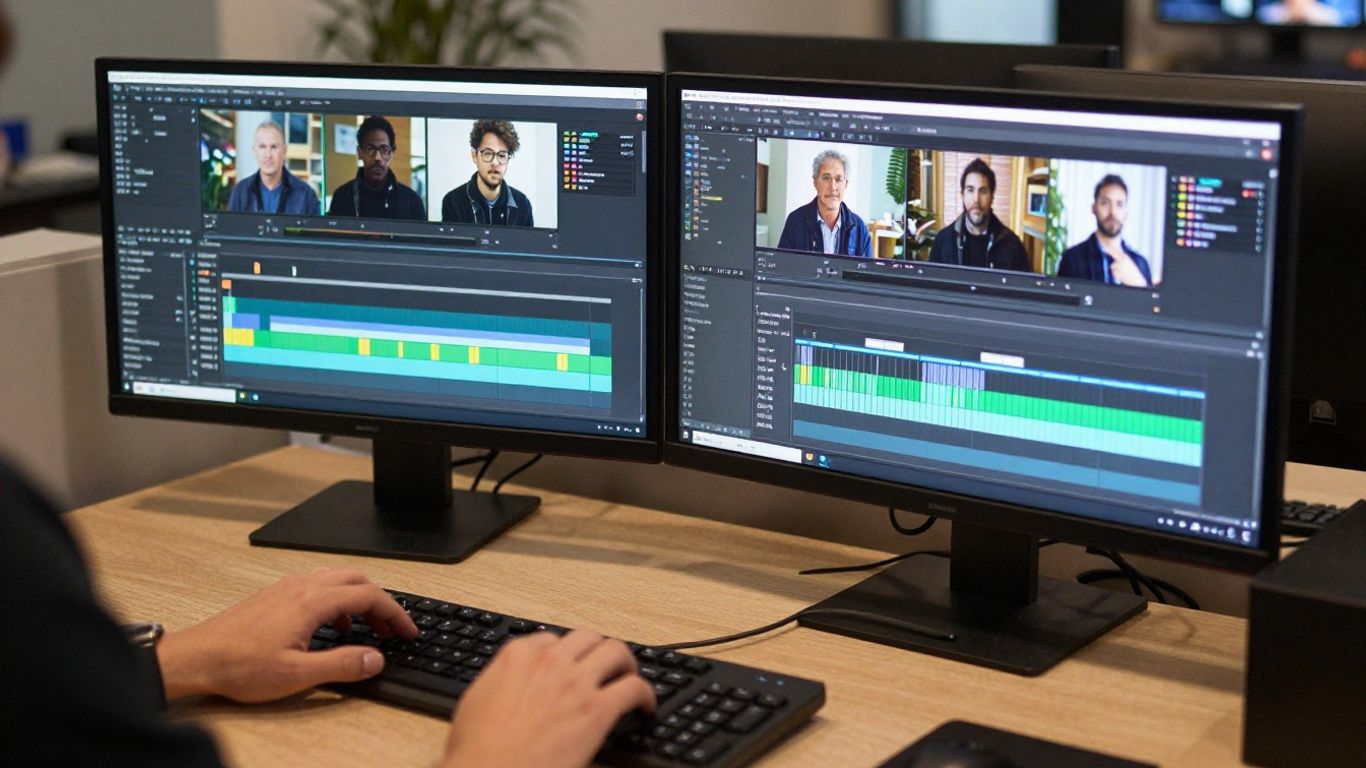
Post-production is the final stage where raw data becomes a strategic asset. Efficiency here dictates how quickly you can move from the event floor to distribution. Managing project files and adhering to a strict editing workflow keeps turnaround times short, which is a core benefit offered by VG Creations.
Organizing raw footage for efficient editing workflows
Effective file management is the backbone of post-production. Labeling every file by speaker, session type, and date allows for rapid retrieval during the edit. Professionals treat this as a housekeeping task that significantly impacts final asset quality.
Incorporating brand assets and custom motion graphics
Consistent branding ensures that all content feels like a native part of your company’s ecosystem. Custom motion graphics for lower-thirds and transitions provide that professional edge that viewers associate with industry leaders. Integrating your brand aesthetic here is essential for recognition purposes.
Selecting appropriate background music and professional sound design
Sound design drives the emotional arc of your video recaps. The right music choice should align with the tone of your conference, whether it is high-energy innovation or serious corporate strategy. Consistent audio mixing prevents jarring volume shifts between interviews and b-roll.
Implementing color grading to achieve a cinematic look
Color grading brings uniformity to footage captured under wildly different conditions. By standardizing skin tones and lighting conditions in post-production, the video is transformed into a single, cohesive visual statement. This step turns basic event documentation into a marketing asset with professional appeal.
Maximizing ROI through distribution strategies
Producing a video is only half the battle. Distribution is where the actual return on your investment happens. Having a documented plan ensures your hard-earned assets stay relevant long past the cleanup crew’s final shift.
Creating short-form content for engagement on social media
Social platforms thrive on quick, impactful clips. Taking the best moments from your keynote and trimming them into short, vertical video clips increases the probability of higher organic reach. Use these clips to drive traffic back to your deeper content archives.
Repurposing full event sessions into educational video series
Do not let long-form content gather dust. By breaking hour-long sessions into segmented, topic-specific videos, you create an educational repository. Implementing this via structured training and education programs or internal learning platforms provides ongoing value for your stakeholders.
Distributing highlight reels for future event promotion
Recap videos serve as the ultimate incentive for future attendance. Showing prospective attendees exactly what they missed encourages them to register for the next cycle. Using dynamic recap storytelling ensures your brand remains top-of-mind.
Measuring video performance through engagement and conversion metrics
Establish your metrics before you publish. Track watch time, click-through rates, and social shares to determine which topics resonate most with your audience. Using this data helps inform the subject matter for future event planning.
Choosing the right videography team
Selecting a partner defines the quality of your output. When hiring, you need a team that acts as a strategic extension of your marketing department. Evaluate their ability to manage complex logistics while maintaining a creative, results-oriented focus.
Evaluating a production agency’s portfolio and stylistic consistency
Look for evidence that they have managed projects similar to your own. A capable video partner should demonstrate a portfolio that spans various industries while maintaining a professional visual standard. Consistency across their previous work indicates reliability.
Understanding project management and communication workflows
Communication failures are the number one cause of production delays. Your team should have a clear, documented process for reviewing edits and handling feedback. A streamlined review cycle is the mark of an experienced partner who respects your timeline.
Reviewing client testimonials to ensure operational reliability
Authentic social proof is just as important for your vendors as it is for your own products. Ask for references to understand how the team handles high-pressure events. A truly reliable partner understands how to work within your team’s specific culture, similar to how VG Creations emphasizes building trust through strategic collaboration.
Comparing specialized services like live streaming versus cinematic recap production
Not all event videographers possess the same technical focus. Ensure your chosen partner is as technically proficient with live switching as they are with artistic narrative editing. Aligning their core areas of focus with your event goals is vital for success.
Conclusion
Events video production is a powerful tool for scaling your influence when approached with strategic intent rather than as an afterthought. By treating every conference or gathering as an opportunity to collect high-quality content that feeds your marketing engine, you ensure that your investment extends far beyond the final day of the event. Selecting the right partners, prioritizing crisp audio, and planning for distribution through thoughtful channels will turn your temporary experiences into permanent brand assets that drive engagement and growth for years to come.
Frequently Asked Questions
How much time should I allocate for pre-production planning?
Pre-production should ideally begin as soon as your event venue and speakers are confirmed, ideally at least 4-6 weeks out, to allow for thorough strategy development.
Is it necessary to hire a dedicated professional production team?
Professional teams provide specialized equipment and logistical experience that significantly reduce the risk of technical failure during live sessions.
What is the most important element of an event highlight reel?
An effective highlight reel must balance strong, clear audio from speakers with emotionally engaging b-roll that captures the energy of your attendees.
Should I prioritize live streaming over post-event recap videos?
This depends entirely on your business goals; live streaming excels for immediate, broad reach, while recap videos often perform better for long-term marketing and social proof.
How do I ensure my corporate brand colors look consistent on video?
Professional cinematographers use white balance tools and color grading in post-production to ensure your brand’s specific color profile remains accurate across all footage.
Can event video production help with employee recruitment?
Yes, by capturing authentic testimonials and the surrounding atmosphere of your events, you create compelling visual evidence of your company culture for potential applicants.
What common mistakes should I avoid during live event filming?
Avoid failing to establish a clear shot list, neglecting audio backup requirements, and overlooking the need for clear communication between the production crew and the site managers.