Key Takeaways
A strong videographer search starts before you open a directory. Define the story, audience, scope, and working relationship you need, then compare candidates on fit rather than price alone.
- Set a clear goal, audience, format, and success measure.
- Search through local networks, referrals, portfolios, and online platforms.
- Judge relevant storytelling and production experience, not just polished visuals.
- Compare scope, timelines, revisions, usage rights, and total cost.
- Choose the person or team who communicates clearly and collaborates well.
Define your video project before you search
The easiest way to find videographer options is to know what you are asking them to make. A vague request attracts vague proposals, while a useful brief gives creative professionals something concrete to respond to. You do not need every shot planned, but you should understand the business reason behind the video and what success would look like.
Clarify your goals and target audience
Start with the action you want viewers to take after watching. Perhaps you want more qualified inquiries, a clearer explanation of a service, stronger attendance at an event, or a trustworthy introduction to your team. Then describe who the viewer is, what they already know, and what may prevent them from taking that next step.
A short audience profile can shape everything from interview questions to pacing and distribution. It also helps a videographer distinguish between a brand story, a customer testimonial, an internal piece, and a direct promotional video. Brand video planning can help you connect the audience and message to a broader content objective.
Choose the type of video you need
The format should follow the job, not a trend. A company introducing its expertise may need a corporate or brand story video; an event manager may need coverage that can be edited into several useful assets; a marketing team may need interviews, testimonials, social media content, or a commercial. Be specific about whether you need filming, editing, or a complete production process.
VG Creations lists commercial, corporate, interview, podcast, event, and other video production services, which illustrates why naming the format early makes a conversation more productive. If you are unsure, describe the problem first and ask the candidate to recommend a format.
Determine your preferred style and visual direction
Collect a few examples that feel close to your intended tone. They might be calm and documentary-like, energetic and fast-cut, polished and cinematic, or conversational and intimate. Explain what you like about each reference—lighting, movement, sound, composition, or the way people are portrayed—rather than asking someone to copy it.
Your visual direction should also fit the brand. Consider color, wardrobe, locations, music, graphics, and how comfortable people need to feel on camera. A good videographer can translate a loose reference into an original approach while keeping the message recognizable.
Set your timeline, location, and deliverables
Write down the fixed elements first: launch date, event date, filming location, interview availability, approval deadlines, and distribution channels. Then list the outputs you expect, such as one master video, shorter social edits, still frames, captions, or a version sized for a particular platform. Clear deliverables prevent surprises later.
Leave room for planning, reshoots, editing, feedback, and final exports. A realistic schedule is more useful than an optimistic promise, especially when several stakeholders must review the cut.
Know where to find a videographer
Your search channel affects the kind of information you receive. Local referrals can reveal how someone works under pressure, while directories make it easier to compare availability and specialties. Use several sources, but keep the brief consistent so you are comparing candidates against the same project.
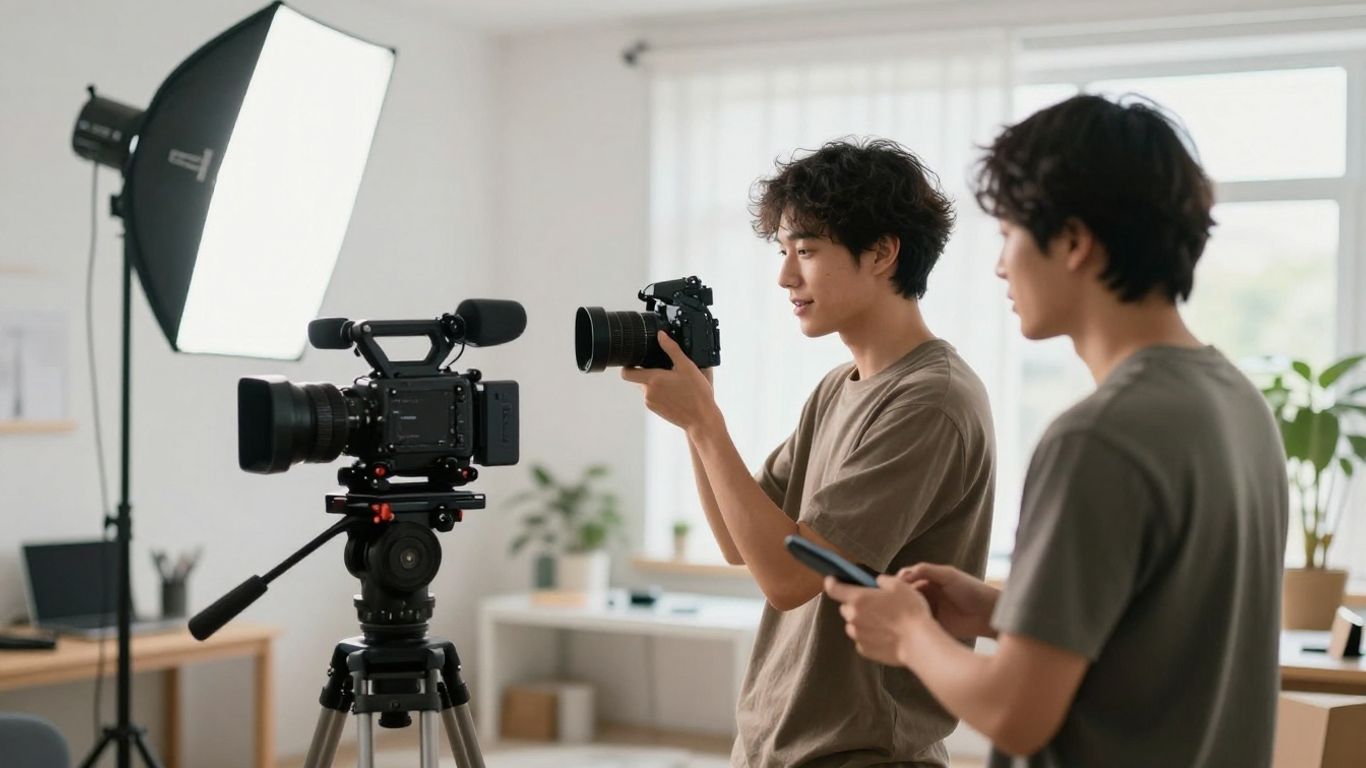
Search for local videographers and production agencies
Search by city, project type, and audience rather than using only the broad term “videographer.” A local production team may already understand nearby locations, permits, travel time, and the practical demands of filming at businesses or venues. For a multi-person production, an agency can also make crew and post-production planning simpler.
Look beyond search rankings. Read the service pages, study recent work, and check whether the company explains its process. A useful shortlist usually includes people whose experience matches the scale and setting of your project.
Review professional portfolios and showreels
A showreel is a quick introduction, not the whole decision. Watch complete examples when possible, especially work with a similar audience, interview style, location, or turnaround. Notice whether the pacing supports the message or simply accumulates attractive shots.
Pay attention to consistency across several projects. One impressive sequence may have involved a large crew or unusually generous conditions; a broader portfolio gives you a better sense of what the videographer can repeat.
Ask for referrals from businesses and event professionals
Ask marketing directors, venue managers, event planners, photographers, and other trusted suppliers who they have worked with. Their answers can reveal punctuality, responsiveness, flexibility, and how the videographer handles revisions. Ask what kind of project the referral involved so you can judge whether the recommendation transfers to your own needs.
A referral is a starting point, not a substitute for review. Follow up by watching relevant work and discussing your brief directly.
Explore videographer directories and online platforms
Online platforms can widen the pool, particularly when you need a specialist or a fast shortlist. Filter by location, format, availability, and relevant experience, then read the profile critically. A directory may show services and reviews, but it cannot fully show how well someone will interpret your brand or manage a complex approval process.
Keep the shortlist manageable. Three to five serious candidates are usually easier to compare than a dozen loosely matched profiles. A broader local videographer search guide offers another way to think about search channels, fit, and booking terms.
Evaluate a videographer’s portfolio and experience
A portfolio should answer more than “Can this person make attractive images?” It should help you understand how they observe people, shape a story, record sound, and carry an idea through the edit. Look for evidence that the candidate can solve your communication problem, not merely reproduce a visual style.
Look for work similar to your project
Search for similarities in context as well as subject. A healthcare interview, a conference recap, and a product film require different kinds of preparation, even if all three look polished. Compare the candidate’s work with your intended locations, number of speakers, audience, and distribution plan.
If your project is confidential, ask whether the videographer can privately share relevant examples. The absence of public work in your niche does not automatically mean a lack of ability, but you should understand how the team would approach the gap.
Assess storytelling, cinematography, and editing quality
Watch for a beginning, middle, and end, even in short work. Do interviews sound natural? Does the edit give viewers enough context? Are camera movement, lighting, framing, music, and transitions serving the message? Good cinematography draws attention without competing with the people and ideas on screen.
Listen carefully as well. Uneven sound, distracting background noise, or inconsistent dialogue can weaken an otherwise beautiful film. Ask who handles the edit, color, audio mix, captions, and motion graphics if those elements matter to your final use.
Check experience in your industry or niche
Industry familiarity can reduce explanation time, but it is not the only measure of fit. A thoughtful outsider may bring a fresh perspective, while a specialist may understand compliance, terminology, or audience sensitivities more quickly. Ask candidates to explain what they learned from comparable assignments rather than simply counting years in business.
For regulated or sensitive work, discuss approvals, privacy, releases, and location restrictions at the beginning. The right experience should show up in the questions a videographer asks you.
Confirm access to the equipment and crew you need
Your project may require more than a camera operator. Clarify whether you need a second camera, a sound professional, lighting support, a drone operator, a production assistant, or an editor. Ask whether those people are in-house, regular collaborators, or hired for the assignment.
Equipment should follow the production plan. A small interview may benefit from a quiet sound setup and controlled lighting, while a busy event may demand multiple cameras and a clear method for capturing usable audio. Focus on the result and the workflow, not on an impressive gear list alone.
Compare videography services and pricing
Videography quotes are difficult to compare when each supplier defines “production” differently. One price may include planning, filming, editing, captions, and several revisions; another may cover only a shoot day and a basic cut. Ask for an itemized scope so the lower number does not become expensive after the work begins.
Understand what a videography package includes
Request a proposal that names the crew, filming hours, equipment, editing stages, final formats, music licensing, captions, travel, and revision allowance. Also ask what is explicitly excluded. This creates a shared baseline before you negotiate details.
A simple comparison table can keep the decision grounded in scope rather than sticker price:
| Area |
Questions to compare |
Why it matters |
| Planning |
Is scripting, scheduling, and location scouting included? |
Preparation affects the shoot and final story. |
| Production |
How many hours, cameras, and crew members are covered? |
Scope determines what can be captured reliably. |
| Post-production |
Are editing, sound, color, graphics, and captions included? |
Finishing work shapes usability and polish. |
| Delivery |
Which files, aspect ratios, and versions will you receive? |
Outputs need to fit the places you will publish. |
After the comparison, ask each candidate to explain the assumptions behind the price. A transparent proposal is easier to approve internally and less likely to produce an awkward renegotiation.
Account for pre-production, filming, and post-production
A production has three connected phases. Pre-production may include creative development, interviews, scripts, schedules, permits, and shot lists. Filming covers the people, locations, sound, lighting, and direction on the day. Post-production includes selecting footage, editing, audio, color, graphics, captions, reviews, and exports.
When a quote seems unusually low, find out which phase has been compressed or omitted. Saving on planning can create more editing time; saving on sound or crew can create a problem that cannot be fixed cleanly afterward.
Compare turnaround times and revision policies
Ask when you will receive a first cut, how many review rounds are included, and what counts as a revision. There is a difference between correcting a factual error and changing the direction of the film after approval. Make sure the person giving feedback is identified so notes do not arrive in conflicting batches.
If you have a public launch date, work backward from the final upload. Include time for internal approvals, accessibility checks, legal review, and alternate versions.
Balance your budget with production value
A responsible budget reflects the value and complexity of the assignment. Spend first on what viewers will feel: clear thinking, strong interviews, good sound, appropriate lighting, and an edit that respects their time. Additional cameras or elaborate locations may help, but only when they support the story.
Ask for options rather than demanding a vague discount. A candidate might offer a smaller shoot, fewer locations, or a focused set of deliverables while protecting the elements that matter most. That conversation is more useful than comparing two totals with different assumptions.
Ask the right questions before hiring
The final conversation should feel like a working session, not an audition filled with promises. Explain the business context and invite the videographer to challenge unclear assumptions. You are testing creative judgment, preparation, and communication at the same time.
Discuss creative ideas and the production process
Ask how the candidate would approach the story, what they would need from your team, and where they see potential risks. Listen for specific questions about audience, message, contributors, locations, and the viewer’s next step. A good conversation may refine your brief without making it feel as though the creative decision has been taken away from you.
Also ask how the team moves from concept to shoot plan to edit. You should understand who makes key decisions and when you will see the work.
Confirm availability, locations, and scheduling
Confirm the actual shoot dates, editing availability, travel expectations, and backup plans. If filming depends on a live event, executive, customer, or outdoor location, ask what happens when the schedule changes. Discuss permits, parking, power, weather, noise, and access before they become production-day problems.
Availability should cover post-production too. A videographer who can film next week may not be able to deliver a first cut when you need it.
Review contracts, usage rights, and deliverables
Read the agreement for payment milestones, cancellation terms, reshoots, ownership, licenses, music, talent releases, and permitted uses. Clarify whether you receive project files or only finished exports, and whether the quote includes versions for different platforms. If multiple partners or locations are involved, make sure responsibilities are assigned in writing.
Usage rights deserve plain language. Ask where, how long, and in what formats the footage can be used, especially if the video may support paid campaigns, recruitment, sales, or future edits.
Ask how communication and approvals will work
Find out who your main contact is, how quickly questions are normally answered, and where files and feedback will be shared. Ask how many stakeholders can review a cut and how notes should be consolidated. This is a small operational detail that can make a major difference to the schedule.
Before signing, repeat the agreed scope in your own words. If both sides describe the next step the same way, you are starting from a healthier foundation.
Choose the right videographer for your project
The strongest choice is rarely the person with the lowest quote or the most dramatic reel. It is the candidate whose creative approach, production capacity, terms, and working style fit the assignment. Give yourself enough time to compare evidence rather than making the decision from a single introductory call.
Compare proposals and communication styles
Put proposals side by side and mark differences in scope, not just totals. Note who answered your questions directly, who identified assumptions, and who made the next steps easy to understand. A polished proposal is useful, but a clear exchange about your actual project is more revealing.
The candidate should be able to explain trade-offs without pressuring you. If the process feels confusing before you hire them, it may become harder once deadlines and feedback are involved.
Look for a collaborative production partner
Your videographer will often work with people who are busy, nervous, or unfamiliar with production. Look for patience, practical guidance, and the ability to make contributors comfortable while keeping the day moving. Collaboration does not mean agreeing to every idea; it means making decisions together with the project’s purpose in view.
For event teams and marketing departments, the relationship may continue beyond one video. Event video production is one example of how planning can turn a single gathering into useful visual material, provided the scope and intended assets are agreed in advance.
Review client testimonials and references
Testimonials can point to strengths such as responsiveness, creative care, comfort on camera, or dependable delivery. Read them alongside the work they describe, and ask for references when the project is substantial or sensitive. A short conversation with a former client may clarify what the working relationship was really like.
Ask references whether the final scope matched the initial quote, how revisions were handled, and what they would clarify before hiring again. Those answers are more useful than praise without context.
Plan your discovery call and next steps
Prepare a one-page brief, a few visual references, your target date, and the questions that matter most. Use the call to see whether the candidate understands the story and can describe a sensible path from idea to delivery. You should leave knowing what information each side still needs.
Afterward, summarize the agreed scope, request a written proposal, and set a decision date. If you need platform-specific content, social media video production may be a relevant conversation, but the same rule applies: confirm the audience, formats, schedule, and approval process before booking.
Conclusion
To find videographer options that can genuinely serve your brand, begin with a clear purpose and judge each candidate by relevant work, thoughtful questions, transparent scope, and collaborative communication. The right fit will not simply record your story; they will help you make practical decisions that give the finished video a useful life beyond its first publication.
Frequently Asked Questions
How early should I hire a videographer?
Start several weeks or months ahead when the project involves locations, permits, multiple contributors, a live event, or a fixed launch date. Smaller shoots may move faster, but post-production and approvals still need time.
How many videographers should I shortlist?
Three to five well-matched candidates usually provide enough comparison without making the process unwieldy. Shortlist by relevant experience, availability, style, scope, and communication rather than by search position alone.
What should I send before a discovery call?
Share the goal, audience, intended format, approximate length, deadline, location, contributors, distribution channels, and a few visual references. Even an unfinished brief helps the videographer prepare useful questions.
Should I choose a freelancer or a production company?
Choose based on the project’s scale and required support. A freelancer may suit a focused shoot, while a production company may be better for multiple crew roles, complex logistics, or a larger post-production workload.
How can I compare videography quotes fairly?
Compare the included planning, crew, shoot hours, equipment, editing, revisions, licensing, deliverables, travel, and turnaround. A lower price is not genuinely lower if essential stages or outputs are missing.
What makes a videographer’s portfolio relevant?
Relevance includes more than subject matter. Look for similar audiences, locations, interview needs, production scale, storytelling demands, sound quality, editing approach, and final formats.
What should a videography contract include?
It should cover scope, payment schedule, dates, cancellations, revisions, deliverables, ownership or usage rights, music and talent licensing, reshoots, file delivery, and each party’s responsibilities.