Key Takeaways
Finding the right partner for your visual storytelling requirements depends on deep alignment between your business objectives and the production team’s creative capabilities. These points summarize how to navigate the process effectively:
- Define clear business goals before reaching out to any creative team.
- Prioritize a portfolio that demonstrates consistent results rather than just expensive gear.
- Use a discovery call to assess communication styles and project management transparency.
- Understand the full scope of costs, including permits, travel, and post-production revisions.
- Establish a local connection to capitalize on regional environment knowledge and logistical efficiency.
Understanding your video production needs
Before you start searching for a partner, articulating what you actually need helps focus the entire creative direction. When you define your intent, you ensure that the end product works as a functional tool rather than just a pretty visual piece. A clear scope allows both you and the production partner to align on the core message while avoiding missteps during the early development phase.
Defining your project scope and specific goals
Start by listing the primary reason for your new content, whether that involves lead generation, brand awareness, or employee training. If you are struggling with this, refer to a 2fcb for perspective on making data-driven decisions that avoid the common pitfalls of ambiguity. Setting firm, measurable outcomes transforms a simple production into a strategic asset for your business.
Identifying the target audience for your content
Knowing who is watching your film is just as important as knowing what you are saying. You need to craft your narrative to speak directly to your ideal customer’s pain points, language, and interests, which is a core theme explored in e9d8.
Choosing between corporate, event, or promotional styles
Different projects demand different aesthetic approaches, and selecting the right tone early on saves significant time during the edit. Whether you need a formal conference recap or a polished social media spot, understanding the distinction is vital, as detailed in our 4953.
Managing expectations for production timelines
Production involves many moving parts, so setting honest deadlines is critical for a smooth launch. When you communicate your hard release dates early, you allow partners enough time to secure resources and maintain high standards, much like the approach taken during a 4f8c with complex aviation clients.
Evaluating a Miami videographer’s portfolio
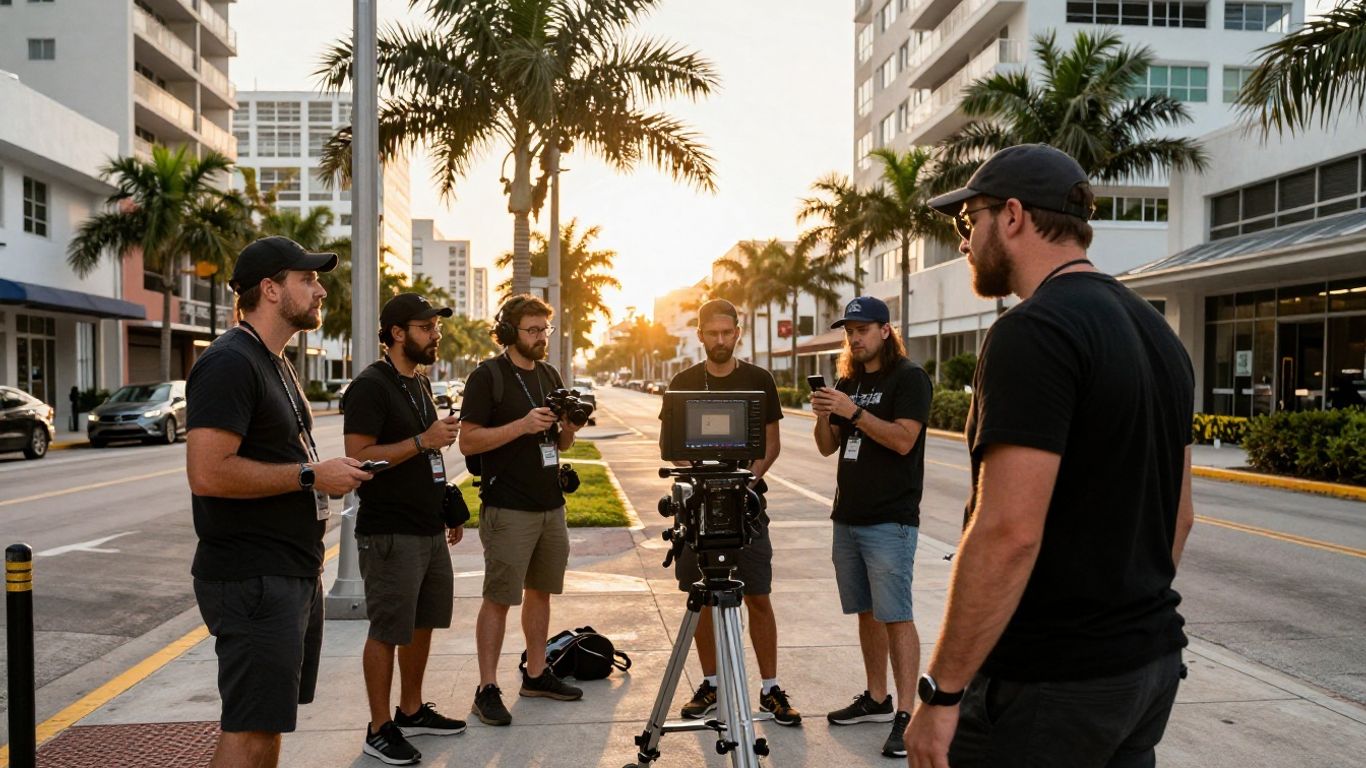
An impressive reel is your first indicator of competence, but you should look past the highlight clips to understand how a partner handles specific messaging. When you examine a portfolio, you are gauging how clearly the team translates abstract business goals into coherent emotional or logical hooks. A good partner doesn’t just record high-resolution footage; they solve marketing problems with a lens.
Assessing technical quality and cinematography standards
The baseline for modern brand video is high, and a serious partner will field gear that supports your brand identity cleanly. High-quality cinematography is the minimum requirement, which is precisely what e349 highlights when discussing how to select a team that understands your strategic vision.
Looking for consistency in storytelling and branding
Consistency indicates a disciplined workflow rather than just a lucky streak of successful shots. When you review VG Creations, you notice how they maintain a high degree of narrative clarity across diverse formats, ensuring the brand voice remains recognizable regardless of the subject matter or location.
Reviewing previous client testimonials and success stories
Verifying previous outcomes helps you trust that the team is reliable under pressure and knows how to work with human subjects. Real-world accounts like ab3a can provide insight into how a team handles the delicate balance of technical precision and authentic storytelling during client engagements.
Analyzing industry-specific experience
Experience is a major competitive advantage when you are operating in a fast-paced environment or a niche industry. Partnering with a team that has already navigated your sector—like those described in 9013—is often the difference between a project that hits its mark and one that feels generic.
Essential questions to ask before hiring
Once you narrow down your list, your discovery calls act as the final filter. You should ask about their specific workflows and how they protect your creative vision from the first draft to the final color grade. A transparent partner will be eager to show you their checklists, which are fundamental to 3fbd for ensuring that marketing investments produce actual, measurable results.
Clarifying equipment specifications and technical setups
Ask exactly what camera systems they utilize and why, ensuring they suit your venue and light conditions.
Discussing post-production and editing workflows
The edit is where the final film is truly created, so understand how many rounds of revision are standard.
To keep your project organized, I recommend tracking the following items in your preliminary discussions:
| Item |
Importance |
Notes |
| Deliverable Formats |
High |
Define for web, mobile, or broadcast |
| Project Rights |
Critical |
Confirm usage and ownership terms |
| Revision Cycles |
Medium |
Set counts to avoid scope creep |
Verifying expected turnaround times and delivery formats
Ask about their standard project life cycle and whether they can support your specific distribution channels.
Understanding licensing and creative control
You must explicitly discuss who holds the rights to the raw footage and high-res files before starting production.
Navigating professional production pricing in Miami
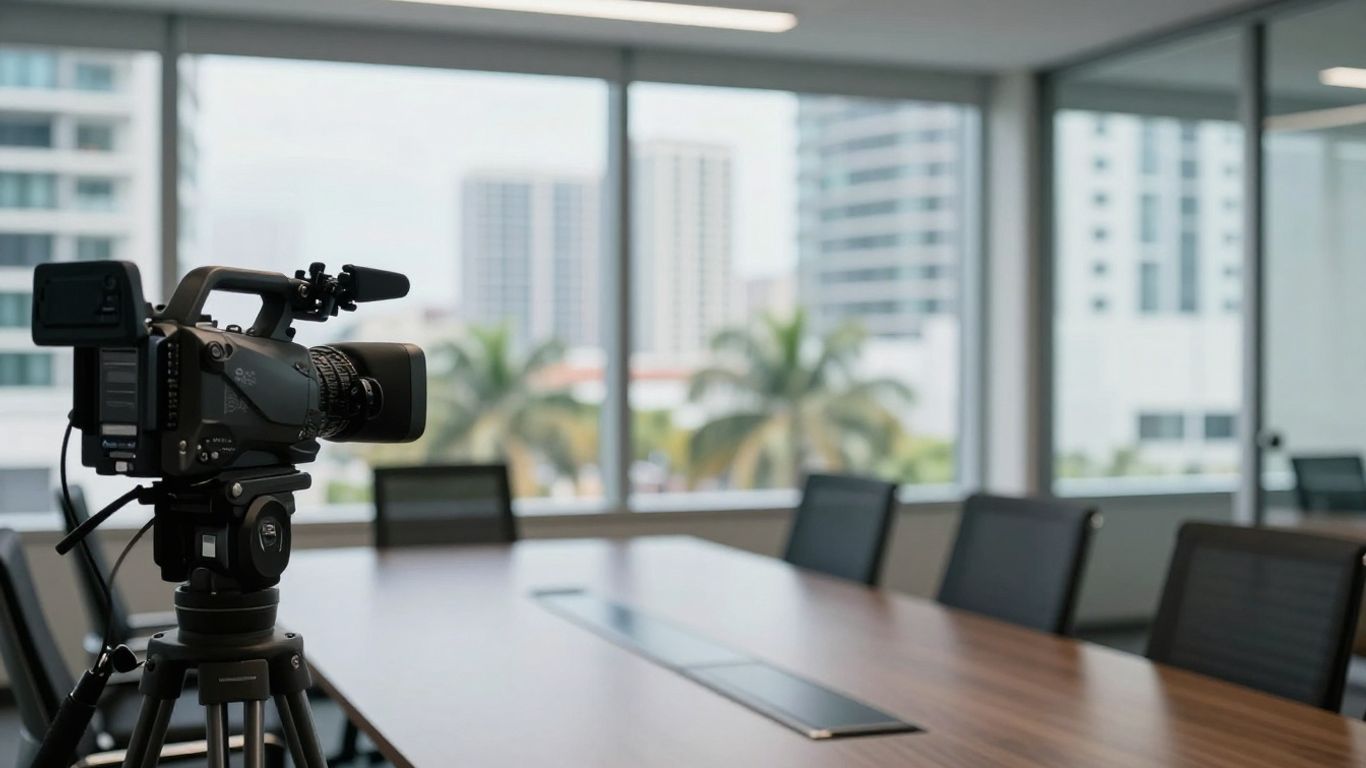
Budgeting in a busy market like South Florida requires clear insight into the variables that drive costs. Professional teams often provide detailed quotes because they account for professional talent, specialized insurance, and the complex logistics of filming in high-traffic urban zones. Transparent pricing is one of those factors that distinguish true experts from hobbyists, much like the factors explained in 6055.
Understanding the core components of a production budget
Budget segments usually cover pre-production planning, personnel, equipment rentals, and specialized post-production time.
A well-structured budget is the bedrock of a successful creative partnership, preventing last-minute surprises while ensuring quality is maintained throughout the entire filming and editing cycle.
Comparing hourly rates versus flat-fee packages
Some projects benefit from hourly arrangements, while large brand stories often require the predictability of a flat-fee structure.
Factoring in hidden costs like travel or location permits
Miami often requires specific filming permits and downtown parking logistics that many inexperienced teams forget to factor in early. Accessing a service that explicitly includes these details—as noted in 1b48—helps you stay ahead of potential overhead inflation.
Balancing budget constraints with long-term quality requirements
It is tempting to look for the cheapest bid, but that often leads to short-lived assets that struggle to compete in digital marketplaces. If you need a long-term solution, investing in high-quality capture is standard for VG Creations, which aligns with the ethos of treating video as infrastructure.
The importance of local production experience
Local knowledge is a real asset when you are shooting in a region with as much character and complexity as Miami. A team that knows the layout, the laws, and the best lighting times will always be more efficient than a national team flying in for a single shoot. We advocate for local partnership as a core requirement in 5d3b to ensure you are getting the most value for your time.
Leveraging knowledge of Miami filming locations
Understanding which neighborhoods, like Brickell or Wynwood, offer the best backdrop for your brand is a skill that comes only through repetition and local presence.
Accessing a local network of production professionals
Local teams often have access to a network of reliable audio engineers, local talent, and secondary crew that an outside firm simply cannot mirror.
Handling logistics for on-location filming in South Florida
Whether it is navigating bridge traffic or dealing with afternoon rainstorms, VG Creations demonstrates how a team that knows the terrain stays on schedule.
Building a reliable relationship with a nearby partner
When you build a relationship with a partner, you reduce the time needed for onboarding in the future. Regular collaboration allows your partner to internalize your brand voice, a concept championed in ea72 for businesses in the West Palm Beach area.
Optimizing the post-production process
Post-production is the phase where your raw capture is transformed into a strategic brand asset. Clear communication during this stage is the difference between a timely delivery and a project that stalls forever. A structured feedback process ensures you reach the finish line without unnecessary friction.
Establishing clear channels for feedback and revisions
Use dedicated platforms or simple, unified spreadsheets to track changes so that comments never get lost in email chains.
Choosing the right music, color grading, and sound design
These elements dictate the emotional reaction of your audience; do not underestimate the power of a professional grade.
Ensuring brand alignment in the final edit
Make sure the pacing and visual style match your broader marketing collateral.
Adapting content for social media and web platforms
Think about modular content—can that hero video be cut into shorts for social media? A strategy-driven 46a9 will help you maximize your reach across multiple platforms.
Ensuring a seamless video production experience
Finalizing your selection requires trust in the production partner’s capability to handle the unexpected. A seamless experience happens in the pre-production phase when everyone is clear on their roles and ready for the day of the shoot. You want a partner who feels like a natural extension of your team.
Streamlining pre-production planning and creative strategy
Solidify your shot list and creative vision before the crew even hits the pavement.
Coordinating talent, scheduling, and on-site logistics
Keep your project on track by ensuring you understand the chain of command, as you might in a complex logistical event like those highlighted in dd1a.
Maintaining transparency through initial discovery calls
Nothing replaces the clarity of a direct conversation to resolve concerns well before the camera is on.
Scaling production services for future business growth
Choose an agency today that can support where you want to be tomorrow, ensuring your video assets continue to drive growth.
Conclusion
Selecting the ideal partner is a foundational step in your brand’s growth, as consistent, strategic videos allow you to build authority and reach your audience effectively. By vetting expertise, prioritizing clarity in communication, and leveraging local knowledge, you ensure your visual assets remain powerful tools for years to come.
Frequently Asked Questions
What is the average cost of a brand video in Miami?
Pricing varies based on the scale of the production, the number of crew members required, and the intensity of the post-production process, but firms usually charge based on the complexity of the shoot and the intended usage of the final asset.
Why is local expertise so important for a commercial shoot?
A local team understands regional logistics, such as permit requirements, traffic patterns, and weather conditions, which helps keep your production on track and reduces unnecessary costs related to delays.
Should I prioritize a videographer with the best gear or the best portfolio?
Portfolio quality is significantly more important than equipment because it demonstrates how the creative director handles storytelling, lighting, and narrative flow, which are the elements that actually drive ROI for your business.
What should I provide in a brief to a potential videographer?
A strong brief states your primary goals, target audience, preferred distribution channels, and specific business results you hope to achieve, which helps the creative team align their technical recommendations to your outcomes.
How many rounds of revisions are typical for a corporate video?
Most agencies allow for two or three rounds of revisions to ensure you have time to provide feedback on pacing, color, and storytelling without inflating the production budget.
Can I use the same footage for both TV commercials and social media?
You can often repurpose footage across platforms, but you should discuss this early so the videographer can capture the appropriate aspect ratios and lengths needed for different media deliverables.
What are the biggest red flags when hiring a film crew?
Watch out for partners who avoid direct answers about pricing, lack a portfolio of work in your specific industry, or fail to discuss your business goals during the initial consultation phase.