Key Takeaways
A podcast studio audience can add warmth, spontaneity, and a stronger sense of connection when the room is designed around the people in it.
- Choose a live audience format that supports the show’s purpose.
- Prioritize comfort, accessibility, sightlines, and clean acoustics.
- Brief everyone carefully so reactions feel natural rather than forced.
- Capture dialogue, crowd response, and visual details as separate production needs.
- Edit the recording into a full episode, short clips, and useful audience insights.
Define the role of a podcast studio audience
A podcast studio audience is more than background noise. It changes the rhythm of a conversation, gives guests immediate feedback, and can make remote listeners feel present in the room. The right crowd supports the story; the wrong crowd can distract from it. Before booking seats, decide what the audience is meant to add.
When a live audience improves the show
A live audience works best when the format benefits from reaction, participation, or a shared occasion. Comedy, interviews with strong personal stories, panel discussions, and celebratory episodes often gain something from having people nearby. A quiet, highly technical conversation may need a smaller group or no in-person audience at all. The test is simple: would the exchange become more vivid if the speakers could hear and see real responses?
How audience energy affects guests and hosts
Energy spreads quickly in a small room. Laughter can help a guest relax, while attentive silence can give a serious answer more weight. Hosts should still guide the pace rather than chase every reaction. A calm room creates trust, and trust usually produces better listening and more honest conversation.
Choosing between an in-studio and remote audience
An in-studio crowd offers physical presence, easier eye contact, and more organic reactions. A remote audience can widen access and make it easier to include people who cannot travel, but it needs deliberate moderation and a reliable connection. Hybrid formats can work when the producer treats each audience as a separate part of the show instead of allowing one to disappear behind the other.
Matching the audience format to your podcast goals
Start with the outcome you want. If the episode is intended to feel intimate, invite a small group and keep the seating close to the set. If it is also an event or brand moment, a larger room may make sense, provided the production can still capture clean dialogue. A practical live audience format can help clarify how space, seating, and recording goals fit together.
Design a podcast studio for audience comfort
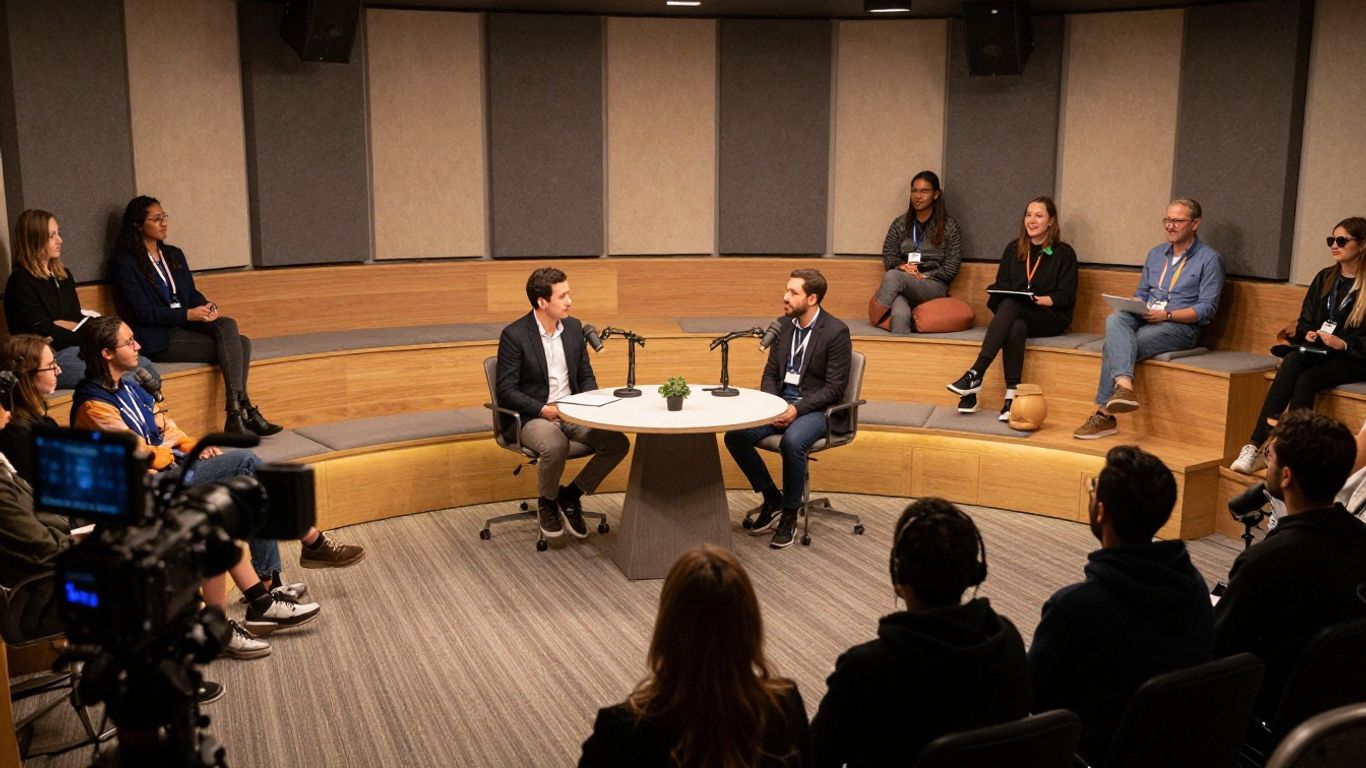
Comfort affects attention, and attention affects the recording. A room that looks impressive but leaves people cramped, overheated, or unable to see the speakers will produce flat reactions. Design the audience area at the same time as the set, not as leftover space around cameras and cables.
Planning seating, sightlines, and room capacity
Every seat should have a reasonable view of the hosts and guests. Avoid placing people behind a camera operator or at an angle that forces them to twist for the whole episode. Leave clear aisles, allow room for late arrivals, and set capacity based on usable floor space rather than the maximum number of chairs that can technically fit.
Creating an accessible and welcoming environment
Ask about access needs during registration, then make those answers part of the floor plan. Include step-free routes where possible, clear walkways, suitable seating, and a simple check-in process. A welcoming producer also explains where restrooms, exits, water, and quiet areas are located. These small decisions make participation easier without drawing attention to anyone’s needs.
Managing acoustics, lighting, and camera angles
The audience should be visible without being lit like a stage. Soft, controlled lighting keeps faces readable and avoids glare, while acoustic treatment helps separate applause and laughter from the speakers’ voices. When planning a podcast studio setup, consider the complete path from microphones and cameras to recording and editing rather than choosing each element in isolation.
Protecting the audience experience during production
Long pauses, repeated takes, and technical resets can drain a room. Tell the audience when a break is coming, keep waiting periods purposeful, and avoid exposing people to unnecessary bright lights or loud monitor feeds. A simple production schedule protects their patience and gives hosts a clearer sense of the day.
Prepare hosts, guests, and audience members
Preparation makes a live episode feel relaxed. Everyone should know what will happen, what will not happen, and who is responsible when something changes. This is especially useful for guests who are comfortable in conversation but have never recorded in front of a crowd.
Setting expectations before the recording
Send arrival time, parking or transit information, approximate duration, accessibility details, and any recording consent language in advance. Explain whether phones must be silenced, whether audience members may be visible on camera, and whether the episode will include questions. Clear expectations reduce avoidable interruptions and help people arrive ready to participate.
Briefing guests on live reactions and interaction
Guests do not need to perform for the crowd. Tell them to continue speaking through small reactions, pause when a host signals, and treat laughter or applause as feedback rather than a cue to exaggerate. A short rehearsal can cover microphone distance, eye line, hand signals, and how questions will be selected.
Establishing audience rules and participation cues
Rules should be brief, friendly, and easy to remember. Before doors open, cover the essentials:
- Keep phones silent and avoid bright screens.
- React naturally, but do not interrupt the conversation.
- Wait for a microphone or host invitation before asking a question.
- Follow crew directions during resets, breaks, and camera moves.
The producer can then reinforce the cues without repeatedly stopping the recording. People are usually cooperative when they understand how their behavior protects the episode.
Using warm-ups to build energy before filming
A warm-up should loosen the room, not manufacture excitement. Invite a few easy responses, explain how applause will work, and let the audience become familiar with the host’s voice. Give the crowd a little time to talk among themselves before the formal introduction. That transition often creates more natural energy than asking everyone to be loud on command.
Plan the technical production
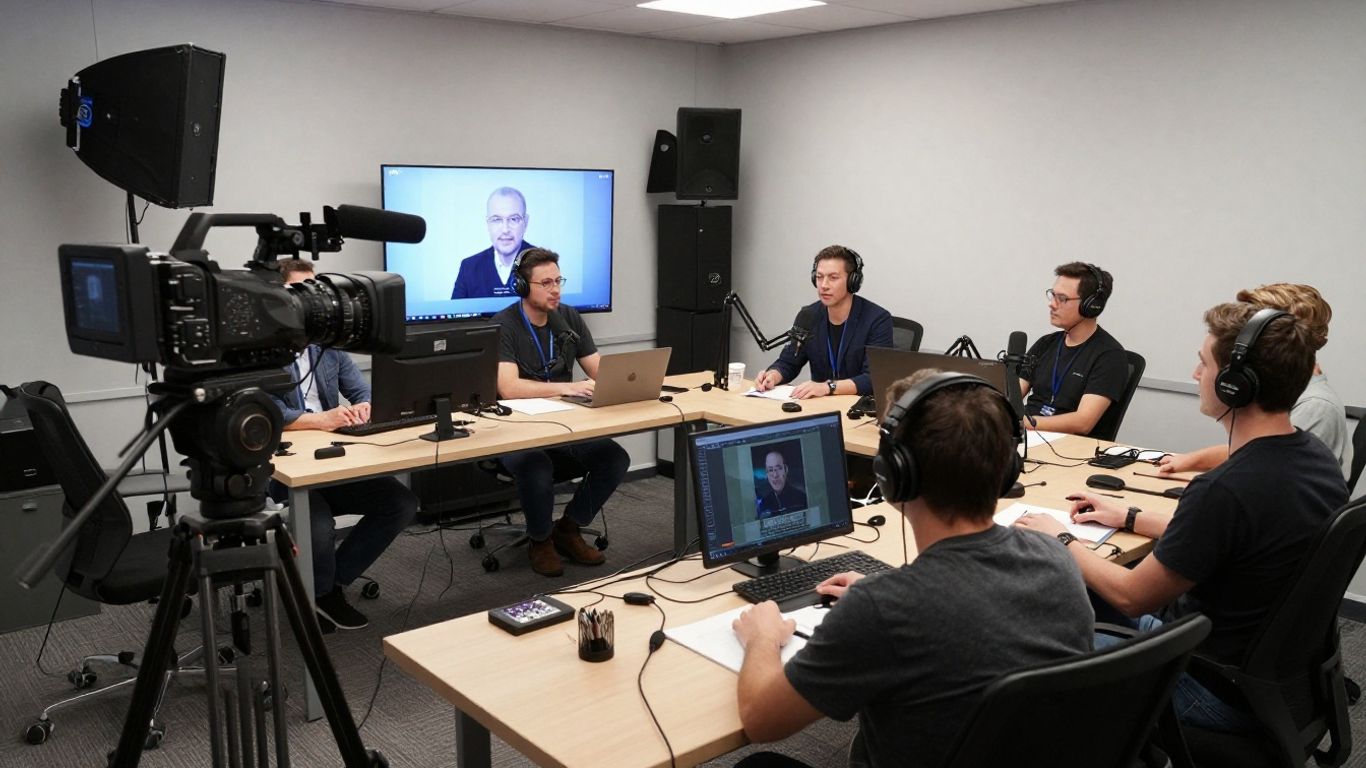
A live audience introduces several signals that must coexist: host dialogue, guest dialogue, room tone, laughter, applause, and sometimes questions from the floor. The technical plan should preserve each one without allowing the crowd to overpower the story. This is where a producer’s preparation matters as much as the equipment.
Capturing clear dialogue and audience reactions
Give each primary speaker a dedicated microphone and monitor levels throughout the session. Audience reaction may need separate microphones or strategically placed room capture, depending on the room and desired sound. VG Creations provides podcast production from setup to post-production, which fits projects that need both a controlled recording process and a finished audio and video podcast.
Positioning cameras for hosts, guests, and crowd shots
Plan a stable master shot first, then add angles that reveal listening, reaction, and interaction. Keep camera paths away from sightlines and avoid framing audience members who have not consented to appear. A camera map should also identify where operators can move during breaks without crossing the recording area.
Balancing live sound with post-production flexibility
Record clean isolated sources whenever possible. A mixed room feed is useful for monitoring, but separate dialogue and audience tracks give the editor more control over applause, pauses, and overlapping reactions. Keep a little room tone from the space as well; it can make edits feel continuous instead of unnaturally silent.
Preparing backup equipment and contingency plans
Small failures become very visible when a room is waiting. Build a short contingency plan around the most likely problems, and assign one person to make decisions during the recording. A useful production checklist includes these practical checks:
- Test every microphone, cable, battery, and recording channel.
- Confirm storage space and create a recording backup path.
- Check lighting, camera power, focus, and memory cards.
- Prepare a quiet holding activity for delays or resets.
A backup is valuable only when someone knows how to switch to it. Run the plan before the audience arrives, then keep the changeover steps close to the producer.
Build audience interaction into the episode
Interaction should serve the conversation rather than interrupt it. The strongest moments often come from a simple question, a shared laugh, or a response that reveals what listeners are thinking. Plan enough structure to protect the schedule while leaving room for genuine surprise.
Writing prompts that encourage natural responses
Use prompts that invite a story instead of a one-word reaction. Ask the audience to recall, choose, compare, or explain, and give them a moment to respond before moving on. Hosts can also repeat a question in a shorter form for the recording, helping both the room and the eventual listener follow the exchange.
Adding questions, polls, and live segments
A question segment needs a clear beginning and end. Collect questions in advance, allow moderated submissions during the show, or use a quick poll when the result can shape the next topic. The format should match the audience’s size and the episode’s tone. A small group may support open conversation; a larger crowd usually benefits from microphones and stricter selection.
Controlling timing without making the show feel scripted
Give hosts time markers, topic cards, and discreet signals rather than writing every response. If a segment runs long, a planned transition can move the episode forward without making the change feel abrupt. Concise live formats often translate better to recorded distribution, a point also explored in this live podcast discussion.
Handling unexpected reactions and interruptions
A surprising response is not automatically a problem. Let the host acknowledge it, decide whether it adds useful context, and then return to the planned thread. For disruptive behavior, the floor producer should intervene quietly while the host keeps attention on the guest. The goal is not to remove every unscripted moment; it is to keep one moment from taking over the episode.
Turn the recording into engaging content
The recording is only the first asset. A well-produced audience episode can become a long-form show, short clips, stills, quotes, and ideas for future topics. VG Creations also offers social media content creation, making the connection between a finished production and its supporting content a practical part of the plan.
Editing audience moments for the full episode
Keep reactions that deepen the emotional arc or clarify the room’s atmosphere. Trim applause that repeats without adding meaning, but do not remove every pause or laugh; doing so can make a live recording feel strangely lifeless. Review the audience tracks alongside the dialogue so edits preserve the cause-and-effect of each response.
Creating short-form clips for social media
Look for moments that stand alone: a sharp answer, a strong audience question, a visible change in mood, or a concise exchange between host and guest. Add enough context for someone unfamiliar with the full episode, then keep the framing and captions consistent with the broader brand. A social video strategy can help connect repurposed clips to distribution and performance tracking.
Using audience feedback to improve future episodes
Listen for recurring questions and watch where attention rises or falls. Audience feedback can reveal which topics deserve a follow-up, which explanations need tightening, and whether the live format suits the show. Treat comments as evidence to review alongside the host’s experience and the edit team’s observations, not as a vote that dictates every creative decision.
Measuring engagement, retention, and production value
Choose measures that match the purpose of the episode. Completion rate may matter more than raw views for a deep interview, while saves, shares, and qualified inquiries may matter more for a business-led show. A simple review table keeps the conversation grounded:
| Signal |
What it can reveal |
Useful follow-up |
| Watch or listen retention |
Where attention changes |
Review pacing and segment length |
| Audience questions |
What viewers want clarified |
Build future prompts around themes |
| Shares and saves |
Which moments travel |
Cut related short-form pieces |
| Production issues |
What reduced trust or comfort |
Adjust the next run of show |
The numbers do not replace editorial judgment. They show where to look, while the room experience explains why a moment worked or failed.
Conclusion
A successful podcast studio audience is planned as part of the story, the room, and the production—not added after everything else is decided. Give people a comfortable place to listen, prepare them for participation, and record the room with enough control to shape it later. When those pieces work together, the live energy can remain authentic in the finished episode and continue working across the content that follows.
Frequently Asked Questions
What is a podcast studio audience?
It is a group of people present while a podcast is recorded, whether in a studio, theater, event space, or another prepared venue. They may simply listen or take part through reactions, questions, polls, or planned segments.
How many people should attend a live podcast recording?
The right number depends on the room, format, camera plan, and desired atmosphere. A smaller audience can support an intimate conversation, while a larger group may suit a show built around visible energy and audience participation.
Should the audience be on camera?
Only when that is planned clearly and covered by appropriate consent. Decide which areas will be visible, explain the arrangement before recording, and provide seating for people who prefer not to appear.
How do you keep audience noise from overpowering the hosts?
Use dedicated microphones for the speakers, control the room acoustically, monitor levels, and capture reactions separately when possible. The editor can then preserve useful energy without allowing applause or laughter to cover important dialogue.
Can a remote audience work as well as an in-person audience?
Yes, but it needs its own structure. Reliable connectivity, a moderator, clear participation cues, and a plan for selecting questions help remote contributors feel included rather than treated as an afterthought.
What should audience members know before recording?
They should know the arrival time, expected duration, access information, phone policy, recording consent details, break schedule, and how questions or reactions will be handled. Clear information makes the room calmer and more cooperative.
How can a live podcast become more content?
Review the recording for strong exchanges, audience questions, emotional reactions, and concise insights that can stand alone. These moments may support the full episode, short-form video, still images, show notes, and ideas for future programming.