Key Takeaways
Finding a workspace that balances technology, accessibility, and professional support is critical for successful long-term podcast development. This guide covers how to align your production requirements with the right studio environment in New York City.
- Define your show’s format and equipment needs before booking.
- prioritize studios with acoustic treatment and high-quality microphones.
- Evaluate rental packages against your frequency and volume requirements.
- Consider workflow efficiency, including on-site engineering and turnaround times.
- Align your studio choice with your broader content strategy goals.
Defining your podcast production goals
When evaluating a space for your recording, begin by looking at the broader mission of your show to ensure the facility meets your tactical needs. At VG Creations, we view podcast production not as a standalone task but as a key element of your strategic communication. Defining exactly what you want to achieve helps you filter through the broad range of options available in the city.
Identifying the primary format of your show
Your chosen format dictates the physical environment required for your sessions. A conversational, interview-based show needs a very different layout than a solo monologue podcast or a narrative-style production. Understanding whether your primary output involves intimate desk chats or standing segments will shape your search for a compatible space.
Determining the required number of guests for typical recordings
Capacity issues can ruin a recording session if you aren’t prepared for the space limitations. You must verify if a studio can accommodate the maximum number of people you anticipate, including co-hosts and potential special guests. Booking a room too small for your needs leads to cramped production and poor microphone isolation.
Deciding between audio-only or integrated video production
Choosing between audio and video impacts almost every decision from lighting to furniture. Many creators aiming for social media growth prioritize studios that include professional video editing services integrated into their pipeline. An integrated visual setup creates a higher barrier to entry but produces a much more versatile content asset.
Establishing the frequency and volume of your sessions
Volume drives your financial model and scheduling security when selecting a venue. Creating a predictable, recurring series allows you to align your workflow with a dedicated partner. Establishing this cadence early prevents the last-minute scramble of searching for available hour slots in a competitive market like New York.
Evaluating studio equipment and technical specifications
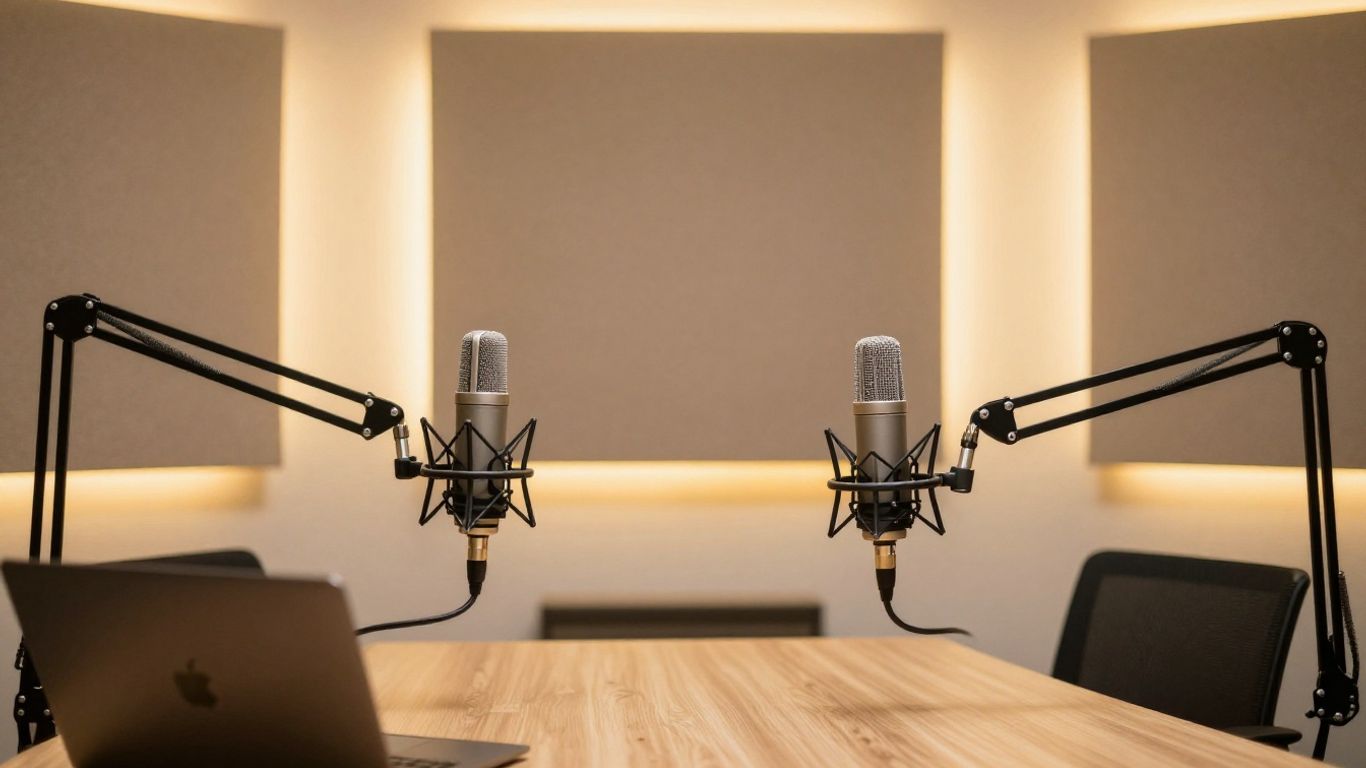
Technical performance is the backbone of your brand reputation, and you should never compromise on gear quality. Our team follows the principles outlined in our 10 essential videography equipment pieces guide to ensure that every recording maintains consistent technical polish. A studio in a competitive market must provide more than just the basics.
Assessing the baseline quality of microphones and preamps
Look for industry-standard dynamic microphones that provide broadcast clarity while minimizing ambient noise. If the studio uses sub-par preamps, your final product will suffer from gain noise that no amount of post-production can fully fix. Request a sample recording if you have doubts about the signal-to-noise floor of their current setup.
Checking for soundproofing and acoustic treatment standards
An untreated room creates reflections and messy audio that make editing an exhausting challenge. True professional studios utilize wall foam, bass traps, and quiet HVAC systems to maintain an isolated environment. You want an space that feels dead, allowing you to control the auditory aesthetic of the conversation completely.
Reviewing multi-camera setups for high-quality video podcasts
Switching between angles is essential for keeping viewers engaged throughout long-form content. Ensure the studio utilizes high-resolution cameras that maintain color consistency across all inputs. The ability to record independent files for each angle allows for more dynamic editing and visual movement during the final assembly.
Ensuring equipment compatibility with your preferred recording software
Compatibility matters when you are working on a custom, high-end production pipeline. Ask about their connectivity methods, especially if you plan to plug in your own hardware or hard drives. You want a process that minimizes data loss while allowing for a seamless ingestion into your own editing suite or cloud platform.
Analyzing location and facility accessibility
Location matters for your logistics as much as it does for your brand identity. You need a space that serves your team and your guests with equal ease throughout the year. Avoid studios where the commute to the front door feels like an obstacle course, as reliability is the foundation of any consistent content calendar.
Choosing a studio location within a convenient city borough
Manhattan might offer prestige, but look at neighborhoods like DUMBO or parts of Queens if your logistical footprint demands more space. When assessing a location, consider the density of traffic and the average time it takes for your typical guest to arrive. A studio that requires a complex cross-town trek will eventually reduce your guest’s enthusiasm for the interview.
Factoring in proximity to major public transportation hubs
Access to subway lines is a major factor for anyone producing a show in a busy metropolitan area. Studios within walking distance of major transfer hubs ensure that guests coming in from outside the city can easily connect to your session. If a guest struggles to navigate your studio’s location, the stress will show during their performance.
Considering building entry and ease of equipment loading
Never underestimate the pain of dragging gear through a freight elevator or a lobby security desk. A studio that provides direct street access or a clear, easy-to-use loading area is worth a premium. You want to focus your energy on the actual recording, not on maneuvering cases through tight corridors.
Reviewing studio hours and availability for early or late sessions
Studio flexibility determines whether you can capture content outside of the standard business day. Many guests, especially those with demanding professional roles, require early mornings or late evenings for their interview slots. Ensure the facility and its support team can provide access schedules that accommodate these non-traditional windows.
Breaking down studio pricing and membership options
Transparent pricing is the hallmark of a reliable production partnership, as unexpected fees often derail project budgets.
The following table outlines common price structures you will encounter when searching for a podcast studio new york:
| Package Type |
Standard Inclusions |
Ideal For |
| Hourly Rate |
Mic, Room, Self-recording |
Occasional creators |
| Monthly Block |
Editing, Studio Access |
Weekly shows |
| Full Production |
Engineer, Editing, Lighting |
Brand campaigns |
Selecting the right package helps ensure you have the resources necessary to scale your series without breaking your overhead targets. It is vital to audit your needs against these structures to maximize your investment.
Comparing hourly rental rates versus recurring monthly memberships
Hourly rates are perfect for testing a premise or creating pilot episodes with very little risk. Once your show has a confirmed audience and a regular schedule, switching to a membership offers better predictability and often lower per-session costs. Look for studios that allow you to roll over unused hours if your schedule changes suddenly.
Identifying potential hidden costs within standard rental packages
Hidden fees for data storage, file delivery, or microphone sanitization can quickly inflate a simple booking. Ask for a written breakdown of what is included in the base rate before you commit to a long-term agreement. Knowing what constitutes an "extra" helps you compare studios on an apples-to-apples basis.
Evaluating the value of including a professional audio engineer
Having an engineer on-site changes the feel of the session significantly, allowing you to focus purely on the discussion while the technical side of things remains robust. A professional engineer manages monitor mixes, ensures correct gain staging, and provides real-time oversight. This reliability often pays for itself by preventing the need for massive "fix-it" edits later on.
Assessing flexible booking policies for last-minute cancellations
Cancellations are an unfortunate reality of working with busy guests or shifting priorities. Check the studio policy regarding modifications to your booking to ensure that you aren’t penalized for unforeseen timing changes. A flexible studio understands the nature of creative production and works with you to protect your schedule.
Selecting a studio based on available post-production support
Your post-production workflow determines the final quality of your episodes, and selecting a studio with in-house expertise can streamline this significantly. At VG Creations, we emphasize this part of the process because even the best raw footage needs editorial love to reach its full potential. A cohesive workflow ensures your brand remains consistent and professional.
Understanding raw file delivery versus fully edited episodes
Decide if you have the internal team to handle post-production or if you need a turnkey solution. If you take raw files, ensure the studio names the files clearly and organizes them using a standardized naming convention. Having to organize raw footage after a long shoot creates unnecessary friction in your pipeline.
Assessing the availability of professional audio mixing and mastering
Audio mixing ensures that all voices are leveled appropriately and that background noise is removed for clean listening. Mastering provides the final punch and consistent volume that ensures your show sounds professional on streaming platforms. Avoid facilities that pass off basic volume normalization as full mixing and mastering.
Checking for video editing, color grading, and motion graphics
Video production requires more than just cuts; it requires color correction for a cinematic look and motion graphics for branding. A good studio will show you previous work that uses these elements to emphasize their brand identity. Clear, clean editing is what separates a casual stream from a high-impact branded podcast.
Reviewing typical turnaround times for final project delivery
Waiting weeks for an episode to be returned limits your ability to stay relevant in a fast-paced news or trend cycle. Ask for their typical delivery cadence to ensure it meets your publishing schedule. Reliable firms, like those that handle interview video production services efficiently, pride themselves on setting and meeting clear development timelines.
Preparing for a successful studio recording session
Preparation ensures that you enter the room ready to execute your vision without having to debug technical issues. Coordination is the secret ingredient to any high-level production, and following a structure will help you and your guests feel more comfortable on camera.
Creating a technical checklist for your guests and co-hosts
Send a brief document to your guests explaining the studio environment and how to best prepare their own input. This list might include wardrobe tips for video or advice on how to handle the microphone for optimal clear audio. Proactive communication reduces jittery energy and improves the experience for everyone involved.
Managing show notes, running orders, and production cues
Keeping your session organized with a clearly mapped running order helps you hit your content goals without running overtime. A written outline keeps the conversation focused and ensures that you don’t miss important talking points. If you have any cues for the engineer, include them here to keep the team aligned throughout the recording.
Testing remote connection workflows for virtual guest integration
If you feature remote guests, test your connection bridge at least 24 hours before the live session. A failure on a guest’s connection during a high-budget studio session is a avoidable tragedy. Ensure that the studio tech is ready to capture high-quality local feeds from these remote participants if possible.
Coordinating pre-session equipment check-ins with your studio engineer
- Perform a sound check for every participant.
- Confirm the recording resolution and file format for video.
- Review the placement of all microphones and lighting fixtures.
- Test the file playback for any planned media segments.
Running through these tests early allows you to fix small problems before they balloon into show-stopping issues. A good engineer will walk you through these steps gladly, knowing that a solid check-in leads to a much smoother, higher-quality session.
Conclusion
Selecting the right podcast studio in New York is an investment in your content authority and the overall growth of your business. By carefully evaluating your production needs, the technical specifications of a space, and the reliability of your studio partner, you create a foundation for consistent, high-quality output. Whether you are aiming for short-form awareness or long-form narrative storytelling, a rigorous approach to your studio choice ensures that your team focuses on what matters most: creating lasting connections with your target audience through the power of strategic video and audio.
Frequently Asked Questions
What are the main benefits of recording in a professional studio versus at home?
Professional studios provide controlled acoustics, high-end gear, and expert engineering, which collectively result in a broadcast-quality product that home setups rarely replicate. Utilizing a specialized environment also removes the burden of managing technical maintenance, allowing you to focus entirely on your content and your guest’s experience.
Should I prioritize a studio that offers both audio and video services?
Prioritizing a dual-purpose studio is highly recommended if your long-term plan involves multi-platform social media growth. Having integrated video capabilities allows you to repurpose your podcast into short-form assets, effectively maximizing the return on every hour of recording time you invest.
How far in advance should I book my studio sessions?
Ideally, you should secure your studio time at least two to four weeks in advance for a recurring show. This ensures you get your preferred time slots, which is particularly important for guest availability in a bustling city where top-tier studios often run on very tight calendars.
Is it worth paying for an on-site audio engineer?
Yes, an on-site engineer is typically the best investment for maintaining a professional standard of audio. They handle the technical aspects of level management and monitoring that are easy to overlook while you are actively conducting an interview, virtually guaranteeing a smoother end file that requires less post-production effort.
What should I look for when comparing pricing packages?
Look beyond the hourly rate to understand what is included in the package, such as engineering support, file post-processing, and late-cancellation policies. Often, a higher-priced package that includes these services is more economical than adding them on as individual fees after your booking is finalized.
How can I make guests feel more comfortable in a studio setting?
Send your guests a simple, encouraging prep guide before the session that outlines what to expect and how to handle the microphone. On the day of, ensure pre-session check-ins allow them to settle in and do a quick run-through so that by the time you hit record, they feel confident and in control.
How do I evaluate if a studio is a good long-term partner?
Evaluate a potential long-term partner by the consistency of their work, their willingness to integrate into your preferred production workflow, and the responsiveness of their team. A studio that takes the time to understand your content strategy and provides reliable, transparent logistics is a vital asset for your business growth.