Key Takeaways
Finding the right production environment is essential for creating high-quality audio and video assets that serve your long-term business goals. This guide outlines the critical variables to consider when choosing a facility for your next project.
- Define your technical requirements early to match recording gear with your vision.
- Prioritize locations that offer logistical convenience for your guests and team.
- Evaluate the studio’s end-to-end production support, including editing and audio balancing.
- Assess the environment’s professional branding potential, including lighting and acoustic treatment.
- Compare pricing structures, ensuring you understand if equipment add-ons are included in the base rate.
Identifying your technical requirements
Starting your search requires a clear vision of what your podcast format demands from a workspace. Every production has unique constraints, and knowing these will help you pinpoint which facilities align with your specific creative and strategic objectives. Before committing to a rental, walk through your production lifecycle in your head to ensure no critical pieces are missing.
Audio equipment and microphone quality
High-fidelity audio is the foundation of any reputable podcast, as listeners often equate poor sound quality with a lack of professionalism. Verify that the studio uses industry-standard dynamic microphones that minimize ambient bleed. By leveraging VG Creations for podcast production, you can ensure high-quality audio captured by pros who understand the nuances of sound dynamics.
Video recording and camera capabilities
Capturing video adds another layer of complexity to your production, requiring dedicated camera systems rather than simple webcams. Ensure the space offers 4K-ready setups and mounting hardware that permits natural angles for hosts and guests. For those looking to master live streaming on platforms like YouTube, professional camera gear is the baseline requirement for reliable results.
Availability of professional editing services
Recording is only half the battle, as the true polish happens during the post-production phase where pacing and clarity are refined. Inquire about whether the studio team offers video editing as part of their standard workflow or as a separate add-on service. Having this support on-site means you do not have to manage complex syncs between raw files and external editors.
Technical support during recording sessions
Having an expert present during your session saves time and reduces burnout for the host. Technical support ensures that if a microphone level drifts or a video signal cuts out, the situation is resolved immediately. Reliable Studios like Unit Studio specialize in these outcomes so you can stay fully focused on the conversation.
Location and accessibility factors in Sheffield
Choosing a location is not just about the address; it is about how easily your guests can arrive at your studio and settle into the recording mindset. A central, accessible space reduces stress for everyone involved, especially when you are coordinating busy schedules or inviting guests who are not used to podcasting. Ensuring a smooth arrival process minimizes friction, helping your guests feel comfortable and prepared to deliver their best performance.
Proximity to Sheffield city center
Selecting a site close to the city core is beneficial for quick commutes and easy access for local guests. You want a location that does not require a long trek through heavy traffic, as that can drain energy before the recording even begins. Accessibility keeps your workflow efficient, especially when you need to coordinate multiple participants.
Parking and public transport access
Guest comfort begins the moment they start their journey toward your recording space. Look for locations that provide dedicated parking or are situated just steps away from major transit hubs. Whether you are choosing a podcast studio in nearby areas or within the city, verification of these logistics is vital for punctuality.
Studio accessibility and building hours
Flexible building hours are necessary when you are filming outside traditional nine-to-five blocks. Check if the building provides weekend or evening access, so your creative team isn’t restricted by arbitrary closing times. A space that adapts to your scheduling needs is the hallmark of a professional-grade partner.
Environmental noise considerations
Even a well-lit studio can prove useless if it sits directly above a noisy construction site or a busy train line. Visit the site in person during the time you intend to record to get an accurate read on street-level vibrations and room interior hums. Reliable soundproofing is the only way to ensure your recordings remain professional throughout the entire session.
Evaluating production expertise and support
Production teams are an extension of your brand, and the best ones act as partners throughout the creative journey. You should look for staff that understands how to manage the flow of an interview while handling the technical load on your behalf. This allows your team to focus exclusively on content strategy rather than worrying about cable management.
Sound engineering and audio balancing
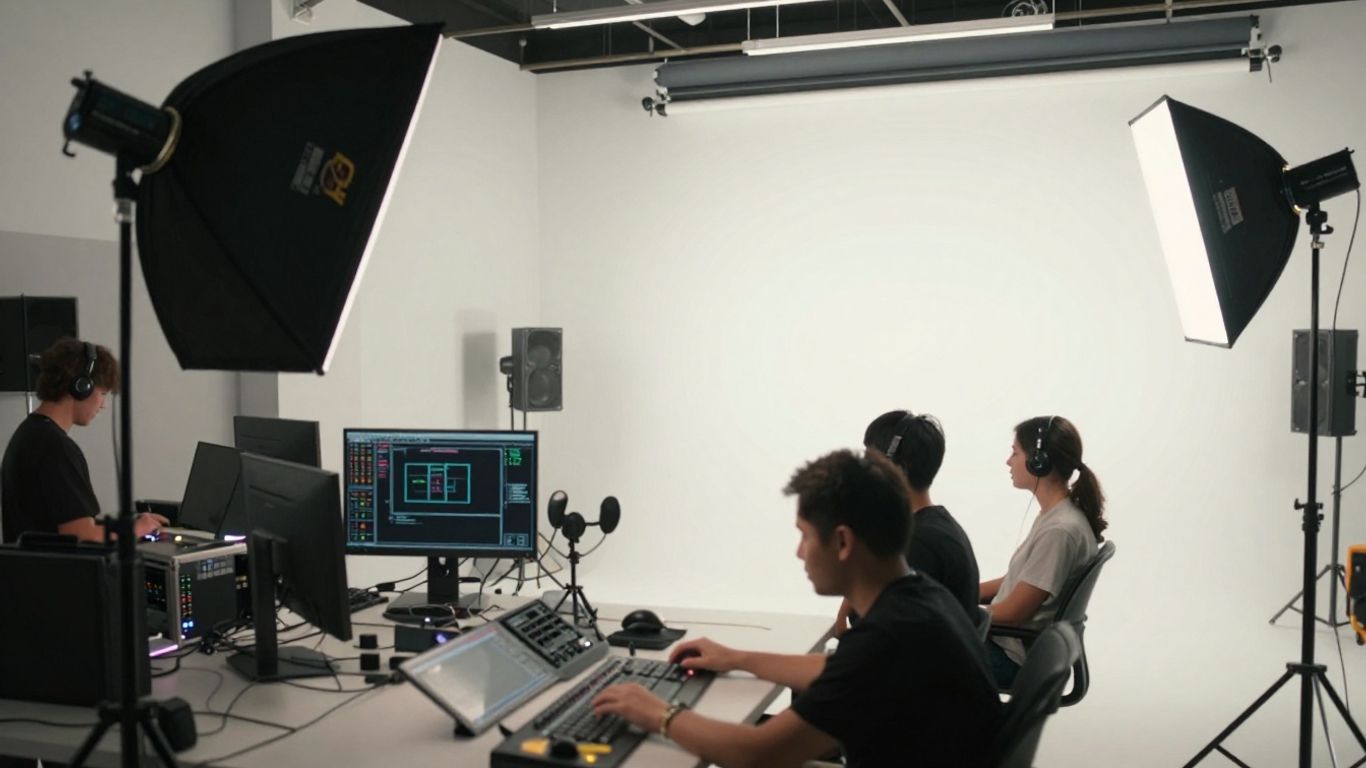
Having a professional monitor your levels throughout the recording ensures that audio remains consistent, even when guest emotions fluctuate. A sound engineer will manage your gain structure to avoid clipping during loud segments or background quiet spots. This level of oversight results in clean files that require less heavy lifting during the mix.
Producer roles for interview management
Effective production management often makes the difference between an average show and a standout business asset. Producers ensure that everyone stays on topic and follows the planned arc of the discussion. This keeps the energy high and ensures that the final product aligns perfectly with your original brand goals.
Assistance with post-production workflows
Understanding the studio’s post-production capacity gives you a clear window into how fast your content goes live. If you need a fast turnaround, verify their capacity for clipping, b-roll insertion, and color correction. Streamlined post-production services are a key factor in ensuring your content remains relevant and timely in a competitive market.
Experience with different podcast formats
Different formats, such as solo monologues versus round-table panels, present different challenges for engineers and camera operators. Look for studios that have a portfolio covering multiple genres, showing they can adapt their setup to suit your specific format needs. Experience across these styles usually translates to more creative solutions for your project’s unique requirements.
Considering the studio environment and branding
Your studio environment should reflect the personality of your brand, acting as a visual cue for the quality of your message. A professional backdrop serves as a high-impact marketing asset that resonates with your viewers long after the episode ends. You can evaluate the technical features versus the branding impact using the comparison table provided below to decide what is non-negotiable for your project.
| Studio Feature |
Brand Impact |
Technical Necessity |
| Lighting Rigs |
Professional Depth |
Required for Clarity |
| Sound treatment |
Focus and Tone |
Required for Audio |
| Seating Comfort |
Guest Confidence |
Essential for Flow |
Studio lighting setups and visual aesthetics
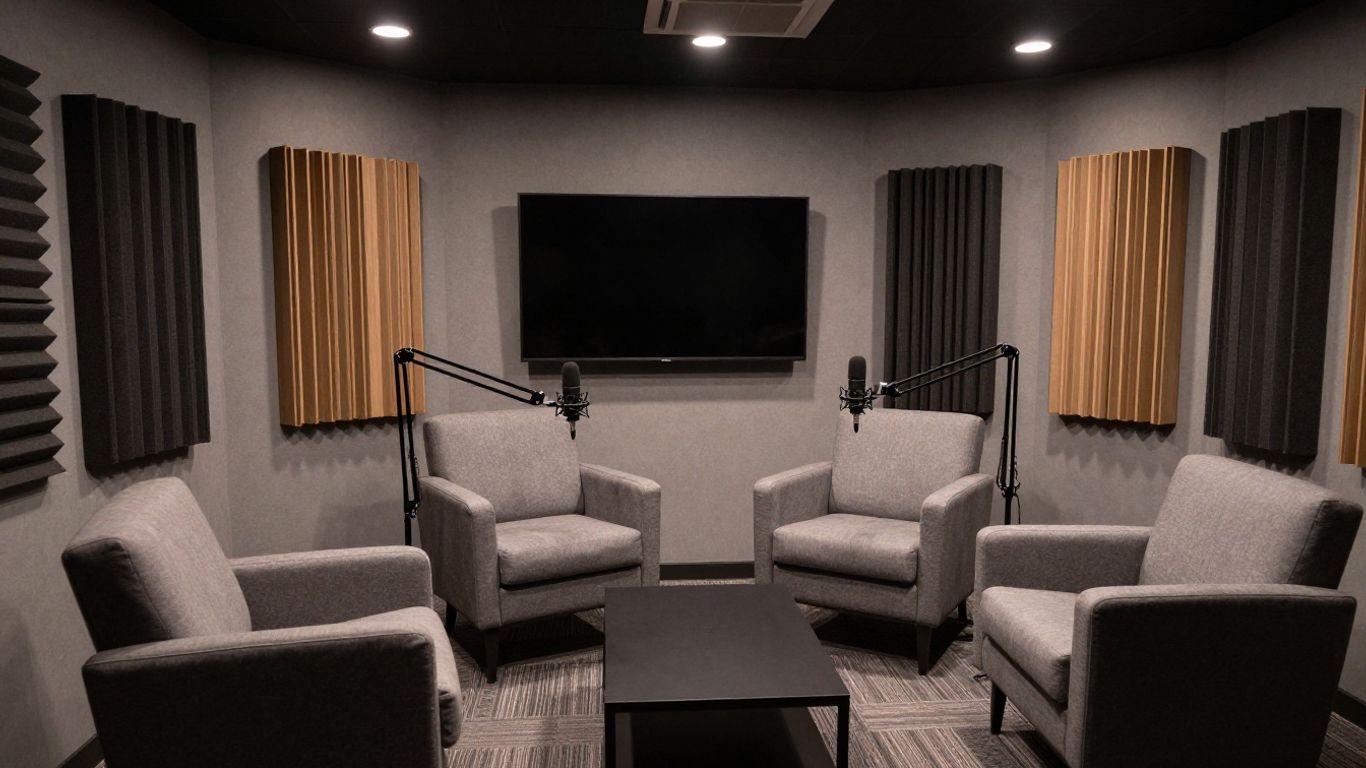
Lighting should be customizable to ensure your color palette and brand feel come through on camera. Whether you need an intimate, low-light vibe or a high-energy broadcast aesthetic, the fixtures must be adjustable. This flexibility is what separates a generic space from a branded studio that reinforces your identity.
Soundproofing and room acoustics standards
High-grade acoustic treatment prevents echo and ensures that the words of your speakers are clear. Without this, your audio may sound flat or muddy, necessitating significant fixing in the post-production stage. If a facility neglects soundproofing, no amount of editing software can fully recover the quality.
Seating comfort for guests and hosts
Recording long sessions can feel exhausting if the chairs are uncomfortable, which negatively impacts the delivery of your guests. Ergonomic furniture that allows for natural posture helps contributors feel at ease during long segments. A comfortable guest is a more articulate guest, which is a major advantage for your final content.
Capacity for multi-person panels and live audiences
If you plan on expanding your format to include panels, you need a space that accommodates the physical footprint of multiple people and equipment safely. Check the maximum occupancy and the structural flow of the room to ensure you are not cramped. Planning for space now saves you from having to migrate your show to a new studio later.
Budgeting for studio hire in Sheffield
Understanding the cost structure is crucial to ensuring your project remains sustainable over the long term. Many creators underestimate hidden operational costs, so be diligent in asking for a full breakdown before signing any agreements. You should aim for a clear relationship between the investment in studio time and the ROI generated from your high-quality content.
Hourly rates versus package deals
Most studios offer both single-session rentals and package deals for ongoing series. Generally, these series packages offer savings if you have a consistent frequency requirement for your show. Here is why you should consider a package approach for your ongoing business content:
- Improved rate reliability compared to ad-hoc booking.
- Guaranteed slot availability for your production team.
- Lower cost-per-episode with bulk commit bundles.
- Better integration with ongoing marketing campaigns.
Hidden costs for equipment add-ons
Always ask for a detailed list of what is included in the base studio hire fee to avoid unexpected charges later. Some studios charge separately for premium lens kits, teleprompters, or specific high-end microphone setups. A transparent facility will gladly list these in the quote so your project budget remains intact.
Flexibility of booking and rescheduling policies
Business is often unpredictable, so knowing how a studio handles booking changes is a safety net for your production. You need to understand their lead time requirements for cancellations to avoid unnecessary penalties. A fair, flexible policy supports long-term consistency for your brand efforts.
Comparing value for money across local facilities
Ultimately, value isn’t just about the lowest hourly price but the quality of the final asset you walk away with. Investing in a professional space like Aspect Ratio Studio can provide peace of mind that your content meets corporate standards. Ensure the studio truly understands how to elevate your brand strategy, as efficient production is often a more valuable long-term asset than a cheap booking.
Conclusion
Choosing a professional studio is a strategic investment in the future of your brand, providing you with the technical foundation and visual quality necessary to build audience trust over time. By carefully evaluating technical capabilities, locational logistics, and professional support, you can secure a partner that treats your content with the same seriousness you bring to your business operations.
Frequently Asked Questions
Should I prioritize a studio near the city center or one with more space?
This depends on your primary goal, but a city center location provides better guest access and convenience, whereas a suburban studio might allow for easier parking and larger set builds. Always verify which logistical constraint causes the most friction for your specific team or guest list.
Do I need to bring my own recording engineer to the studio?
Most high-quality facilities include an engineer or a production lead to help with setup, but it is always wise to confirm this before booking. Having a dedicated professional on-site is essential for maintaining consistent audio quality and troubleshooting issues during a live recording.
How far in advance should I book professional podcast space?
For shows that record weekly, it is wise to book in monthly blocks to ensure your desired time slot is always reserved. This also allows the studio and your production team to confirm gear needs early so nothing is missing at the start of your shoot.
What does an acoustic-treated room really do for my sound?
Effective acoustic treatment dampens reflected sound waves, meaning your audio does not contain echo, reverb, or hollow artifacts. This allows for a clean studio sound that requires very little post-production cleanup, ensuring your listeners focus on the content instead of the noise.
Can a studio handle both podcast recording and social media content?
Many modern studios are designed to handle both formats simultaneously during a single booking period, using cameras and audio rigs that bridge the two outputs. By capturing high-quality content during your primary session, you can repurpose long-form audio into shorter, impactful social media clips.
Are package deals always better than hourly rates?
Package deals are usually cheaper if you are committed to recording a specific series of episodes, but they require a larger upfront investment. If you are experimenting with an initial episode or only recording sporadically, an hourly rate provides more flexibility without the long-term contract requirement.
What should I look for when touring a potential studio?
When touring, focus on the equipment quality, the cleanliness of the space, and the presence of professional staff who are ready to assist you. Also, pay attention to the level of ambient noise and the general vibe of the environment, noting whether it inspires the creative energy you want to capture in your episodes.