Key Takeaways
Strong testimonial videos turn a customer’s experience into evidence that prospective buyers can understand and believe. The best results come from thoughtful planning, relaxed interviews, polished production, and distribution tied to a clear business goal.
- Choose customers whose experiences reflect the audience you want to reach.
- Build each story around a real challenge, decision, and outcome.
- Prepare interviewees without forcing them into memorized answers.
- Prioritize clear audio, natural performances, and useful supporting footage.
- Measure how testimonial videos influence attention, leads, and conversions.
What testimonial videos are and why they work
Testimonial videos are customer stories told through recorded interviews, supporting visuals, and a carefully shaped narrative. They let potential buyers hear how a real person approached a problem and what changed afterward. Unlike a product description, a customer story gives the audience context, emotion, and a human point of reference. That combination can make a complicated decision feel more familiar.
How customer stories influence buying decisions
A buyer rarely wants only a list of features. They want to know whether a product or service can fit their circumstances, solve a recognizable problem, and justify the investment. A customer explaining what life looked like before the decision—and what became easier afterward—helps answer those questions without sounding like a sales pitch.
Specificity makes the story persuasive. Details about the original concern, the selection process, and the practical result give viewers something to compare with their own situation. The customer does not need to sound perfect; they need to sound credible and clear.
The difference between authentic testimonials and scripted endorsements
A scripted endorsement usually begins with the conclusion: the brand is excellent, the service is effortless, and everyone should buy. Authentic testimonials move in the opposite direction. They allow room for uncertainty, ordinary language, and the small details that make an experience feel lived rather than manufactured.
Preparation still matters. The interviewer can explain the purpose, share broad themes, and confirm logistics, but the customer should not be asked to memorize polished sentences. A believable voice builds trust because viewers can sense when someone is describing an experience in their own words.
Where testimonial videos fit in the marketing funnel
Customer stories can support several stages of the funnel, but the edit and call to action should change with the viewer’s intent. A short, emotionally clear clip can introduce a brand, while a longer case-study-style piece may help someone comparing options. On a sales page, the strongest story often addresses a specific objection that remains late in the decision.
Think of the funnel as a set of questions. Early viewers ask whether the company understands people like them; later viewers ask whether the promised value is real and whether moving forward feels safe. A testimonial can work at both points when its framing is deliberate. A useful starting point is this testimonial video guide, which connects customer storytelling with trust, conversions, and strategic placement.
How video testimonials support brand credibility and ROI
Video adds voice, expression, setting, and pacing to social proof. Those signals do not replace proof such as figures or documented outcomes, but they can make the evidence easier to absorb. Credibility grows when the story is balanced: the customer explains the problem, the decision, the experience, and the result in a way that respects the viewer’s intelligence.
ROI should be treated as a measurement question rather than a promise. Track where the video appears, who watches it, what action follows, and whether assisted conversions change over time. A well-produced testimonial can also become a long-term marketing asset when its central story remains relevant beyond one campaign.
Planning a testimonial video campaign
A successful shoot begins before anyone sets up a camera. First decide who needs to be persuaded, what decision they are making, and which customer experience can help them make it. Then align the story, production scope, and distribution plan so the finished video has a job to do. This approach keeps the production focused instead of simply collecting attractive footage.

Defining the audience, offer, and campaign goal
Start with one audience and one meaningful business question. Are you helping a prospective client understand a service, addressing hesitation about price, or showing how a complex process works? The answer determines the customer you feature, the questions you ask, the length you need, and the page or channel where the video belongs.
Write the goal in observable terms. It might be increasing qualified inquiries on a service page, supporting a sales conversation, or improving engagement with a campaign. A clear goal gives the edit a filter: every sentence and shot should either advance the story or help the viewer take the next step.
Choosing customers who represent your ideal clients
The most impressive customer is not always the most useful one. Look for a person whose industry, situation, concern, or desired outcome resembles the audience you want to reach. Their story should include enough detail to be recognizable while still offering a perspective that feels distinct.
Before inviting someone, review the experience they can speak about and confirm that they are comfortable discussing it publicly. Ask whether they can describe the problem in plain language and whether the outcome can be explained honestly. A customer with a modest but specific story is often more persuasive than someone offering broad praise.
Selecting the right story angle and interview format
A story angle gives the conversation shape. You might focus on a difficult starting point, a surprising reason for choosing the company, a visible transformation, or the practical difference the service made. The angle should reflect a real customer experience, not a marketing slogan imposed from outside.
The format can be a seated interview, a conversation in the customer’s workplace, or a day-in-the-life sequence supported by interview audio. Consider the audience’s attention span and the amount of context needed. A testimonial production guide can help organize objectives, narrative structure, interviews, visuals, and post-production into one connected plan.
Creating a production timeline and budget
A realistic timeline accounts for outreach, scheduling, pre-interviews, releases, filming, review rounds, editing, captions, and delivery. Build in extra time for customer availability; a testimonial shoot often depends on a busy person making room in their schedule. Confirm who approves the cut and how many revision rounds are included before production begins.
Budget decisions should protect the parts viewers notice most: a prepared story, clean sound, flattering light, and an edit with purpose. If resources are limited, reduce complexity before reducing care. A smaller production with a clear narrative will usually serve the campaign better than an ambitious shoot with no distribution plan.
Preparing customers for a strong interview
Customers are doing you a favor, and the preparation should feel respectful rather than burdensome. Explain what will happen, why their perspective matters, and how the finished video may be used. A calm, informed participant is more likely to remember useful details and speak with ease. The goal is not a flawless performance; it is a clear account of a real experience.
Asking questions that uncover specific results
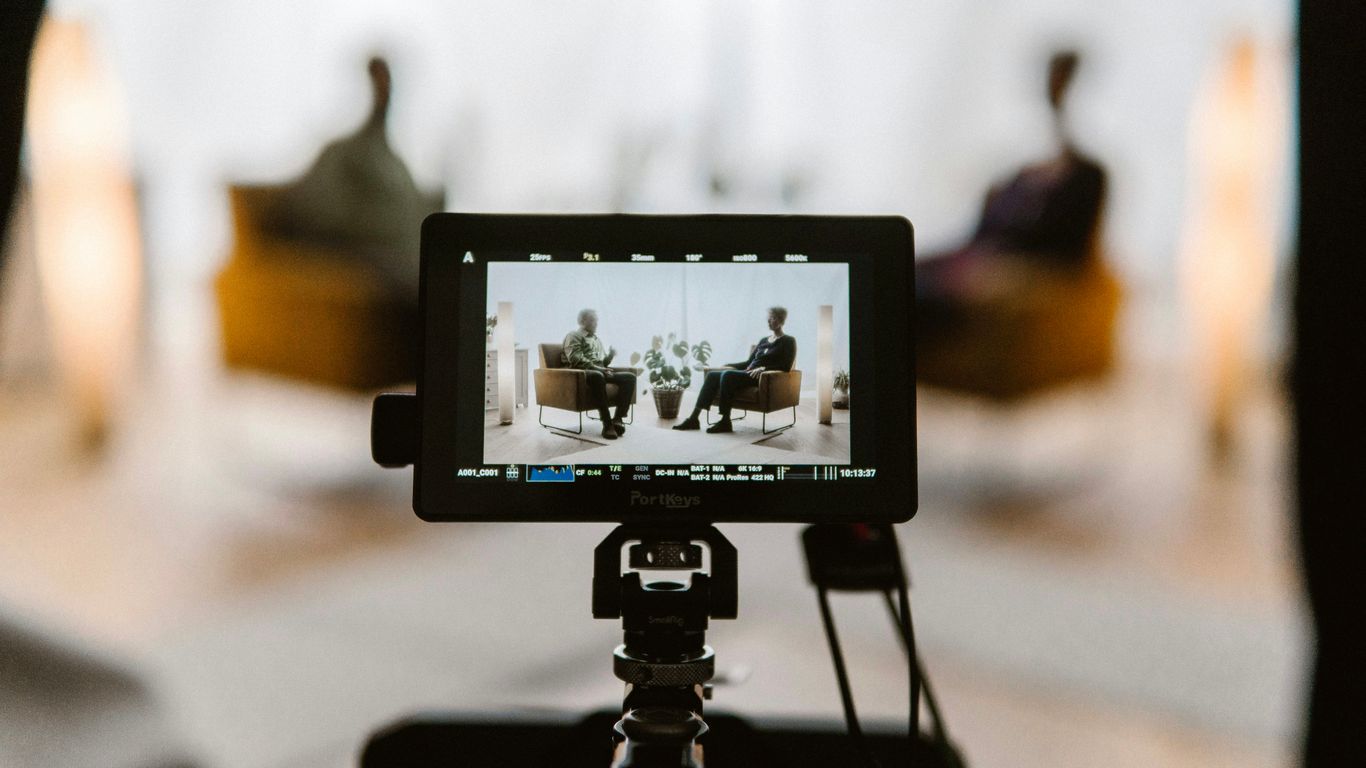
Open-ended questions create room for a story instead of a yes-or-no response. Ask what was happening before the customer sought help, what they considered, what made the decision difficult, and what changed afterward. Follow up on interesting words rather than racing through a fixed questionnaire.
Good prompts are concrete without suggesting the answer. “What did that challenge look like in your daily work?” is more useful than “Did the service solve your problem?” The interviewer should also ask for examples, comparisons, and observable results. A practical collection of customer interview questions can help a team prepare without turning the conversation into a script.
Helping customers feel comfortable on camera
Comfort starts with small choices. Tell the customer where to look, how long answers can be, and whether pauses or retakes are normal. Let them speak with the interviewer rather than stare directly into the lens if that feels more natural. A short warm-up conversation can remove much of the stiffness before the formal questions begin.
Avoid correcting every phrase. People often become more relaxed when they know they can finish a thought without being judged for their wording. If an answer is useful but unclear, ask them to say it again in a simpler way instead of announcing that the first attempt was wrong.
Balancing preparation with natural responses
Share themes in advance, not finished answers. Customers can gather dates, figures, and examples while still responding spontaneously in the room. A pre-interview also reveals sensitive topics, unclear claims, or areas that require approval before filming.
The interviewer’s job is to listen actively. If a customer mentions a moment of hesitation, ask what caused it. If they describe an outcome, ask how they noticed it. Those follow-ups often produce the lines that carry the emotional center of the final edit.
Securing permissions, releases, and brand approvals
A release should explain where the footage may appear, how the customer’s name and role will be shown, and whether excerpts may be edited into shorter versions. Confirm permission for locations, logos, employees, products, and any confidential information visible in the background. Healthcare, financial, and regulated organizations may need additional review before publication.
Create an approval path before filming. Identify the customer’s contact, the internal brand reviewer, and the person responsible for final sign-off. Clear ownership prevents a strong story from getting stuck late in the process or being changed in ways that no longer reflect the customer’s meaning.
Producing a professional testimonial video
Production quality affects how easily people receive the story. Viewers may forgive a simple setting, but distracting sound, harsh light, or a confusing frame can make the speaker feel less credible. The best technical choices support the customer rather than calling attention to the equipment. Plan for a polished image while keeping the environment connected to the person’s real world.
Choosing the location, lighting, and camera setup
Choose a location that adds context without competing with the interview. A workplace, studio, clinic, or home office can work if it is quiet, tidy, and relevant. Look for depth in the background and remove details that reveal private information or create visual clutter.
Soft, controlled light is usually more flattering than a bright overhead fixture. Place the camera at eye level, frame the subject with comfortable space, and keep the background separate enough to create depth. A second camera can provide editorial flexibility, but one thoughtfully composed angle is better than several careless ones.
Capturing clear audio and compelling supporting footage
Audio deserves its own plan. Use a suitable microphone, monitor the recording with headphones, and capture room tone so edits do not jump between answers. Record a little extra silence before and after the interview; it can make transitions feel more natural.
Supporting footage should show the customer in context rather than act as decoration. Film hands at work, a relevant process, a meaningful environment, or an interaction that reinforces what the customer says. Match those shots to the interview so the visuals add evidence instead of merely covering cuts.
Directing interviews without losing authenticity
A good director creates conditions for honesty. Keep the conversation moving, but allow the customer time to think. If an answer sounds too general, ask for a particular moment; if it becomes overly detailed, gently bring it back to the audience’s main question.
Do not manufacture emotion or ask the customer to make claims they cannot support. Natural pauses, a smile, or a moment of reflection may be more valuable than a perfectly energetic delivery. The director should protect the customer’s voice while guiding the story toward clarity.
Using cinematic production techniques to strengthen the story
Cinematic techniques are useful when they reinforce meaning. A considered composition can make a workspace feel authentic, a slow movement can create a calm transition, and carefully chosen close-ups can show the details behind the customer’s words. None of these choices should disguise a weak story.
VG Creations provides testimonial video production that turns authentic client experiences into marketing assets designed for web, social, and advertising use. The broader principle is simple: visual polish should make the customer easier to believe, not make the brand appear to be speaking through them.
Editing testimonial videos for maximum impact
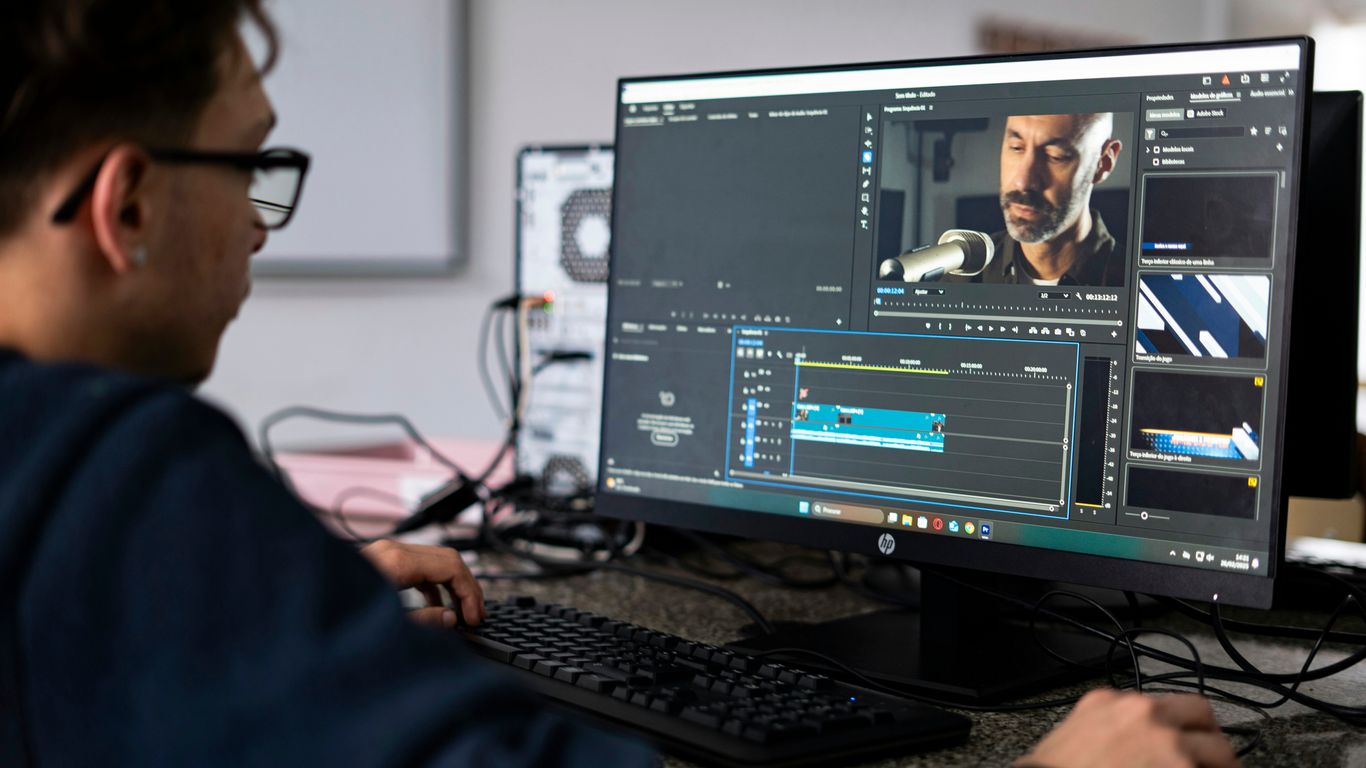
Editing is where a recorded conversation becomes a focused customer story. The editor must preserve the customer’s meaning while removing repetition, pauses that do not help, and background context the audience does not need. A strong cut feels natural even though it has been carefully shaped. The viewer should understand the problem, the decision, and the result without having to work for it.
Structuring the opening hook and customer narrative
Open with a line that creates relevance quickly. It might describe the original challenge, a meaningful realization, or a result that makes the viewer want context. Introduce the customer and situation soon after, then let the story develop through a clear sequence rather than a montage of unrelated praise.
The narrative does not have to follow one rigid formula, but it should answer the questions a viewer is likely to have. What was difficult? Why did the customer act? What was the experience like? What changed? A short ending can point toward the next step without turning the customer into a spokesperson reading an advertisement.
Highlighting challenges, solutions, and measurable outcomes
Keep details that make the experience verifiable and relatable. Specific timeframes, process changes, before-and-after comparisons, or observable improvements are more useful than words such as “amazing” and “incredible.” If a number is included, confirm that the customer and brand approve its use and that the context is clear.
Organize the edit around contrast. The challenge establishes stakes, the solution explains the decision, and the outcome shows why the decision mattered. This structure helps the audience connect the service to a real consequence without suggesting that one customer’s result is guaranteed for everyone.
Adding captions, branding, and supporting visuals
Captions improve access and help viewers follow along when sound is off. Check names, titles, figures, and technical terms carefully, then use brand elements with restraint. A logo, color treatment, or lower third should identify the story without covering important facial expressions or distracting from the speaker.
Supporting visuals can clarify unfamiliar terms and create breathing room in the edit. Use them to show the setting, process, or outcome described in the interview. Music should sit beneath the voice and support the emotional tone rather than instructing the viewer how to feel.
Creating versions for websites, social media, and ads
One interview can produce several purposeful edits. The full version may belong on a case-study page, while shorter excerpts can introduce the customer’s problem or answer one objection on social media. Vertical, square, and horizontal versions may each need different framing and caption placement.
Plan those versions during the shoot. Capture clean moments that can stand alone, record enough supporting footage for varied openings, and keep important information within safe areas for each platform. The final assets should feel related, not simply cropped copies of one master file.
Promoting and measuring testimonial videos
Distribution determines whether a good story reaches a useful audience. Put the video near the decision it supports, then adapt the surrounding copy and call to action to match that context. Promotion should be planned before editing ends so the team knows which aspect ratios, captions, thumbnails, and cutdowns are needed. A customer story becomes more valuable when it is easy to find at the moment a buyer needs reassurance.
Placing testimonials on high-intent website pages
A testimonial belongs where a prospect is already considering an action: a service page, pricing page, booking page, or detailed case study. Introduce it with a sentence that explains why the customer’s experience is relevant. Do not bury the video beneath unrelated content or make the viewer search for the point.
The surrounding page should provide context and a clear next step. A transcript, short summary, or highlighted result can help visitors scan before watching. Test the placement on mobile, confirm that the video loads quickly, and make sure captions are available.
Repurposing customer stories across marketing channels
Repurposing works best when each version has a distinct role. Pull a useful statement for an email, a short vertical clip for social media, a quote for a sales deck, and a longer cut for a landing page. Keep the customer’s words and context consistent across formats.
A single production can support a wider social media video strategy when the content is edited for the way people actually browse each channel. Avoid posting the same opening everywhere. A platform-specific first sentence or visual can make the story feel native while preserving its central message.
Tracking engagement, leads, and conversion performance
Measure more than view count. Watch completion rate, average viewing time, click-through rate, form submissions, qualified leads, assisted conversions, and sales feedback. Compare pages or campaigns with and without the testimonial when the traffic and offer are reasonably similar.
A simple measurement table can keep the discussion grounded:
| Signal |
What it can reveal |
Useful comparison |
| Watch time |
Whether the story holds attention |
Short versus full edit |
| Click-through rate |
Whether the next step feels relevant |
Video page versus control page |
| Qualified inquiries |
Whether the audience fits the offer |
Campaign periods or sources |
| Conversion rate |
Whether proof supports action |
Before and after placement |
No single metric proves that a testimonial caused a sale. Read the numbers alongside attribution limits, sales conversations, and customer feedback so the team can make a reasonable decision about the next edit or placement.
Testing different lengths, formats, and calls to action
Testing should change one meaningful variable at a time when possible. Compare a direct challenge-led opening with a result-led opening, or test a concise edit against a longer version for the same audience. Keep the offer and destination stable enough that the result can be interpreted.
Use these practical checks before calling a test complete:
- Give each version enough qualified traffic to produce a useful signal.
- Keep captions and essential context consistent across formats.
- Match the call to action to the viewer’s stage of decision-making.
- Review both quantitative performance and qualitative sales feedback.
The goal is not to find one universally perfect length. It is to learn which story, structure, and invitation help a particular audience move forward with less uncertainty.
Conclusion
Testimonial videos work best when they respect the customer’s real experience and give that experience a clear strategic purpose. Choose the right story, prepare people thoughtfully, produce with care, edit for relevance, and place each version where it can answer a buyer’s question. Done well, a customer story becomes more than a polished clip: it becomes a credible, reusable part of the way a business earns trust.
Frequently Asked Questions
What is a testimonial video?
A testimonial video is a recorded customer story that explains a problem, experience, and outcome in the customer’s own voice. It may include interview footage, supporting visuals, captions, and a call to action.
How long should a testimonial video be?
The right length depends on the audience, channel, and complexity of the story. A short social clip may last under a minute, while a website case study can take several minutes if each section adds useful context.
What questions should you ask in a testimonial interview?
Ask about the customer’s situation before the decision, the problem they needed to solve, what they considered, why they chose the service, and what changed afterward. Follow-up questions should invite concrete examples rather than generic praise.
How do you keep a testimonial authentic?
Prepare themes and logistics without giving the customer a memorized script. Use open-ended questions, allow pauses, and keep wording that sounds natural while removing only material that is unclear, repetitive, or irrelevant.
Should testimonial videos include customer results?
Yes, when the results are accurate, approved, and explained with enough context. Specific outcomes are persuasive, but they should be presented as that customer’s experience rather than a guarantee for every future customer.
Where should you publish testimonial videos?
Place them on pages and channels connected to a buying decision, such as service pages, case studies, email campaigns, social platforms, sales presentations, and relevant advertisements. Adapt the edit and call to action to each context.
How can you measure the success of a testimonial video?
Track viewing behavior, engagement, clicks, inquiries, qualified leads, conversions, and assisted conversions. Combine analytics with sales-team observations and audience feedback to understand whether the video is reducing uncertainty and supporting action.