Key Takeaways
Strong video and movie production comes from aligning the story, the practical plan, and the finished delivery. A clear process helps teams make deliberate choices at every stage.
- Begin with a defined audience, purpose, and way to measure success.
- Match the format and storytelling approach to the message and viewing context.
- Plan the budget, schedule, crew, locations, and equipment before filming.
- Capture purposeful visuals and clean sound, then shape them through editing and review.
- Deliver accessible versions for the intended platforms and use performance insights to guide future work.
What video and movie production involves
Video and movie production describes the work of turning an idea into finished moving images. The scale can range from a short interview to a feature-length narrative, but each project needs a reason to exist, a workable plan, and decisions about what viewers should see and hear. Production is rarely a straight line: ideas may change during filming, and editing often reveals what the story needs next. The filmmaking process offers a useful wider frame for understanding those connected stages.
How video production differs from movie production
The distinction is often one of scope and intent, not a hard boundary. A business video may be built around a clear message and a specific audience, while a movie may have a longer narrative arc, more scenes, and a broader release plan. Both still rely on choices about story, performance, camera, sound, and editing. The phrase video and movie production covers a wide range of work, so it helps to define the project before settling on its label.
Common formats, from commercials to documentaries
A format shapes what the audience expects and how the crew gathers material. A commercial usually needs a concise central idea, while a documentary may depend on real events, interviews, and observation. Event films, corporate videos, podcasts, and narrative movies each call for a different balance of planning and flexibility. VG Creations lists Corporate Videos among its offerings, a format that can be planned around a business’s particular message and audience.
A quick comparison can clarify the production choices that follow. These broad patterns are starting points, not rules; a project can combine approaches when the story calls for it.
| Format |
Common storytelling focus |
Production consideration |
| Commercial |
A concise idea or offer |
Keep the message focused and the visuals intentional |
| Documentary |
People, events, or a real-world subject |
Leave room to respond to what unfolds |
| Corporate video |
An organization, service, or point of view |
Align the content with the intended audience |
| Movie |
A sustained narrative or cinematic experience |
Coordinate scenes, performances, and continuity |
Once the format is clear, it becomes easier to decide how much preparation the work needs and what kinds of footage will carry the story.
How storytelling shapes the production approach
Story is not limited to dialogue or a script. It can emerge through a person’s explanation, a sequence of actions, an event’s atmosphere, or the contrast between what viewers know at the beginning and what they learn later. Each scene should contribute something: context, character, evidence, or a change in perspective. A clear story spine gives the crew a way to judge whether a shot belongs, even when the original plan needs adjusting.
How to plan a production
Planning translates an idea into decisions that can be carried out by real people, in real places, within a real budget. It also gives the team a shared reference point when questions arise later. Start by agreeing on what the finished video should accomplish, then build the creative and logistical details around that purpose. A practical video strategy guide can help connect production choices to audience and business goals.

Define goals, audience, and success metrics
A useful goal describes a change the video should support, not just the fact that a video will be made. The intended audience matters just as much: what do viewers already know, what do they need to understand, and where are they likely to watch? Choose a measure that reflects the goal, such as completed views, inquiries, or event attendance, rather than treating every available metric as equally meaningful. Clear priorities make later creative decisions easier to evaluate.
Develop the concept, script, and creative brief
The brief is where the purpose becomes a workable creative direction. It can state the audience, key message, tone, format, intended placement, and practical limits, while a script or outline gives the story a shape. Before writing every line, decide what information must be conveyed and what the audience should feel or do afterward. Keeping those decisions visible helps everyone give feedback on the same idea rather than pulling the project in different directions.
Set a budget, timeline, and production scope
Cost and schedule depend on what the project needs: preparation, crew, equipment, locations, filming days, editing, and the number of finished versions. Make choices explicit early, since adding scenes or deliverables can affect both time and expense. A simple planning sequence can prevent avoidable surprises:
- Decide which story elements are essential to the goal.
- Identify the people, places, and equipment each element requires.
- Set review dates and name the person responsible for approvals.
- Reserve time for edits, captions, and final delivery.
With those items in view, the team can discuss trade-offs before filming rather than discovering them at the last minute. The production cost guide is another place to explore the kinds of factors that can shape a project budget.
Choose locations and plan for permits
A location affects the look of the video, but it also affects sound, access, lighting, and the time available to work. Visit or assess the space in advance, noting noise, power, parking, access needs, and whether the environment can be controlled. Check permission requirements with the property owner and relevant local authorities, especially when filming in public spaces or with a larger crew. A backup location or indoor alternative can keep a weather-sensitive plan from unraveling.
How to build the production team and prepare
The right crew is sized to the work rather than to an abstract idea of what a production should look like. A small interview may need only a few people with clearly defined responsibilities; a more involved shoot can require additional coordination. Preparation helps each person arrive knowing the priorities, schedule, and handoffs. It also leaves room to respond calmly when something changes.
Assign roles across the crew
Roles should be clear even when one person handles several tasks. A producer or project lead tracks the plan, a director guides the story and performances, and camera and sound roles focus on capturing the material. Depending on the project, other crew members may support lighting, talent, locations, or continuity. Confirm who makes creative decisions and who gives final approval, so the set is not slowed by uncertainty.
Select cameras, lighting, and audio equipment
Equipment should serve the recording conditions and the intended delivery, not become the project’s purpose. Consider where the camera will be placed, how much movement is needed, what light is available, and whether there is a reliable way to capture and monitor sound. VG Creations describes Podcast Production as covering setup through post-production, a useful reminder that an audio-and-video format involves more than simply pressing record. Test the core setup before the shoot, including microphones and any backup recording approach.
Prepare talent, interviews, and shot lists
People on camera tend to do better when they understand the purpose of the conversation and what the shoot will feel like. Share interview themes in advance, clarify pronunciation and names, and create a comfortable setting without demanding memorized answers. A shot list can focus the crew on essential coverage while leaving space for unplanned moments. For an interview-led piece, plan a few open questions that invite explanation rather than one-word replies.
Coordinate schedules, logistics, and contingencies
A workable schedule accounts for more than camera time. Talent arrivals, setup, lighting changes, meals, location access, and breaks all affect how much can be captured in a day. Circulate the latest schedule and contact details, and make sure everyone knows where to go and what to bring. A modest buffer for delays or a change in conditions can protect the most important scenes when the day does not unfold exactly as expected.
What happens during filming
Filming is where planning meets the moment in front of the camera. The crew works through scenes, interviews, and supporting shots, checking that each contributes to the intended story. Some material will be captured more than once, while some of the strongest moments may happen spontaneously. The challenge is to stay attentive to the plan without becoming so rigid that useful opportunities are missed.
Direct scenes and capture purposeful footage
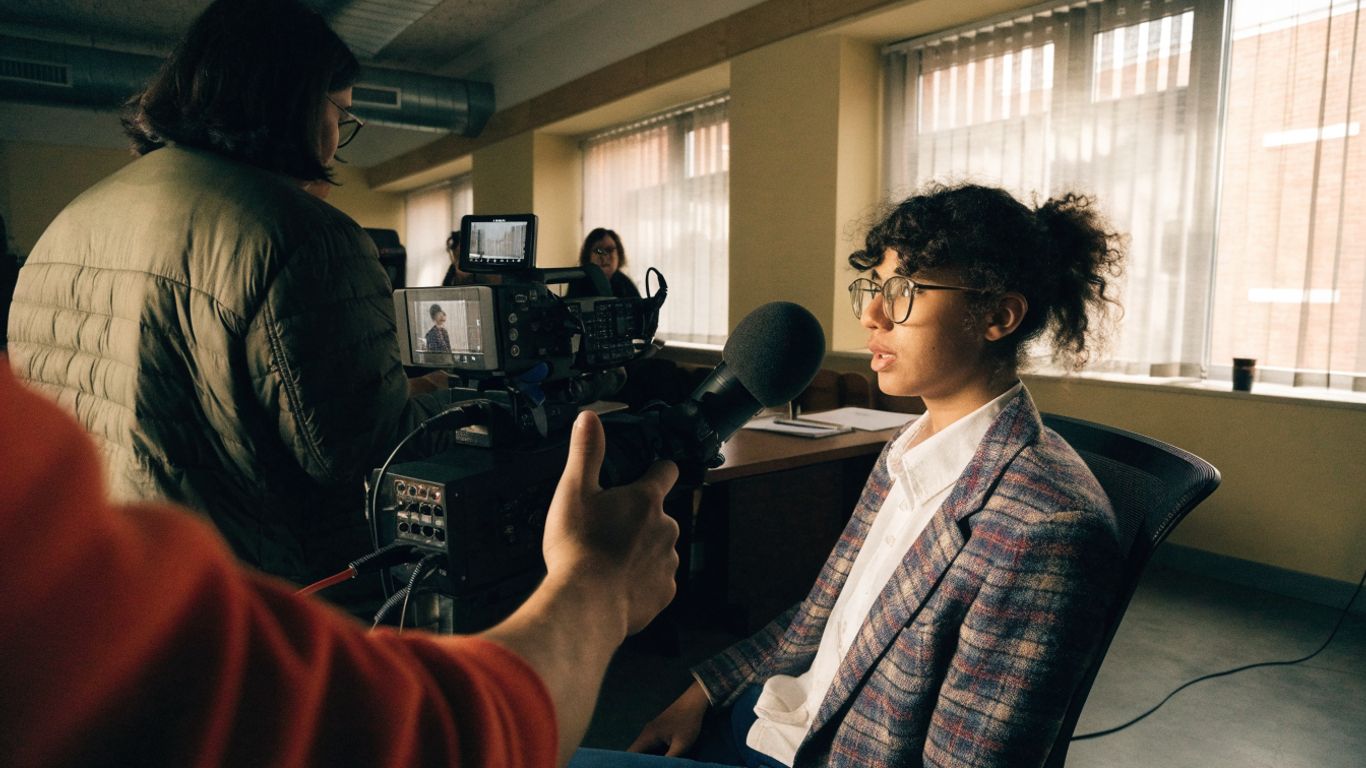
Directing helps performers, interviewees, and crew understand what a scene needs to communicate. Give practical guidance, then allow people enough room to respond naturally; overly polished delivery can make a genuine story feel stiff. Capture establishing shots and details that help viewers understand the setting, but make sure those images have a purpose in the edit. After a take, check whether the message is clear and whether anything important is missing.
Set up lighting, framing, and camera movement
Framing guides attention: the placement of a person or object can make a scene feel intimate, formal, or open. Lighting should make the subject easy to see while fitting the mood and the environment. Camera movement is most effective when it supports the action or helps reveal something, rather than drawing attention to itself. Review the frame for distracting backgrounds, reflections, and objects that appear to cut through a subject.
Record clear dialogue and on-location sound
Viewers may tolerate an imperfect image more readily than speech they cannot understand. Monitor dialogue through headphones, listen for traffic, air conditioning, room echo, and clothing noise, and capture a little quiet room tone where practical. When the location is unpredictable, record a backup if the setup allows it. Sound checks between takes take only a moment and can spare the team from discovering a problem during editing.
Manage the shoot day and review footage
Keep track of what has been captured, what still needs coverage, and whether the schedule remains realistic. Reviewing a few clips during breaks can reveal a focus, framing, or sound issue while there is still time to correct it. For an event or conference, VG Creations lists Event & Conferences among its offerings; a team working in that setting needs to stay alert to moments that happen only once. Close the day by confirming that files are backed up and the next steps are understood.
How post-production brings footage together
Post-production turns recorded material into a coherent viewing experience. Editors organize and review clips, build a sequence, refine its pace, and shape image and sound so the finished piece feels complete. It is also a stage for checking whether the video still serves the goal set during planning. Feedback works best when it is specific and tied to the agreed brief.
Organize footage and create a rough cut
Start by labeling and backing up media so the team can find the right takes without guesswork. Group footage by scene, interview, or subject, and note any technical problems or standout moments. The rough cut is a first pass at the structure: it tests what belongs, what is missing, and whether the story makes sense in sequence. It need not look polished yet; its job is to make the shape of the piece visible.
Refine the edit, pacing, and story
Once the sequence is working, editing can focus on clarity and rhythm. Remove repetition, preserve the moments that carry meaning, and allow important points enough space to land. Transitions should help viewers follow the story, not call attention to the editing itself. If a section feels confusing, first ask whether the order or context needs work before adding more material.
Add sound design, music, and color grading
Sound and image treatments can make separate shots feel like parts of one piece. Dialogue should remain intelligible, while music and effects should support rather than compete with the content. Color adjustments can help shots sit together and establish a consistent look, but the treatment should suit the footage and the project’s tone. These finishing decisions are most effective after the edit’s structure is stable.
Review revisions and prepare final versions
A review process benefits from one coordinated set of notes rather than scattered comments from several people. Ask reviewers to identify the moment they mean and the change they want, then resolve conflicting requests against the brief. Confirm spelling, names, graphics, and audio levels before approval. Leave time to create the agreed versions and check each exported file before delivery.
How to deliver and measure the finished production
A finished edit still needs to reach people in a form that works for its intended setting. Delivery may involve different lengths, aspect ratios, or technical specifications, depending on where the piece will appear. Accessibility and consistent branding are part of that handoff, not afterthoughts. Once the video is in use, its results can inform what to make next.
Adapt the video for web, social media, and broadcast
Confirm the requirements of each destination before exporting, since platforms and broadcasters can call for different dimensions, durations, or file settings. A longer edit may support a website or presentation, while shorter versions can serve specific placements. Keep the central message intact as versions change, and check that the opening works in each context. Maintaining a clear master file makes future adaptations easier.
Add captions, branding, and accessibility features
Captions help viewers follow dialogue when sound is unavailable and can support people who are deaf or hard of hearing. Review them for accuracy, timing, speaker changes, and readable line breaks. Add logos and other brand elements with restraint so they do not obscure key information. If the video includes essential visual information, consider whether narration or descriptive context is needed to make it understandable to more viewers.
Track engagement, conversions, and other KPIs
Choose measures that match the original purpose. Views and watch time can help indicate attention, while clicks, inquiries, sign-ups, or event actions may be more relevant when the video is meant to prompt a next step. Compare results across similar placements and time periods when possible, and be cautious about drawing strong conclusions from a single number. The findings are useful when they lead to a specific question for the next production.
Repurpose footage for future campaigns
A well-organized archive can make future work more efficient. Footage that was not used in the main edit may still support a short social post, a follow-up story, or an updated version, provided it remains accurate and appropriate. Keep notes on what was recorded, along with usage permissions and any relevant dates. Repurposing should extend the value of the material without making old details seem current when they are not.
Conclusion
Video and movie production works best when the story and the practical decisions support each other, from the first brief through filming, editing, and delivery. Clear goals give the crew a shared direction; careful preparation makes filming more focused; and thoughtful review helps the final piece reach viewers in a useful form. Treat each production as both a story and a set of choices, then use what you learn to make the next one stronger.
Frequently Asked Questions
What is video and movie production?
It is the process of planning, recording, editing, and delivering moving-image content, from short business videos to narrative movies. The stages and scale vary by project, but each needs a purpose and a workable approach.
What are the main stages of production?
Most projects involve planning, preparation, filming, post-production, and delivery. Some work moves between these stages as new information or creative needs emerge.
How long does a video production take?
Timing depends on the scope, number of filming days, locations, approvals, and editing needs. A concise project brief and a realistic review schedule help teams estimate the work more clearly.
What should be included in a production brief?
A brief commonly describes the goal, audience, message, format, tone, intended placement, scope, and approval process. It should give the crew enough direction to make consistent decisions without closing off useful creative ideas.
How do I choose the right video format?
Start with what the audience needs to understand and where they will encounter the video. Then choose a format that supports that purpose, such as an interview, commercial, documentary, event film, or narrative piece.
Why is sound important in video production?
Clear sound makes dialogue and other important audio easier to understand. Monitoring during filming can identify problems early, when they are simpler to address than after the shoot.
How can a finished video be measured?
Use measures tied to the video’s objective, such as watch time for attention or inquiries for a response-oriented project. Consider the viewing context and other campaign activity before attributing an outcome to the video alone.