Key Takeaways
Effective video production commercials begin with a clear business objective, not a camera setup. The strongest campaigns connect audience insight, creative discipline, careful production, and ongoing measurement.
- Define the audience, message, platform, and success metrics before filming.
- Build a simple creative idea that communicates value quickly.
- Plan locations, talent, equipment, timing, permissions, and contingency options.
- Use editing, sound, captions, and alternate cuts to improve usability across channels.
- Judge a production partner by both creative quality and commercial thinking.
Define the strategy before production begins
A commercial can look polished and still fail if it reaches the wrong people with an unclear promise. Strategy gives the production team a useful filter for every creative and logistical choice. Before discussing lenses or locations, establish what the viewer should feel, understand, and do. This foundation keeps video production commercials connected to business outcomes rather than treating the finished spot as an isolated asset.
Identify the target audience and customer insight
Start with the person you want to reach, not a broad demographic label. Consider the problem they are facing, the language they use, what they already believe, and what might make them pause while scrolling or watching. A customer insight should reveal a tension or desire that the commercial can make visible in a few seconds.
Audience research does not need to become a lengthy report. Conversations with customers, sales-team observations, search behavior, and existing campaign data can reveal the emotional detail that makes a concept feel specific. The more clearly the team understands the viewer, the less likely the script is to sound like it was written for everyone and therefore for no one.
Set campaign goals and measurable KPIs
A campaign goal might be awareness, qualified traffic, lead generation, event registration, or a direct sale. Each goal changes the role of the video and the evidence you need after launch. Set a primary outcome, then choose supporting measures such as completed views, landing-page visits, cost per lead, assisted conversions, or branded search activity.
The measurement plan should be agreed on before production begins. That makes it easier to create a useful call to action and prevents the team from celebrating views that do not contribute to the business objective. A strong creative brief explains what success looks like and how the campaign will be evaluated.
Choose the right commercial format and platform
The same idea may need a different treatment for connected television, a pre-roll placement, a landing page, or a vertical social feed. Duration, aspect ratio, sound behavior, viewing distance, and audience intent all influence the format. Plan the primary placement first, then identify practical adaptations that can be made from the same shoot.
A commercial intended to create broad awareness can stay high-level and memorable, while a lower-funnel version may need a clearer demonstration or offer. This is also a useful place to consult a commercial production guide when comparing formats, production stages, and measurement needs.
Develop the core message and brand promise
The core message should be expressible in one plain sentence. It needs to explain why the audience should care, what makes the brand credible, and what next step makes sense. Avoid filling the spot with every feature; a commercial earns attention by making one promise understandable and memorable.
Brand cues should support the message rather than interrupt it. Tone of voice, color, music, movement, and visual details can all make the promise recognizable without repeating the company name in every line. When the strategic message is settled early, creative decisions become faster and revisions become more focused.
Build a commercial concept that connects
Once the strategy is clear, the production needs a creative idea with enough shape to guide the work. A good concept is not merely a striking image; it gives the audience a reason to keep watching and gives the editor material to build a coherent sequence. It should also be practical enough to produce within the available time and resources.

Turn the marketing brief into a compelling creative idea
The brief becomes useful when it is translated into a human situation, a visual contrast, a surprising demonstration, or a character-led moment. Look for the simplest dramatic device that can carry the message. If the idea needs a long explanation before anyone understands it, it probably needs another round of refinement.
A strong concept can usually be described through its audience, tension, promise, and resolution. That short description gives the director, cinematographer, performers, and editor a shared north star. It also gives stakeholders something concrete to approve before money is committed to production.
Use storytelling to communicate value quickly
Commercial storytelling works under tight time pressure. Establish a recognizable situation, introduce a problem or desire, and move toward a satisfying change. The change might be practical, emotional, or visual, but it should make the brand’s role easy to understand.
Specific details help the story feel lived-in. A gesture, setting, sound, or brief line of dialogue can communicate more than a paragraph of narration. Clarity earns attention because viewers do not have to work to understand what the scene has to do with them.
Create a script, storyboard, and shot list
The script defines the spoken and visual argument, while the storyboard tests how that argument unfolds in time. The shot list then turns the idea into a production plan, covering framing, movement, action, sound, and necessary coverage. Together, these documents reduce ambiguity without preventing useful discoveries on set.
Treat them as working documents rather than ceremonial approvals. Mark the essential shots, optional shots, transitions, product details, and cutaways. That hierarchy helps the crew protect the central message if weather, timing, talent, or location conditions change.
Balance brand identity with audience expectations
A commercial should feel like the brand, but it should also respect the viewing habits of its audience. A formal financial-services message may require a different visual rhythm from a consumer lifestyle spot, even when both need authority and trust. Familiar brand elements are most effective when they are integrated into a natural story.
Consistency does not mean repetition. Preserve the brand’s recognizable tone, palette, and point of view while choosing a format that feels native to the platform. The result should be identifiable without looking disconnected from the environment where people encounter it.
Plan the production for quality and efficiency
Production planning turns a creative ambition into a sequence of achievable decisions. It is where the team protects quality by identifying constraints before they become expensive surprises. A thoughtful plan also gives clients a clearer view of where the budget is going and what trade-offs are available.
Select locations, talent, props, and production design
Every location carries practical and emotional consequences. Consider available light, sound conditions, power, parking, access, weather exposure, and whether the space supports the story. Talent should be chosen not only for appearance but also for suitability to the role, comfort on camera, schedule, and any required usage terms.
Props and production design should clarify the world of the commercial. A few intentional details usually work better than a crowded set. Build a visual reference that covers wardrobe, surfaces, color, objects, and spatial relationships so the finished footage feels deliberate.
Choose the right cameras, lighting, and audio approach
Equipment should serve the concept, location, movement, and delivery requirements. A camera package is only one part of the visual result; lighting, lens choices, stabilization, exposure, and focus discipline matter just as much. Decide early whether the spot needs a controlled studio look, naturalistic movement, or a combination of both.
Audio deserves equal attention. Dialogue, room tone, music, and effects all influence whether a commercial feels professional and easy to follow. A compact technical plan that anticipates difficult sound conditions can prevent a visually strong shoot from becoming difficult to use.
Build a realistic budget and production schedule
A useful budget separates creative priorities from optional flourishes. Account for crew, talent, location costs, equipment, art direction, transportation, insurance, post-production, music, licensing, and deliverables. The schedule should include setup, lighting changes, rehearsals, company moves, meal breaks, and enough time for safety checks.
A practical production schedule protects the shots that carry the message first. If time is lost, the team can reduce secondary coverage without sacrificing the commercial’s central idea. This is one reason a ranked shot list is more valuable than a long, undifferentiated list of wishes.
Prepare for permits, releases, and logistical risks
Permissions and releases should be handled before the shoot, not during the final export. Confirm location access, talent agreements, music rights, logos, vehicle use, and any restrictions on filming people or property. For public or sensitive locations, identify who can approve changes on the day.
Risk planning does not make a production pessimistic. It makes the team calmer when conditions change. Prepare backup locations, weather options, alternate blocking, spare media, equipment contingencies, and a clear contact chain for urgent decisions.
Capture footage that makes the brand memorable
The shoot is where the strategy becomes physical: a performance, a glance, a movement, or a carefully framed object. Good direction creates room for natural behavior while protecting the message and schedule. The best footage often comes from preparation, attentive observation, and enough flexibility to notice an honest moment.
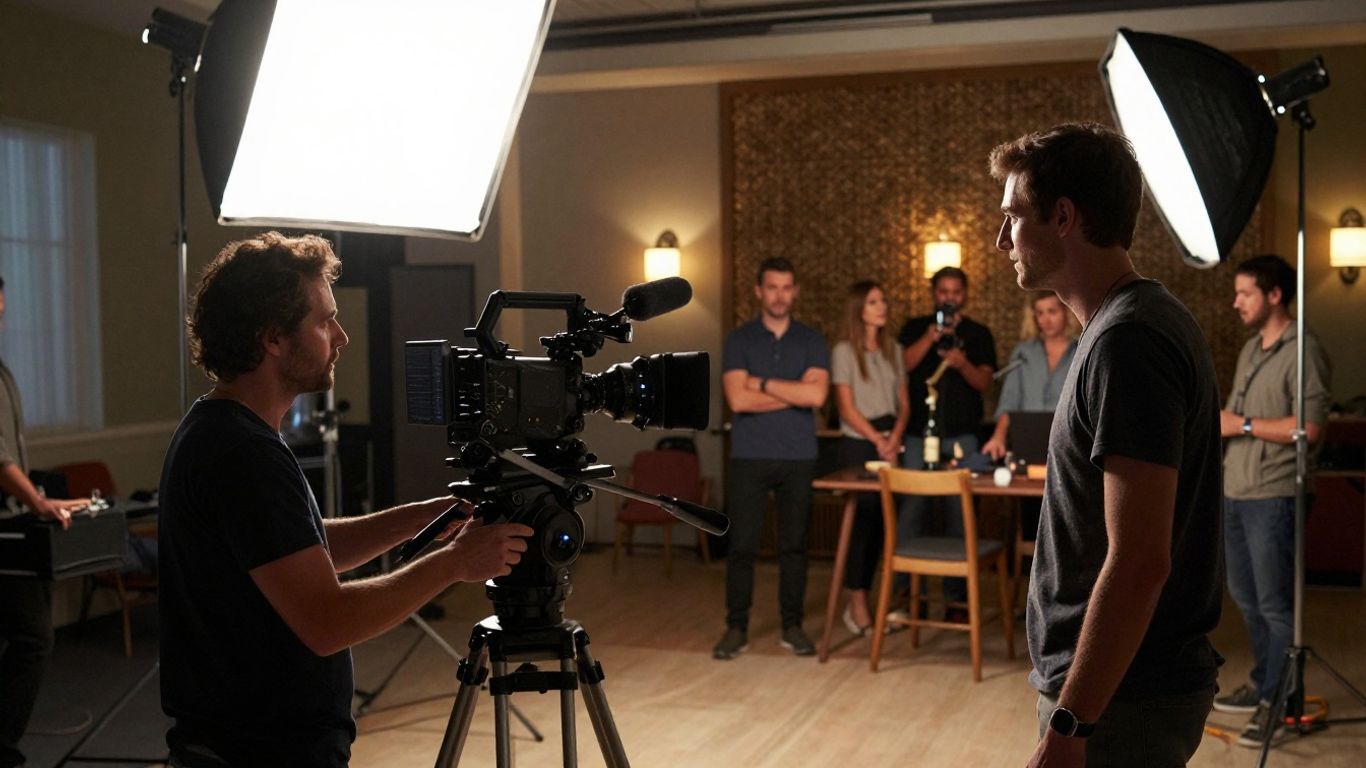
Direct performances for authentic on-camera delivery
Performers usually need a clear objective rather than a demand to “look natural.” Explain who they are speaking to, what they want, and what changes in the scene. Small adjustments in pace, posture, eye line, or emphasis can make a delivery feel more believable without making it feel over-rehearsed.
Give useful notes between takes and avoid changing several variables at once. A calm set helps talent stay present, especially when the script involves unfamiliar language or a product demonstration. Authenticity comes from specific direction and trust, not from abandoning direction altogether.
Use cinematography to shape mood and attention
Framing, camera movement, contrast, depth, and color all tell the viewer where to look and how to feel. A close frame can create intimacy, while a wider composition can establish scale or context. Movement should have a reason, whether it follows a person, reveals information, or creates energy.
Visual variety matters, but random variety weakens the edit. Design a progression of shots that supports the story’s emotional movement. When the cinematography follows the message, the commercial feels intentional even when the viewer cannot explain why.
Record clean dialogue, sound effects, and ambient audio
Clear dialogue is a basic requirement, yet it is often compromised by traffic, HVAC systems, reflective surfaces, or rushed microphone placement. Monitor levels throughout the shoot and record room tone for each meaningful setup. Capture useful production sounds as well, including handling, footsteps, doors, machinery, or other details that make the environment credible.
Music should not be used to conceal weak production audio. Plan how dialogue, music, effects, and silence will share space in the final mix. A quiet pause can be as persuasive as a louder musical lift when the story calls for it.
Capture multiple takes and flexible cutaway footage
Multiple takes give the editor options for timing, expression, continuity, and legal or brand review. Capture alternate deliveries when a line could work with different emphasis, but keep the intention of the scene consistent. Cutaways, inserts, reactions, and clean plates can also rescue an edit when a transition or performance needs support.
Do not gather coverage without purpose. Each additional shot should help with pacing, explanation, emotion, continuity, or platform adaptation. This approach creates flexibility while keeping the production efficient.
Use post-production to strengthen the message
Post-production is where separate moments become a persuasive viewing experience. Editing can clarify the argument, remove distractions, and create a rhythm that feels natural to the audience. It should not be treated as a rescue operation for a concept that was never clear.
Edit for pacing, clarity, and emotional impact
Start by protecting the story’s essential progression. The opening should establish relevance, the middle should build interest or understanding, and the ending should make the brand or action memorable. Remove attractive shots that slow the message or compete with the main idea.
Pacing is not simply speed. A fast sequence can feel flat if every shot has the same emphasis, while a short pause can give an important line room to land. Review edits without sound as well as with sound to see whether the visual argument remains understandable.
Add branded graphics, titles, and visual effects
Graphics should help viewers identify information, context, or a next step. Keep type readable at the intended viewing size and make sure animation supports, rather than overwhelms, the footage. Product details, legal language, and calls to action need enough screen time to be absorbed.
Visual effects can solve practical problems or add character, but they should remain consistent with the concept. A restrained system of transitions, icons, titles, and end frames usually gives a campaign more cohesion than a collection of unrelated tricks.
Use color grading and sound design to create consistency
Color grading brings shots from different setups into a common visual world. It can also shape the emotional temperature of a scene, from bright and open to intimate and restrained. The goal is not to make every frame identical, but to make the commercial feel like one intentional piece.
Sound design performs a similar unifying role. Dialogue cleanup, music editing, effects, and final mixing determine how confidently the spot moves from one moment to the next. VG Creations offers Video Editing Services, a documented service that fits this stage when a project needs dedicated post-production support.
Create alternate cuts for digital and social platforms
A master commercial rarely serves every placement without adjustment. Build alternate durations, aspect ratios, openings, end cards, and caption treatments into the post-production plan. Keep a record of which versions contain which claims, offers, music, and usage rights.
Repurposing works best when it is planned from the original shoot. Framing subjects with multiple crops in mind and capturing concise visual beats can make later adaptations feel native rather than hurried. A useful social video planning resource can help connect those adaptations to platform and audience choices.
Optimize commercials for distribution and performance
Distribution is part of the creative brief, not a final administrative step. A well-made commercial can underperform when it opens slowly, ignores sound-off viewing, or sends viewers to an unclear destination. Prepare each version for the conditions in which people will actually encounter it.
Adapt video length and format for each channel
Review the technical and behavioral requirements of every placement. Vertical, square, and horizontal versions may need different framing, not just a different export setting. A short cut should preserve the commercial’s central promise rather than simply removing random sections from the master.
Plan file naming, captions, thumbnails, end cards, and delivery specifications alongside the edits. This reduces last-minute confusion and makes it easier for a marketing team to publish the right version in the right place.
Improve the opening seconds for stronger retention
The opening must quickly establish relevance or create a question worth answering. Start with a meaningful action, a compelling visual, a direct audience tension, or a line that immediately changes the viewer’s expectations. Avoid spending the first moments on slow introductions that assume the audience has already chosen to stay.
Review early retention alongside the creative itself. If viewers leave before the promise becomes clear, the issue may be the opening structure rather than the entire concept. Small changes to the first shot, first line, or first sound can materially improve the viewing experience.
Include captions, calls to action, and brand cues
Captions make dialogue more accessible and help the commercial work when sound is muted. They should be accurate, legible, timed well, and placed where they do not cover important action. The call to action should tell viewers what to do next and make the destination easy to recognize.
Brand cues should appear early enough to build memory but naturally enough to avoid disrupting the story. A recognizable visual language, voice, product detail, or end frame can help viewers connect the message to the company before the final seconds.
Test creative variations and analyze campaign results
Testing is more useful when each variation has a clear hypothesis. Change one meaningful variable at a time where possible, such as the opening, offer, voiceover, length, visual emphasis, or call to action. Then compare results against the original KPI rather than relying on views alone.
VG Creations offers Social Media Marketing as a documented service, which can fit campaigns that need ongoing platform-focused content after the commercial is produced. The broader lesson is to treat performance data as feedback for the next creative decision, not as a verdict on one isolated video.
Choose the right video production partner
The right partner contributes more than cameras and editing software. They should understand the business reason behind the commercial, explain trade-offs clearly, and build a process that gives the creative room to work. A useful partner also makes responsibilities, approvals, timing, and deliverables visible from the beginning.
Review commercial portfolios and relevant industry experience
Look for work that demonstrates control of story, performance, sound, lighting, and pacing—not just attractive individual frames. Relevant industry experience can shorten the learning curve, especially when the project involves regulated claims, technical products, sensitive people, or complex locations.
Ask what role the prospective team played in each example. A portfolio should help you understand their creative judgment and production responsibility, not merely display work they happened to touch. VG Creations provides Video Production Commercials as a documented offering for businesses seeking professionally produced commercial content.
Compare production processes, communication, and timelines
Ask how the team moves from discovery to concept, pre-production, filming, editing, review, and delivery. Clear stages make it easier to spot decisions that need client input and to keep approvals from drifting. Communication should be predictable enough that stakeholders know when to expect updates.
Compare timelines by looking at what they include. A short promise may exclude concept development, revisions, licensing, captions, or alternate exports. A realistic schedule is usually more valuable than an impressive but vague turnaround claim.
Ask about revisions, licensing, and deliverables
Before signing, clarify how many review rounds are included, how feedback is consolidated, and what happens when the scope changes. Confirm ownership and usage rights for footage, music, talent, graphics, and final exports. Also list every expected deliverable, including resolutions, aspect ratios, captions, project files, and cutdowns.
These details protect the relationship as much as the budget. They also prevent a finished commercial from becoming difficult to publish because a required license or format was overlooked.
Evaluate how the team connects creative quality to ROI
A strong production partner can explain why a creative choice supports the audience, message, platform, or KPI. They do not need to promise a fixed result, but they should be comfortable discussing measurement and learning. Ask how they will use the brief, campaign context, and post-launch feedback to improve the work.
The best evaluation considers both immediate output and future usefulness. A well-planned shoot may create a commercial, cutdowns, stills, social assets, or other material that supports the wider marketing system. That is how production becomes a strategic investment rather than a one-time expense.
Conclusion
Video production commercials perform best when strategy, story, craft, distribution, and measurement are planned as one connected process. Define the audience and business goal first, build a focused concept, protect quality on set, and use post-production to make every second easier to understand. With the right partner and a disciplined testing plan, a commercial can become a durable marketing asset that supports trust, visibility, and growth.
Frequently Asked Questions
What is the main purpose of a commercial video?
A commercial video is designed to attract attention, communicate a focused brand or product message, and encourage a specific next step. Its purpose may be awareness, consideration, lead generation, sales, or another defined campaign outcome.
How long should a commercial video be?
The right length depends on the platform, audience behavior, message, and campaign goal. A master version can support several shorter edits, but every cut should preserve a clear promise and a useful ending.
What should be included in a commercial video brief?
Include the audience, business objective, core message, brand guidance, offer, platform, deliverables, timeline, budget, approval process, and success metrics. The brief should also identify any required claims, legal language, accessibility needs, or usage restrictions.
Why are storyboards and shot lists useful?
They translate a creative idea into visual and production decisions. Storyboards help test the flow, while shot lists help the crew prioritize essential coverage, manage time, and capture material that will support the edit.
How can a commercial improve viewer retention?
Make the opening relevant quickly, use clear visual or verbal tension, remove unnecessary setup, and maintain purposeful pacing. Testing different openings can reveal which version earns attention without changing the entire campaign.
Should one commercial be used on every platform?
Usually, the central idea can remain consistent while the execution changes. Aspect ratio, duration, captions, framing, sound behavior, calls to action, and viewing context should be adapted to each important placement.
How do you measure the ROI of a commercial?
Connect the commercial to a defined business outcome and track appropriate signals, such as qualified traffic, leads, conversions, assisted revenue, cost per action, or brand-lift measures. Interpret results in context rather than treating views as the only measure of success.