Key Takeaways
Choosing a video production company is easier when you evaluate strategy, creative fit, process, and long-term value together.
- Start with a clear business objective and a defined audience.
- Match the video format to the platform and the viewer’s context.
- Review relevant work, not only the most visually impressive reel.
- Clarify scope, budget, approvals, ownership, and delivery formats.
- Choose a partner who can support both the current project and future content.
Define your video goals and audience
A strong production begins before anyone picks up a camera. First, decide what the video needs to accomplish, who should respond to it, and where that response should happen. A useful video production guide can help organize these decisions before you contact a studio. The clearer the brief, the easier it becomes to compare proposals fairly.
Align the project with your marketing objectives
A video may support awareness, education, trust, recruitment, event promotion, or sales enablement. Choose one primary objective, then describe the action you want viewers to take after watching. That action might be visiting a landing page, requesting a consultation, registering for an event, or sharing the content internally. A production company should be able to connect its creative recommendation to that business purpose rather than treating the video as an isolated asset.
Identify your target viewers and platforms
Define the audience in practical terms: their role, concerns, familiarity with your offer, and reason for watching. Platform and viewing context matter just as much. Someone watching a short clip without sound on a social feed needs a different opening from a prospective client watching a detailed video on your website. Share these conditions during the first conversation so the team can plan framing, pacing, captions, length, and delivery versions around them.
Choose the right video format for your message
The format should make the message easier to understand. A testimonial can build credibility through a customer’s perspective, while a corporate video may explain an organization, its people, or its work. Event coverage, interviews, podcasts, livestreams, commercials, and social media content each create different production demands. If you are unsure, ask the company to explain why a format fits the objective instead of simply recommending the most elaborate option.
Set clear success metrics and KPIs
Decide how you will judge the project before production begins. Reach and impressions may matter for awareness, while watch time, completion rate, clicks, form submissions, registrations, or sales conversations may matter for a campaign with a direct response goal. Use a small set of meaningful measures, and establish where the data will come from. This keeps the creative discussion grounded without reducing the video to a single number.
Understand what a video production company offers
The phrase video production company can describe a full-service team, a specialized crew, or a small studio focused on one stage of the work. Ask what is included from the first idea through final delivery. VG Creations offers corporate videos, commercial videos, interview videos, podcast production, event and conference videos, healthcare videos, and social media marketing among its listed services.
Pre-production planning and creative development
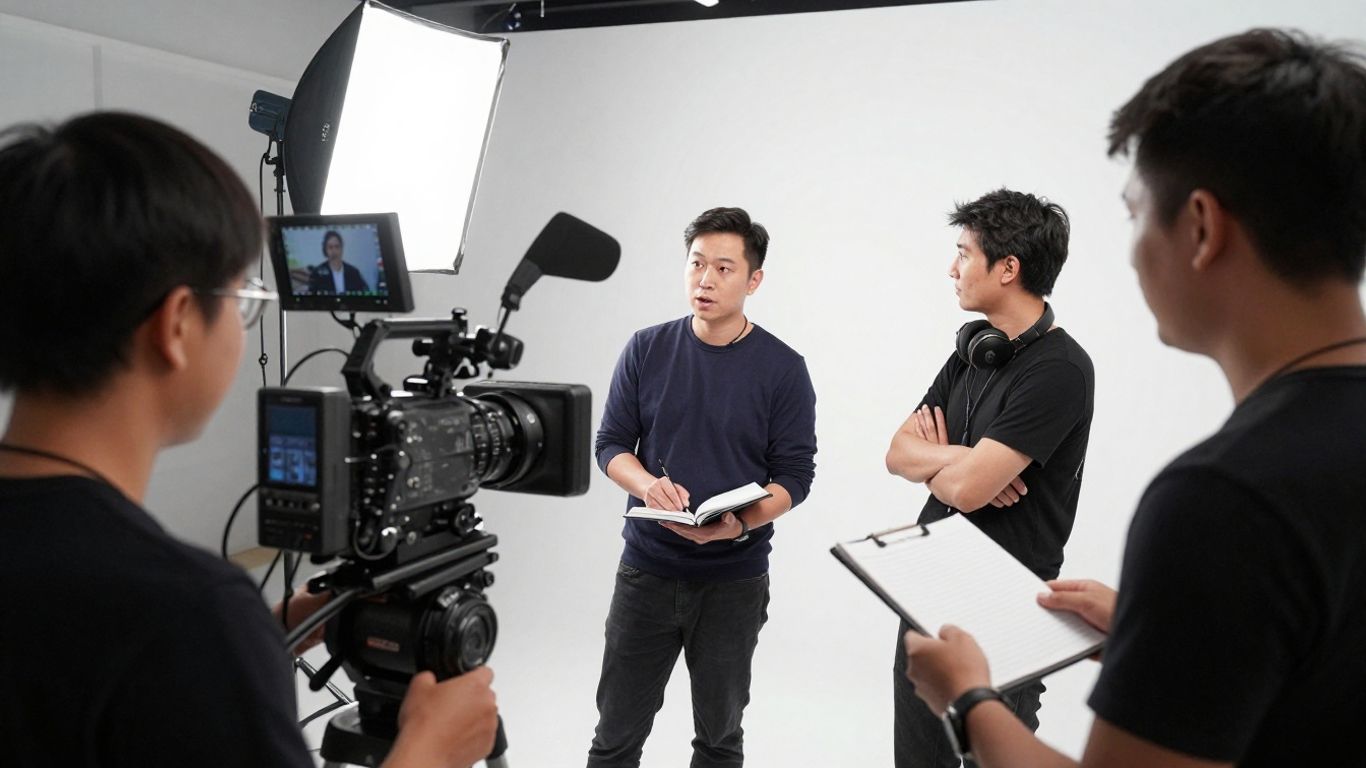
Pre-production is where the project becomes practical. It can include discovery, concept development, research, creative direction, scripting, interview planning, shot lists, location decisions, and scheduling. Ask who owns each decision and what you will receive for approval. Good planning does not remove creativity; it gives the creative work a clear connection to the audience and the available resources.
Filming, cinematography, and production services
Production covers the day or days when the footage is captured, but the quality of the experience depends on preparation. Discuss crew roles, camera approach, lighting, sound, direction, interview support, and how the team will handle changes on location. For event or livestream work, confirm how the company manages the pace and unpredictability of a live environment. The right questions reveal whether a team understands both the visual and operational sides of filming.
Post-production, editing, and motion graphics
Editing shapes the meaning of the material long after the shoot ends. Clarify whether the scope includes selecting interviews, assembling the story, sound work, color treatment, captions, music, graphics, and final exports. VG Creations lists video editing services and describes its post-production services as elevating the feeling of videos and brands so they resonate with audiences. Ask to see examples where editing improved clarity, not only examples with impressive effects.
Distribution support and social media content
A finished master file is not always the end of the job. You may need landscape, square, vertical, captioned, short-form, or platform-specific versions, depending on the campaign. Confirm which versions are included and whether distribution guidance is part of the engagement. The useful production company definition is broad, but your proposal should be specific about the work your team will actually receive.
Evaluate a company’s experience and portfolio
A portfolio should help you predict how a company might handle your project. Look beyond a polished homepage reel and ask to see complete examples, related formats, and work that involved similar constraints. You are evaluating judgment as much as camera quality: how the team finds the story, handles people, and turns a brief into a finished piece.
Look for relevant industry and project experience
Industry experience can shorten the learning curve, especially when the subject involves healthcare, finance, law, technical services, or regulated communication. Still, relevance does not mean the company must have copied your exact project before. Look for evidence that it can understand complex information, protect sensitive details, and communicate with the right level of confidence. Ask what the team learned from comparable assignments and how that experience would affect your production plan.
Assess storytelling, visual style, and production quality
Technical polish is only one part of the evaluation. Notice whether each video has a clear beginning, useful progression, and an ending that supports the intended action. Listen closely to dialogue and ambient sound, since weak audio can undermine otherwise strong images. Also compare the company’s visual style with your brand; a beautiful film that feels unlike your organization may not be the right fit.
Review testimonials, case studies, and client results
Testimonials can reveal how a team communicates, handles feedback, and behaves under pressure. Case studies are more useful when they explain the original objective, the production approach, and the client’s reported outcome rather than presenting a vague claim of success. Treat every result as specific to that client’s circumstances. Ask what was measured, over what period, and what part of the production the company actually controlled.
Confirm experience with your preferred video formats
Make a short list of the formats you need now and may need later. A team experienced with interviews may still need a different workflow for a livestream, event recap, podcast, or a series of social clips. Request examples in the relevant formats and ask how the crew, schedule, and post-production plan change between them. This prevents a strong general reel from disguising a narrow service fit.
Compare the production process and communication style
Two companies can offer similar services and create very different client experiences. The difference often appears in how they ask questions, explain tradeoffs, document decisions, and respond when plans change. During the sales process, pay attention to whether communication feels organized and collaborative rather than merely enthusiastic.
Discovery calls, concepts, and creative briefs
A discovery call should establish the business context before the creative treatment is finalized. Discuss the audience, message, references, stakeholders, distribution plan, and constraints. The resulting brief should give everyone a shared definition of the project, including what the video must say and what it should leave out. If a company rushes to a concept without learning these details, ask how it intends to protect strategic fit.
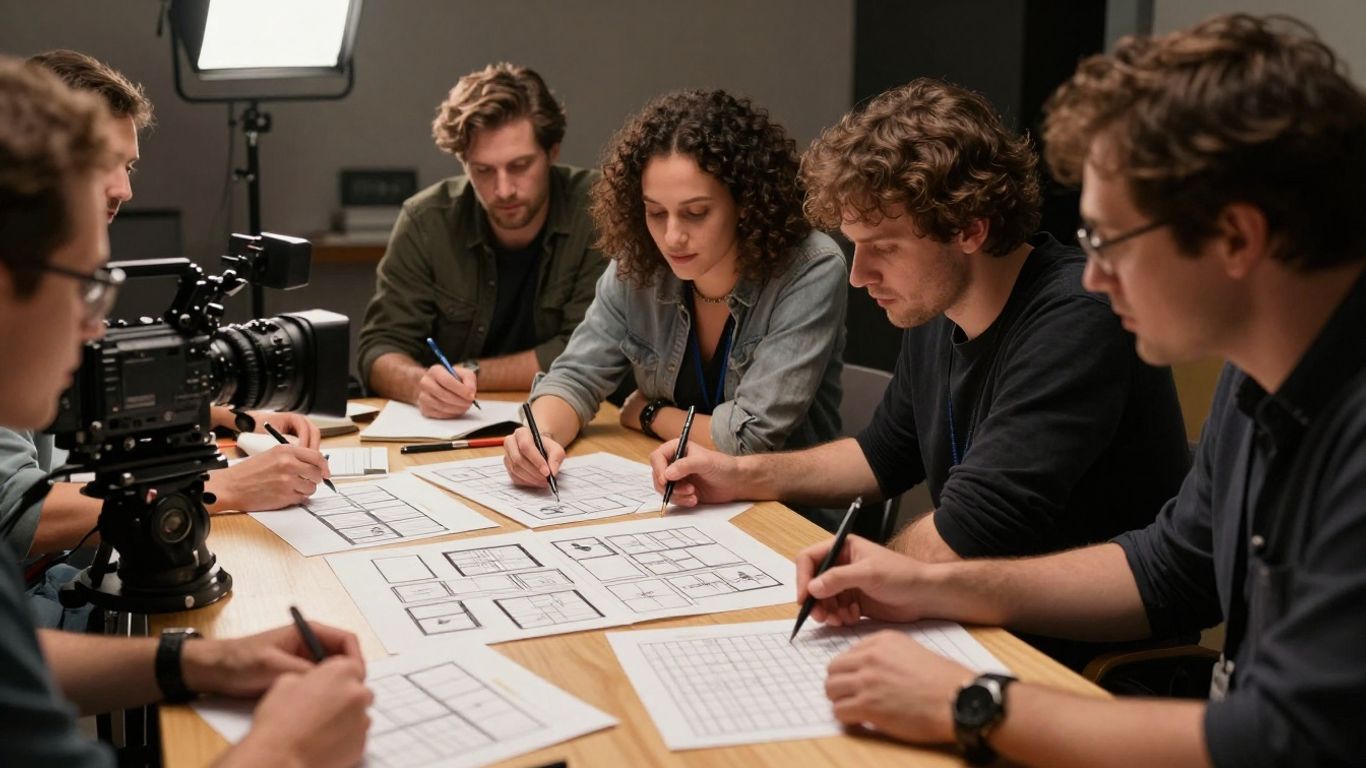
Scripting, storyboarding, and scheduling
Scripts and storyboards make assumptions visible while changes are still affordable. They can clarify interview questions, narration, visuals, locations, props, and timing. Scheduling then turns the creative plan into a workable production day, accounting for talent availability, travel, setup, lighting, and contingency time. Ask what requires your approval and when, because an unclear approval path can create avoidable delays.
On-set direction and project management
On set, professionalism matters as much as technical ability. The director or producer should help participants feel comfortable, keep the schedule moving, and explain meaningful changes without creating confusion. Ask who will be your main contact and who has authority to make decisions during production. A simple responsibility map can prevent several people from giving conflicting instructions.
Review cycles, revisions, and final delivery
Before signing, define how many review rounds are included and how feedback should be consolidated. One decision-maker or a clearly managed group is usually more efficient than scattered notes arriving at different times. The table below offers a practical way to compare proposals without treating price as the only variable.
| Proposal area |
What to clarify |
Why it matters |
| Creative scope |
Concept, script, storyboard, and direction |
Prevents different assumptions about the idea |
| Production scope |
Crew, equipment, locations, and shoot days |
Reveals what the quoted price actually covers |
| Post-production |
Editing, sound, graphics, captions, and exports |
Defines the finish level and usable deliverables |
| Feedback process |
Included rounds, deadlines, and approver |
Reduces delays and conflicting revisions |
Read the proposal alongside the schedule and revision terms. A lower quote may not be lower once missing deliverables, extra shoot time, or additional editing rounds are added.
Plan your budget, timeline, and logistics
A realistic plan protects both the creative quality and the working relationship. Production costs are shaped by the idea itself, but also by the number of shoot days, locations, people, equipment, travel, permits, post-production needs, and delivery versions. Share constraints early; a thoughtful team can often reshape the plan before those constraints become expensive problems.
Understand the factors that affect video production costs
A simple interview in one location has a different cost structure from a multi-location commercial with several talents and extensive art direction. Editing complexity, motion graphics, music licensing, special equipment, travel, and expedited delivery can also affect the estimate. Ask which assumptions drive the price and which items are allowances. This gives you room to prioritize the elements viewers will actually notice.
Request a detailed quote and project scope
A useful quote names the services, deliverables, schedule, payment terms, revision policy, and exclusions. It should distinguish between production expenses and optional additions. If the document uses broad phrases such as “full service,” request a line-by-line explanation. Clear scope is not bureaucracy; it is the basis for making informed tradeoffs when the project changes.
Plan locations, talent, equipment, and permits
Logistics deserve attention well before the shoot. Confirm who will secure locations, obtain releases, coordinate talent, arrange parking, manage equipment, and handle permits where needed. Consider accessibility, sound conditions, weather, power, privacy, and backup spaces. A short logistics meeting can save a production day from being consumed by issues that were visible in advance.
Set realistic turnaround times and approval deadlines
Build time for creative approvals, scheduling, filming, editing, feedback, and final exports. Your internal review process is part of the timeline, so identify decision-makers and reserve time on their calendars. If the video supports a launch or event, work backward from the true public deadline rather than the date you hope to have a first cut. Fast delivery is possible only when the scope and approvals support it.
Choose a long-term video production partner
The best partner is not necessarily the company with the biggest crew or the most dramatic reel. It is the team that understands your objectives, communicates clearly, and can produce useful assets without losing the character of your brand. A long-term relationship becomes more valuable when each project creates learning, reusable material, and a clearer process for the next one.
Confirm ownership, usage rights, and deliverables
Before production starts, confirm who owns the final video, raw footage, project files, music licenses, talent releases, and other components. Usage rights may vary by channel, territory, duration, or campaign type. Put the agreed deliverables and rights in the contract rather than relying on a conversation. This is especially important when the content may be reused for paid media, recruiting, events, or sales presentations.
Plan versions for websites, ads, and social media
Think beyond one master edit. A campaign may need a full-length website version, shorter paid placements, vertical social clips, captioned cuts, still images, or excerpts for email and sales outreach. Decide which versions are essential and which can be created later. Planning them during pre-production can influence how interviews are framed and how much supporting footage the crew captures.
Measure performance after the video launches
Set a review date after publication instead of judging the project only by personal opinions. Compare the agreed KPIs with actual viewing behavior, traffic, inquiries, registrations, or other relevant actions. Performance will also depend on the audience, offer, placement, and promotion, so interpret the result in context. The learning should inform the next brief, whether the outcome exceeded expectations or revealed a message that needs work.
Build an ongoing content strategy for future campaigns
A long-term partner can help you think in connected projects rather than one-off shoots. VG Creations describes its positioning around strategic video content, including brand, event, corporate, testimonial, livestream, podcast, photography, and social media content. Build a content calendar that reuses strong themes while giving each piece a clear role. That approach can make production more consistent and help your team get more value from each planned shoot.
Conclusion
Choosing the right video production company comes down to fit: fit with your goals, audience, working style, budget, and future plans. Compare the thinking behind each proposal as carefully as the images in each portfolio, then choose the team that can turn a clear strategy into dependable, useful content.
Frequently Asked Questions
What should I ask a video production company before hiring one?
Ask about relevant experience, project scope, timeline, crew, revision rounds, deliverables, usage rights, communication, and what is excluded from the quote. Also ask how the company will connect the creative approach to your business objective.
How much does professional video production cost?
Costs vary with the concept, locations, shoot days, crew, talent, equipment, travel, editing, graphics, licensing, and delivery requirements. A detailed scope is the best way to compare estimates accurately.
How long does it take to produce a brand video?
The timeline depends on the complexity of the concept, approvals, scheduling, filming, editing, and number of deliverables. Plan backward from the launch date and include time for internal reviews and revisions.
Should I choose a local video production company?
Local teams may simplify location planning, travel, and on-site coordination, but location should not be the only deciding factor. Evaluate creative fit, relevant experience, communication, and the ability to deliver the formats you need.
What belongs in a video production contract?
The contract should cover scope, schedule, payment terms, deliverables, revision rounds, cancellation terms, ownership, usage rights, music and talent licensing, raw footage, and final delivery specifications.
How many revisions should a video project include?
There is no universal number, but the agreement should define what counts as a revision and how feedback is collected. Clear approvals during scripting and editing can reduce unnecessary changes.
How can I measure whether a video worked?
Choose metrics that match the objective, such as watch time, completion rate, clicks, inquiries, registrations, qualified conversations, or sales activity. Review those measures alongside distribution, audience, and campaign context.