Key Takeaways
Choosing a local video partner is easier when the creative idea, production scope, and business purpose are clear from the start.
- Define the audience, message, format, and result you want before requesting proposals.
- Compare portfolios, industry experience, technical quality, communication, and local access.
- Ask what pre-production, filming, editing, revisions, and delivery include.
- Plan for Miami and West Palm Beach logistics, including weather, permits, sound, and accessibility.
- Build a distribution plan so one production can support websites, social media, advertising, and future campaigns.
Define your video production goals
A strong production begins with a decision about what the video needs to accomplish. You may want to explain a complex service, introduce a company, document an event, or give prospective customers a reason to trust you. The clearer that purpose is, the easier it becomes to choose a production style and partner. This local video production guide can also help organize your audience, budget, timeline, and distribution questions before outreach begins.
Identify your audience and business objective
Start with the viewer, not the camera. A prospective client may need reassurance, while an employee candidate may want a sense of culture and an event attendee may simply want to relive the experience. Write down the action you want after viewing, such as booking a consultation, requesting information, attending an event, or remembering your brand.
A useful brief names the audience, the problem they have, the point you want them to remember, and the next step. It keeps the shoot from becoming a collection of attractive shots without a clear business role.
Choose the right video format for your message
The format should follow the message. A testimonial can build trust through a customer’s experience, a corporate video can clarify an organization’s story, and event coverage can preserve energy that is difficult to communicate through still images alone. Interviews, commercials, podcasts, livestreams, and social media videos each create different demands for planning and editing.
Think about where the finished piece will live as well. A homepage video may need a measured pace and captions, while a short social clip needs a strong opening and a tighter structure. The right video production approach connects format, channel, and desired action rather than treating every project alike.
Set success metrics before production begins
Metrics give creative decisions a practical reference point. Choose measures that reflect the purpose of the project instead of collecting numbers simply because a platform makes them available. Awareness, qualified inquiries, watch time, registrations, completion rate, and sales-assist activity can all be useful when matched to the campaign.
Set a baseline where possible and decide when you will review performance. A brand story may be judged partly by quality engagement and assisted conversions, while a paid clip may be evaluated more directly through click-through and lead activity. The production team cannot guarantee a business result, but it can help you create assets that are easier to measure.
Align the concept with your brand identity
Your video should feel like it belongs to the organization before anyone sees a logo. Consider tone, vocabulary, color, wardrobe, locations, music, pacing, and the kind of people who should appear on camera. Authenticity usually comes from making those choices deliberately, not from leaving them to chance on filming day.
Share brand guidelines and examples early. When the concept fits your existing identity, the finished video can support recognition across campaigns instead of becoming a one-off visual experiment.
Explore the video production services available locally
Local production teams often cover more than a single type of shoot. A business may need a commercial today, interview footage next quarter, and event or social content throughout the year. Reviewing the full service mix helps you find a partner whose capabilities fit both the current assignment and the content plan around it.
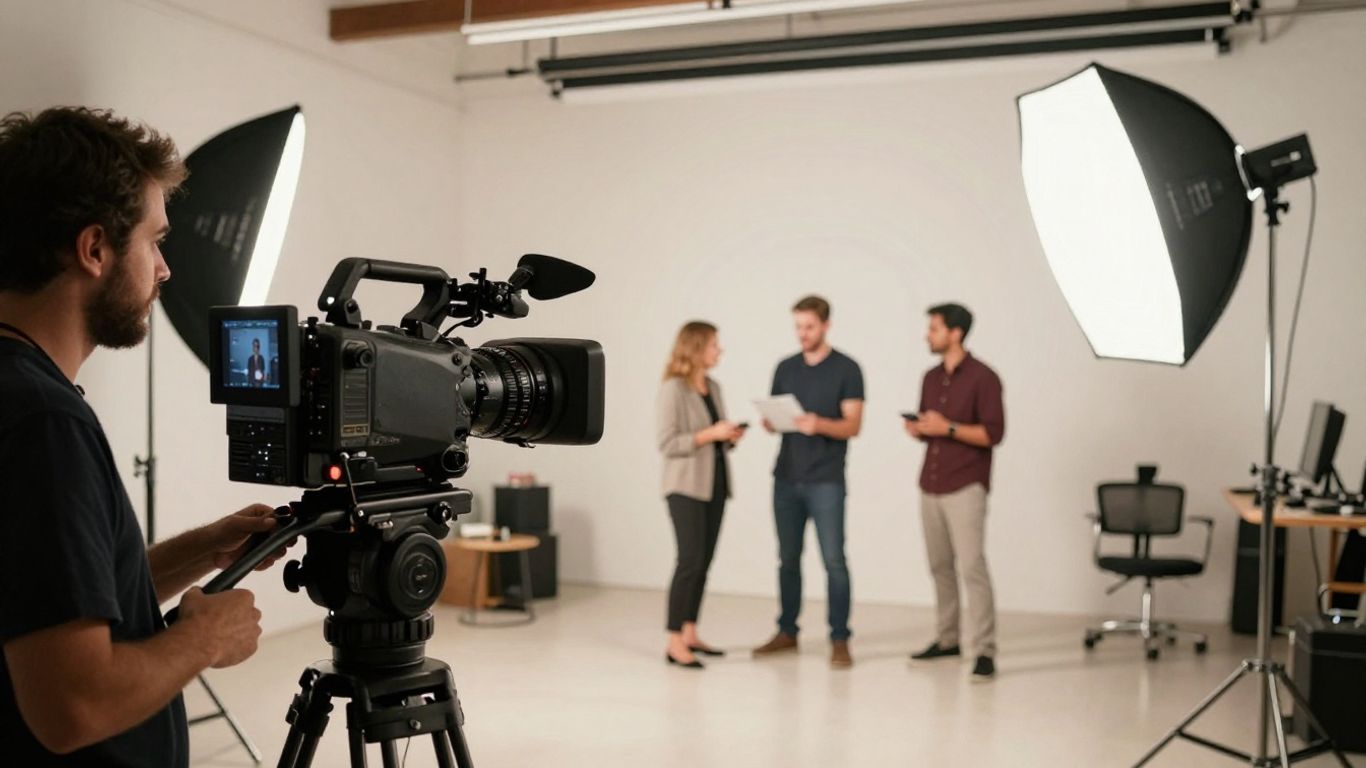
The service names are only a starting point. Ask how each service is planned, filmed, edited, delivered, and adapted for the channels you use.
Corporate and commercial video production
Corporate and commercial projects need a clear message, a controlled visual style, and a practical distribution plan. They may include brand stories, product or service explanations, recruiting material, or campaign creative. Ask whether the team can help shape the concept and script, or whether you are expected to arrive with every creative decision already made.
VG Creations lists corporate videos, commercial videos, and brand-focused cinematic production among its services. That makes it a relevant example for a business comparing local partners for a polished company or campaign film.
Testimonial and interview videos
Testimonials work best when the speaker sounds like a person rather than a script. Pre-interview questions can uncover useful details, while thoughtful direction helps the subject speak comfortably and specifically. Good production also gives attention to clean audio, flattering light, a suitable background, and enough time for natural answers.
Interview footage can serve more than one purpose. A full conversation may support a website, while shorter excerpts can help introduce a service or answer a common sales question.
Event and conference coverage
Event coverage requires more than placing a camera in the back of a room. The crew needs to anticipate entrances, reactions, presentations, networking, sponsor details, and moments that communicate the atmosphere. A schedule, shot priorities, audio plan, and permissions process help the team work without disrupting the event.
Ask whether the deliverable is a highlight film, a collection of speaker sessions, social clips, or a combination. Each choice affects crew size, recording time, editing, and delivery timing.
Podcast, social media, and live streaming production
Podcast and social production benefit from a repeatable setup. Camera placement, microphones, lighting, backgrounds, framing, and file organization should be consistent enough that future episodes or posts feel connected. Live streaming adds another layer of planning around internet reliability, monitoring, moderation, and backup procedures.
VG Creations describes podcast production as covering setup through post-production, and its service list also includes live streaming and social media marketing. Those documented services may suit a business that wants a connected production plan rather than isolated clips.
Healthcare, e-commerce, and training videos
Specialized videos require extra care with accuracy, privacy, product detail, and viewer comprehension. Healthcare organizations may need a calm, trustworthy presentation; e-commerce projects may depend on clear demonstrations; training videos need a logical sequence that people can follow and revisit.
Before filming, identify approvals, compliance considerations, product handling requirements, and accessibility needs. Captions, clear language, and organized chapters can make the final material more useful to a wider audience.
Evaluate a local video production company
A nearby company may be convenient, but proximity alone does not establish fit. Treat the evaluation as a creative and operational review: look at the work, ask how the team thinks, and confirm what will actually be delivered. You are choosing a collaborator for decisions that affect how customers experience the business.
Review its portfolio and visual style
Watch several projects from beginning to end rather than relying on a reel. Notice whether the story is easy to follow, whether the pacing serves the subject, and whether the visuals feel intentional. A strong portfolio should show consistency without making every client look identical.
Also ask to see work similar in scale and purpose to yours. A beautiful short film may not tell you much about a conference with multiple rooms or a recurring social content schedule.
Check experience in your industry
Industry experience can shorten the learning curve, especially when the subject involves technical language, sensitive information, or professional audiences. It should not replace curiosity, though. Ask how the team researches a topic and turns expert knowledge into language a viewer can understand.
For a practical comparison, review Florida video production considerations alongside each company’s portfolio. Local knowledge can matter when a project involves regional locations, permits, weather, or travel between South Florida communities.
Assess cinematography, audio, and lighting quality
Look closely at skin tones, exposure, camera movement, focus, and transitions. Then listen carefully. Uneven dialogue, room echo, distracting background noise, or music that overwhelms speech can weaken an otherwise attractive film. Lighting should support the subject and remain dependable across angles and locations.
Ask what equipment and crew roles the project needs, but do not make a gear list the entire decision. Technical choices matter because they serve the story, the environment, and the final distribution format.
Read client testimonials and case studies
Reviews can reveal how a team behaves when plans change. Look for comments about preparation, communication, direction, punctuality, editing, and responsiveness to feedback. Case studies are most useful when they explain the assignment and process rather than simply praising the finished video.
Treat individual client results as individual results, not promises. A production partner should be willing to discuss what it controlled, what the client handled, and how performance was assessed.
Confirm service areas and studio access
Confirm where the team regularly works and whether it has a suitable studio option. VG Creations identifies locations in Miami and West Palm Beach, with the West Palm Beach service area listed as Palm Beach County. A local base may simplify scouting, meetings, equipment movement, and last-minute adjustments.
Ask about travel fees, parking, load-in, studio availability, and backup plans. These details often matter more to the schedule than the distance shown in a search result.
Understand the local video production process
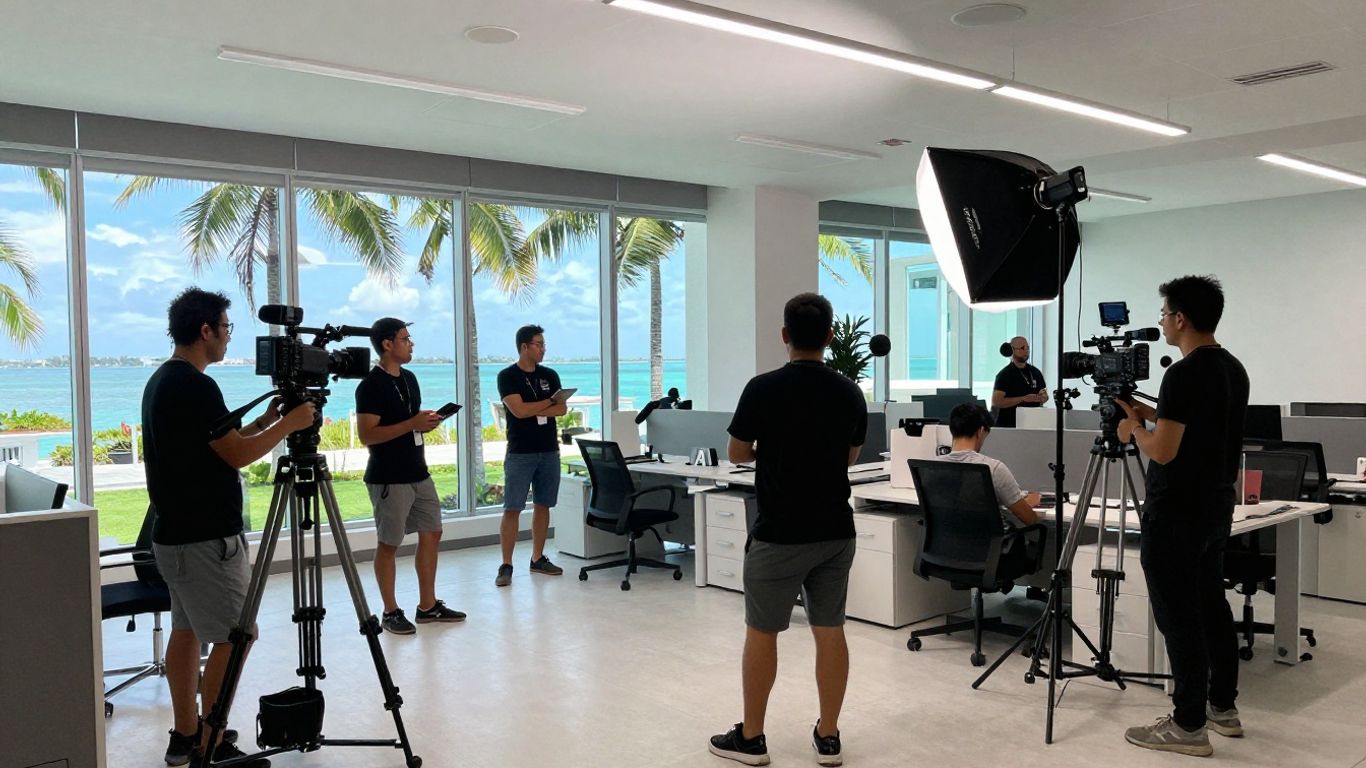
A smooth project usually follows a recognizable path, even when the creative work feels spontaneous. The early conversations establish the brief, the shoot turns that plan into usable material, and post-production shapes it into a finished asset. Knowing the stages helps you ask better questions and avoid surprises.
Request a quote and schedule a discovery call
Give the production company enough information to price the work responsibly. Include the purpose, format, locations, approximate filming hours, number of interviewees or speakers, expected deliverables, deadline, and distribution channels. A discovery call should clarify what is known, what still needs development, and who approves decisions.
VG Creations’ stated workflow begins with filling out a form and booking a discovery call with its director of cinematography. That first conversation is a useful place to test communication and determine whether the team understands the assignment.
Develop the creative brief and production plan
The creative brief turns a broad idea into an actionable document. It can cover the audience, key message, tone, references, script or talking points, locations, talent, schedule, shot list, and deliverables. A production plan then assigns responsibilities and identifies dependencies such as permits, releases, wardrobe, props, or product availability.
Keep room for discovery without making every decision vague. Clear decisions early give the crew freedom to focus on performance and visual detail once filming begins.
Prepare the location, talent, and filming schedule
Location preparation affects the image and the day’s pace. Walk through the space, listen for noise, check available power, identify natural light changes, and consider where people and equipment can move. Talent should know what to expect, including wardrobe guidance, arrival time, talking points, and the approximate length of the session.
A realistic schedule includes setup, lighting, sound checks, breaks, resets, and contingency time. Compressing every task into the exact filming window leaves little room for the unexpected.
Manage filming with an experienced production team
On set, the director or producer keeps the work aligned with the brief while the crew handles camera, lighting, and audio decisions. Good direction creates a comfortable environment for interview subjects and keeps the team alert to useful details that were not visible during planning.
Use a designated decision-maker from the client side. That person can give timely feedback without creating a competing set of instructions for the crew.
Complete editing, color grading, sound, and revisions
Post-production is where the material becomes a coherent story. Editing determines structure and pace; color work creates visual consistency; sound cleanup and mixing make dialogue easier to follow; music and graphics add context when they serve the message. Captions and alternate exports may also be needed for accessibility and distribution.
VG Creations describes video editing services that include storytelling and clarity, visual enhancement, audio work, platform optimization, branding, captions, and vertical, square, and horizontal exports. Confirm which of those deliverables apply to your project before the quote is finalized.
Plan your video production budget
A useful budget reflects the whole production, not just the hours a camera is recording. Pre-production, crew, equipment, locations, travel, editing, music, graphics, captions, and revisions can all affect the final figure. When comparing proposals, make sure each company is pricing a similar scope.
Understand the factors that affect pricing
Cost can change with the number of filming days, locations, speakers, crew roles, equipment needs, set design, complexity of the edit, and deadline. A multi-camera event or a commercial with several setups requires different resources from a single interview in a prepared room.
Rush work, travel, permits, specialized talent, licensed music, and animation may also need separate attention. Ask for assumptions in writing so a low initial number does not conceal missing work.
Compare project scope instead of headline rates
Two quotes can look far apart while describing different productions. One may include a complete creative brief, several lighting setups, a full edit, captions, and multiple exports; another may cover filming and a basic cut only. Compare the inclusions line by line.
A simple scope review can use the following questions:
- How many hours or days are included for filming?
- How many final videos, versions, and formats will be delivered?
- Who provides scripts, locations, talent, music, graphics, and captions?
- What level of editing, color, sound, and motion design is included?
This approach makes the decision less about a headline rate and more about the value of the finished package.
Account for pre-production and post-production costs
Pre-production may include discovery, creative development, scripting, scheduling, scouting, casting, permits, and shot planning. Post-production can include editing, graphics, audio mixing, color grading, captions, review rounds, and exports. Both stages shape the quality of the result, even though neither appears in the raw footage.
Ask whether the quote includes a producer or project manager. Clear coordination can prevent delays and reduce the cost of avoidable changes.
Prioritize deliverables that support your goals
Do not order every possible version simply because it is available. Choose deliverables that correspond to the channels and actions identified in your brief. A landing page may need one strong primary edit, while a campaign may benefit from several shorter cuts and different aspect ratios.
A focused package is often more useful than a large folder of material no one has assigned to a channel. You can always plan another production when the data shows what deserves more attention.
Clarify revision policies, usage rights, and timelines
Before signing, ask how many revision rounds are included, who consolidates feedback, and what happens when a change affects the approved concept. Confirm delivery dates for rough cuts and finals, along with the approval process and file formats.
Usage rights should cover the intended media, territory, duration, music, talent, and archival material. These details protect both sides and keep distribution from becoming an afterthought.
Choose the right filming location and production setup
Location is part of the message, but it is also a production decision. A real workplace can add credibility and context, while a studio can provide control and consistency. In Miami and West Palm Beach, the right choice also depends on traffic, weather, permissions, sound, and how easily the crew can move equipment.
Compare an on-location shoot with a studio session
On-location filming gives viewers a sense of place and lets the story unfold around real people, products, or processes. It may require more preparation because the environment can change and cannot always be controlled. A studio offers repeatable lighting, cleaner audio, and greater control over backgrounds and timing.
Choose based on the audience’s need for context. A location is valuable when place is part of the story; a studio may be more efficient when the priority is a consistent interview or product setup.
Prepare Miami and West Palm Beach filming locations
Visit potential locations before the shoot whenever possible. Look for visual depth, manageable background activity, reliable power, parking, loading access, and a quiet area for interviews. A local team familiar with Miami and Palm Beach County can help identify practical options, but the client still needs to confirm access with the property owner.
The Miami videographer planning guide offers a useful reminder to connect location choices with project scope, visual style, technical quality, and local logistics. Those considerations should appear in the production plan, not surface on filming day.
Plan for permits, weather, sound, and accessibility
Outdoor shoots need a weather plan, shade or rain protection, flexible timing, and a decision about when conditions require a move indoors. Sound deserves equal attention: traffic, air conditioning, construction, crowds, and wind can all affect interviews and narration.
Also consider ramps, elevators, restrooms, seating, parking, and the needs of anyone appearing on camera. Accessibility is both a practical responsibility and a way to make the production more welcoming.
Select equipment for cinematic and social-first content
Equipment should match the story and the delivery plan. Camera movement, lens choice, lighting, microphones, stabilization, and recording formats all influence what can be captured and how easily it can be edited. If you expect both horizontal website video and vertical social clips, frame subjects with those crops in mind from the beginning.
A good crew can explain tradeoffs without turning the conversation into a catalog of specifications. Ask how the setup supports clean audio, flattering light, reliable coverage, and efficient post-production.
Protect brand consistency across multiple locations
Multiple locations can make a campaign feel varied without making it feel disconnected. Use consistent wardrobe guidance, color references, graphics, music direction, framing principles, and interview preparation. Keep approved logos and brand elements organized so every editor and shooter works from the same source.
Consistency does not mean every shot should look identical. It means the viewer can move from one asset to the next and still recognize the same organization.
Turn one production into ongoing marketing content
The most efficient productions are planned with reuse in mind. A carefully prepared interview, event, or brand shoot can produce a primary film plus supporting assets for several channels. This is where a video becomes part of a marketing system rather than a file that is published once and forgotten.
Create versions for websites and landing pages
Begin with the primary viewer journey. A homepage edit may introduce the company, while a service-page video can address a specific question or objection. Keep the opening focused, provide captions where appropriate, and place the call to action near the point where the viewer is ready to act.
Ask for web-ready exports and a naming system that makes future use clear. Organized files help marketing teams publish, test, and update content without returning to the original project every time.
Adapt footage for social media platforms
Social edits need more than a simple crop. Rebuild the opening for smaller screens, keep the main idea visible quickly, use captions, and choose a length that suits the platform and audience behavior. Vertical, square, and horizontal versions may each need different framing and pacing.
A production plan should reserve clean moments, reaction shots, details, and concise statements that can stand alone. That preparation makes social adaptation faster and more coherent.
Produce clips for paid advertising campaigns
Paid placements benefit from a direct proposition and a clear next step. Pull clips that answer a specific customer concern, introduce a benefit, or establish credibility quickly. Create variations in opening, length, and call to action so performance can be compared fairly.
Do not assume that the most cinematic moment will be the strongest ad. Review results by audience, placement, watch behavior, and conversion activity, then use those findings to guide the next edit or shoot.
Repurpose interviews and events into short-form content
An interview can yield topic clips, customer questions, quote-led edits, and educational snippets. Event footage can become a highlight film, speaker excerpts, attendee reactions, behind-the-scenes moments, and invitations for the next gathering. Select clips that each make one complete point.
Keep releases, speaker permissions, music rights, and branding organized as you repurpose. A short asset still needs to be cleared for the channel where it will appear.
Measure performance and improve future productions
Review performance by asset and by purpose. Watch time may reveal whether the opening works, while click or inquiry data can show whether the next step is clear. Qualitative feedback from sales, customers, event teams, or internal stakeholders can explain results that a dashboard cannot.
Use the findings to refine the next brief: change the opening, adjust the length, record clearer answers, capture more usable cutaways, or plan different deliverables. That feedback loop turns local video production into an ongoing process of learning and improvement.
Conclusion
Finding the right video production near me is less about choosing the closest camera crew and more about finding a partner that understands your audience, message, workflow, and distribution plan. Define the business objective, compare complete scopes, inspect the work closely, and plan local logistics before filming. With that foundation, one well-made production can keep supporting trust, visibility, and sales long after the shoot is over.
Frequently Asked Questions
How early should I book a local video production company?
Book as early as the project allows, especially for events, outdoor shoots, multiple locations, or campaigns with fixed launch dates. Early planning leaves time for creative development, scouting, permits, scheduling, and revisions.
What should I include when requesting a video production quote?
Include the objective, audience, format, locations, filming dates, estimated hours, number of speakers, desired deliverables, distribution channels, and deadline. The more complete the brief, the more useful the comparison will be.
How do I know whether a video production company is a good fit?
Review its portfolio, storytelling, technical quality, relevant experience, communication style, process, and client feedback. Ask questions about scope, revisions, usage rights, delivery, and who will manage the project.
Is a studio better than filming at my business?
Neither is universally better. A studio offers greater control over lighting, sound, and background, while a business location can add context and authenticity. Choose the environment that supports the message and practical needs of the project.
What affects the cost of video production?
Filming days, crew size, locations, equipment, travel, permits, talent, creative development, editing complexity, graphics, music, captions, revisions, and turnaround time can all affect cost.
Can one video shoot create content for multiple platforms?
Yes, when the production is planned for reuse. A shoot can generate a primary edit, shorter clips, social versions, advertising variations, and supporting footage, provided the framing, permissions, and deliverables are considered early.
What should happen after the video is delivered?
Publish it in the channels connected to the original objective, monitor meaningful performance, collect feedback, and document what worked. Those findings can improve future briefs, shoots, edits, and distribution decisions.