Key Takeaways
Choosing a local video team is less about finding the closest studio and more about finding a partner that understands your business goals.
- Define the audience, purpose, budget, and timeline before requesting proposals.
- Compare services such as corporate videos, testimonials, event coverage, podcasts, and social content.
- Review portfolios for storytelling, technical quality, and experience in relevant industries.
- Clarify the local production process, communication style, revisions, and delivery schedule.
- Plan distribution from the beginning so one production can support several marketing needs.
Define your video goals before contacting a production company
A strong production usually begins before anyone turns on a camera. You need a clear reason for making the video, a specific audience in mind, and a practical idea of where the finished piece will appear. This early clarity helps a production company recommend the right scope rather than simply offering the largest possible package. A useful video production planning guide can also help organize those decisions before the first call.
Match the video format to your business objective
Different formats do different jobs. A corporate video may explain your company and its expertise, while a testimonial can build trust through a customer’s experience. Event footage can extend the value of a conference beyond the room, and a short social clip may be designed to earn attention quickly. Start with the business objective, then choose the format that gives viewers a natural next step.
A brand story may need a more spacious, human approach, while a product or service video may benefit from a direct structure. If the goal is recruitment, internal training, sales enablement, or awareness, tell the production team early. That context shapes the interview questions, locations, pacing, and final deliverables.
Identify your target audience and distribution channels
The same story can feel very different on a website, at a trade show, in an email, or in a vertical social feed. Describe who should watch, what they already know, and what you want them to understand or do afterward. Distribution also affects framing, duration, captions, aspect ratio, and whether the video needs several cutdowns.
Try to name the primary channel instead of saying that the video will be used everywhere. A production team can still create adaptable assets, but a clear first destination makes creative decisions more disciplined. It also prevents the finished piece from becoming a compromise that fits no platform especially well.
Set a realistic production budget and timeline
A budget is not only a number for filming. It can include creative development, crew, equipment, locations, talent, travel, editing, sound, color, graphics, licensing, and revisions. Give potential partners enough information to distinguish what is essential from what would simply be nice to have. That makes proposals easier to compare and reduces surprises later.
Timeline matters just as much. A shoot date may be easy to reserve, but approvals, interview preparation, location access, and post-production can take longer than expected. Build in time for feedback and legal or brand review, especially when several departments need to approve the final cut.
Choose the success metrics that matter, including ROI and engagement
Decide how the video will earn its place in your marketing plan. Depending on the objective, useful measures may include qualified inquiries, watch time, completion rate, event registrations, sales conversations, page engagement, or internal adoption. A view count can be helpful, but it rarely tells the whole story by itself.
Tie each metric to a business question. Are viewers reaching the call to action? Are prospects spending more time with a service page? Is a testimonial helping a sales team answer a common objection? Clear success criteria give the production team a sharper creative brief and give your team a fairer way to judge the investment.
Compare video production services near you
Local production companies often offer overlapping services, but their strengths and workflows can vary widely. Compare what each team actually produces, how involved it is in strategy, and whether its process fits the scale of your project. A polished reel is a starting point, not proof that a company is right for every assignment.
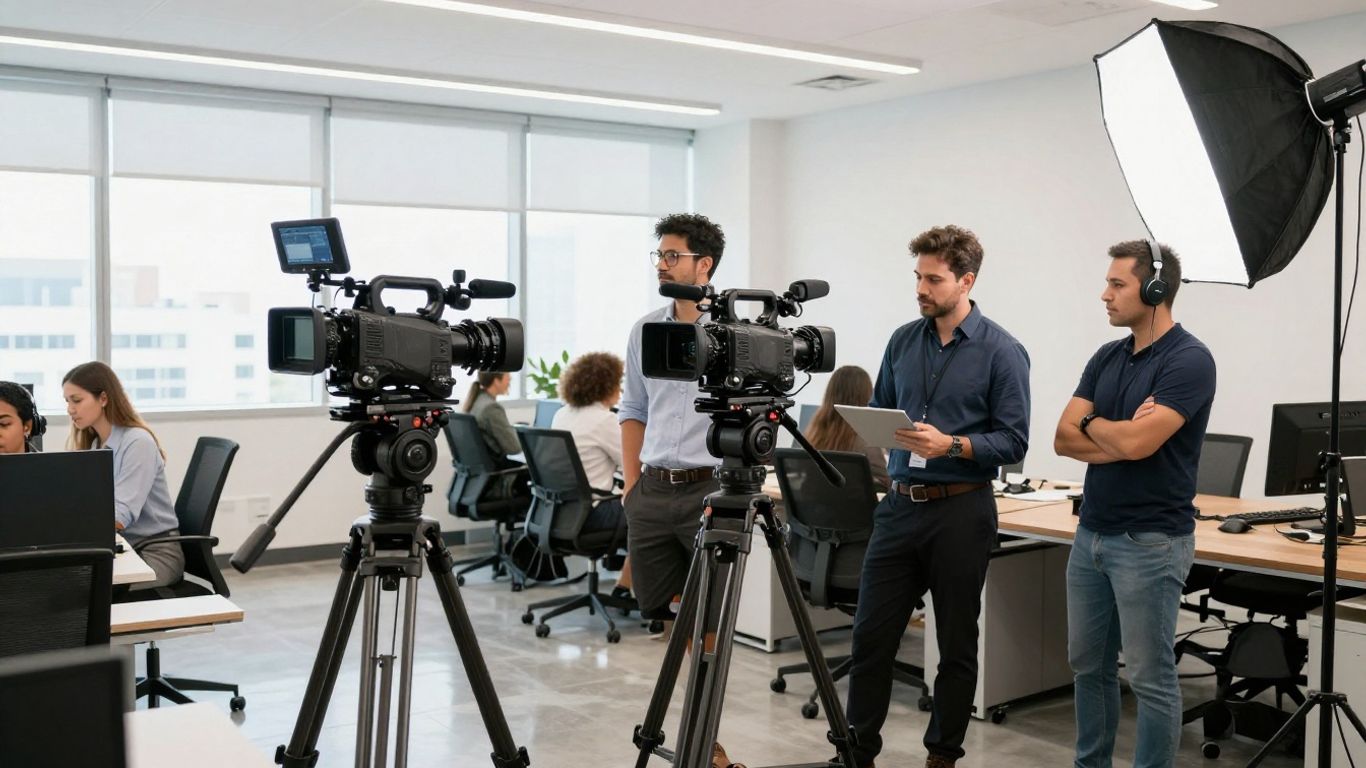
The following categories can help you sort your shortlist. You may need one service or a combination, but the distinction makes it easier to ask focused questions.
Corporate and commercial video production
Corporate and commercial work can range from a concise campaign spot to a deeper film about a company’s people, service, or point of view. Ask whether the team can translate your positioning into a clear visual story, not just capture attractive footage. The right approach should reflect your audience and the action you want them to take.
VG Creations provides corporate video production and commercial videos, both of which fit projects that need a polished presentation of a business or offer. When comparing a proposal, ask how concept development, filming, and post-production will connect to the intended marketing use.
Interview, testimonial, and documentary videos
Interview-led work depends on more than a camera and a list of questions. The director needs to create a comfortable setting, listen for useful details, and shape real experiences into a coherent story. Testimonials are especially sensitive: the strongest moments usually sound like the speaker, rather than like copy written by a brand.
Documentary-style projects may require more time for observation, location work, and editorial discovery. Ask to see examples with a similar emotional or informational purpose. It is also worth confirming how subjects are prepared and how factual or legal review will be handled.
Event, conference, and live-streaming coverage
Event video requires planning around a schedule that will not wait for a second take. A capable team should understand room layouts, stage lighting, audio feeds, speaker timing, audience movement, and the possibility of changing conditions. For live streaming, ask about the complete technical plan, backup procedures, connectivity, and how recordings will be delivered afterward.
VG Creations offers event coverage and live streaming, services that can help businesses preserve conference moments and extend an event’s reach. Discuss the desired outputs before the event, such as a highlight film, speaker edits, social clips, or a full recording, so the crew can capture the right material.
Video podcasts, social media content, and branded campaigns
Podcast production and social content often reward consistency as much as one impressive episode. Consider whether the team can establish a repeatable setup, capture clean audio, and create useful edits for the channels where your audience already spends time. For a branded campaign, ask how individual pieces will relate to one another across the release schedule.
VG Creations provides podcast production and social media content creation. Its knowledge base describes podcast work from setup through post-production, so those are appropriate capabilities to discuss when comparing a local partner. You can also review social media video production for ideas about adapting a larger story into platform-specific assets.
A simple comparison can keep early conversations grounded in practical differences:
| Service |
Questions to ask |
Useful output |
| Corporate or commercial |
Who leads the concept and creative direction? |
Brand film, campaign video, or service overview |
| Testimonial or interview |
How are subjects prepared and interviews shaped? |
Trust-building customer or leadership story |
| Event or live stream |
How are audio, timing, and backups handled? |
Highlight film, recording, or live broadcast |
| Podcast or social content |
Can the shoot support recurring edits and formats? |
Episodes, clips, reels, or short-form cutdowns |
The best match is the one whose service model supports your objective and distribution plan. Price still matters, but it should be considered alongside scope, reliability, and the amount of usable content the production can create.
Evaluate a local production company’s creative quality
Creative quality is easier to judge when you look beyond the opening seconds of a reel. Watch several complete pieces and pay attention to whether the story remains clear, the sound stays consistent, and the visuals serve the message. A local team should be able to explain its choices in plain language rather than relying on style alone.
Review its portfolio for relevant industries and styles
Search for work that resembles your situation, not only work that looks impressive. A healthcare organization may need a different level of care and clarity than a lifestyle brand; a conference organizer may value timing and coverage more than elaborate sets. Relevant examples reveal whether the team understands your audience, environment, and approval process.
Ask to see full projects where possible. Short reels can hide uneven pacing or weak endings, while complete videos show how the team handles structure. Look for variety within a consistent standard, especially if you expect to produce several kinds of content over time.
Assess cinematography, storytelling, and brand consistency
Cinematography includes composition, camera movement, lighting, color, and the way images guide attention. Those choices should make the brand feel credible and distinct, but they should not overwhelm what the viewer needs to learn. Strong storytelling gives every shot a reason to be there.
Brand consistency matters across locations and formats. Check whether logos, colors, language, wardrobe, environments, and tone feel intentional. A production partner should be able to preserve recognizable brand qualities while adjusting the visual treatment to fit a testimonial, event, commercial, or social edit.
Check the quality of editing, sound design, and post-production
Many production problems become visible after filming. Listen for clear dialogue, balanced music, natural room tone, and transitions that do not distract from the speaker. Watch for clean graphics, thoughtful pacing, consistent color, and captions that are accurate and readable.
Ask how feedback is collected and how many revision rounds are included. You should also understand who handles color correction, sound mixing, motion graphics, captions, exports, and file organization. VG Creations describes post-production services as a way to improve how a video feels and how it resonates with its audience, making this a useful area to discuss during a proposal review.
Look for experience with healthcare, e-commerce, and corporate brands
Industry experience can shorten the learning curve, but it should not become a substitute for good creative judgment. Healthcare work may call for careful language and privacy awareness. E-commerce content often needs to show products clearly and support a buying decision, while corporate work may involve multiple stakeholders and a more formal review process.
Ask what the team learned from comparable projects and how it handled constraints. You do not need an identical case study. You do need evidence that the production company can listen, ask sensible questions, and adjust its process to the realities of your organization.
Understand the local production process
A smooth production process makes creative work easier. It gives everyone a shared understanding of what is being made, who is responsible for each decision, and when feedback is due. Before hiring a team, ask for a plain-language explanation of the stages from first conversation through final delivery.
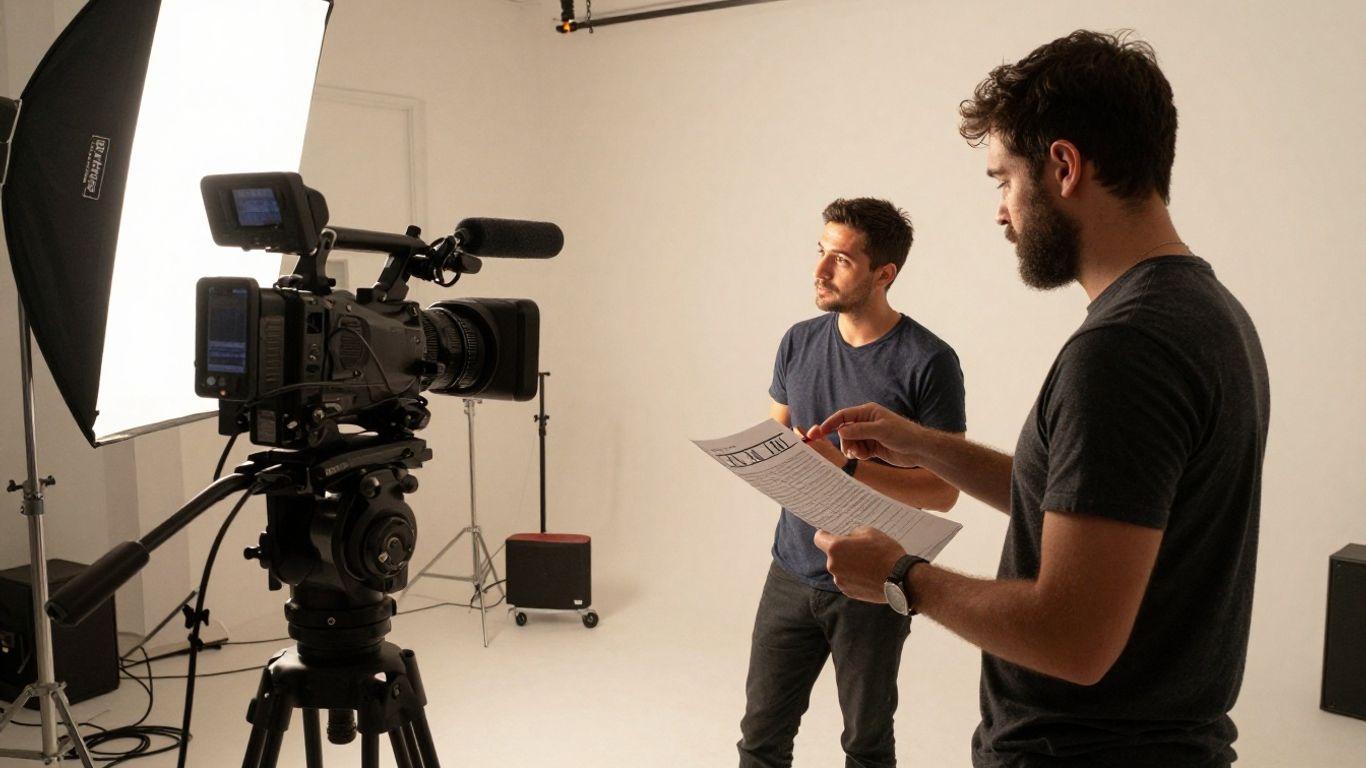
You can also watch a broad video production fundamentals resource to become familiar with common creative and technical terms. You do not need to become a filmmaker, but knowing the vocabulary helps you ask better questions.
Start with a discovery call and creative brief
The discovery call should cover your business objective, audience, message, references, schedule, budget range, and distribution needs. It is also a chance to see whether the team listens well and asks questions that improve the assignment. A creative brief turns that conversation into a working document that the wider crew can use.
Try to leave the call with a shared definition of success. If the project is intended to build authority, clarify what expertise needs to come through. If it supports sales, identify the objections or decisions the video should address. These details keep the creative work connected to the business purpose.
Develop the concept, script, and production plan
Once the direction is agreed, the team can develop a concept, outline, script, storyboard, or shot list. Not every project needs a fully scripted treatment, but every project benefits from knowing what must be captured. Review the approach before filming so major changes do not arrive after the crew has been booked.
A production plan should also identify deliverables, formats, locations, contributors, equipment needs, and approval points. This is where a broad idea becomes a practical assignment. Give stakeholders a clear moment to respond, then avoid reopening settled creative decisions without a reason.
Coordinate locations, talent, equipment, and scheduling
Pre-production is often where local knowledge pays off. Confirm who is securing locations, permissions, releases, talent, props, wardrobe, parking, power, and access. Even a small interview shoot can become stressful if the room is noisy, the subject has limited availability, or the schedule leaves no time for setup.
Use a call sheet or shared schedule when several people are involved. Include arrival times, contact details, scene order, breaks, and contingency plans. The more specific the plan, the more attention the crew can give to the people and story in front of the camera.
Manage filming, editing, feedback, and final delivery
On filming days, a good team keeps the schedule moving while leaving enough room for useful discoveries. Afterward, editing turns the recorded material into a story, usually through a rough cut, feedback round, and final polish. Agree in advance on who consolidates comments so the editor is not receiving contradictory notes from several channels.
Final delivery should be defined as carefully as the shoot. Confirm file formats, resolutions, captions, aspect ratios, thumbnails if needed, music licensing, and where the master files will live. VG Creations describes a workflow that moves from a discovery call to planning and strategy execution, which is a useful structure to look for when assessing how a local team organizes its work.
Decide whether a nearby team is the right fit
Proximity can make collaboration easier, but it is not automatically the deciding factor. A nearby team may offer simpler location access, in-person planning, and faster responses when a shoot changes. Still, the team must also understand your business and communicate clearly throughout the project.
Consider location access in Miami and West Palm Beach
Miami and West Palm Beach offer varied environments, from offices and studios to outdoor, hospitality, and event locations. Local familiarity can help with scouting, travel planning, weather considerations, and realistic scheduling. It may also make an in-person creative session practical when the project benefits from seeing the space together.
VG Creations has locations in Miami and West Palm Beach, with its Miami studio described as supporting cinematic brand videos, music visuals, event coverage, and social media content. Its West Palm Beach service area includes cinematic brand content, commercial videos, event coverage, photography services, and social media visuals. Those documented local services may be relevant when your production needs South Florida access.
Evaluate communication, collaboration, and responsiveness
Pay attention to how a company communicates before you sign. Are questions answered directly? Are next steps documented? Does the team make room for your expertise while still offering a clear creative point of view? These small interactions often predict what the project will feel like once deadlines become real.
Ask who your main contact will be and who has final creative responsibility. A compact team can be highly collaborative, while a larger operation may offer more specialized roles. Neither model is automatically better; the important thing is knowing how information moves between you and the crew.
Confirm turnaround times and revision policies
Turnaround should be discussed in relation to the deliverables, not just the filming date. A single short edit may move quickly, while a campaign with multiple versions, captions, graphics, and stakeholder reviews needs more time. Request a milestone schedule that identifies the rough cut, feedback deadline, revision window, and final delivery.
Read the revision policy carefully. Find out what counts as an included revision and what happens if the brief changes after editing begins. A clear policy protects both sides and makes feedback more focused.
Ask about local permits, venues, and production logistics
Some locations require permits, insurance documents, certificates, parking arrangements, or venue approval. Ask who is responsible for researching and securing those requirements. You should also discuss power, noise, weather backup, load-in, accessibility, and whether filming will affect customers or employees.
A local team should be candid about what it knows and what still needs confirmation. Do not assume that a familiar city means every location is simple. Good logistics are quiet when they work, which is precisely why they deserve attention before the shoot.
Prepare for a successful video shoot
The production company can manage the technical work, but your preparation has a major effect on the result. Share the information that helps the crew understand your brand, your people, and your audience. The goal is not to script every natural moment; it is to remove avoidable uncertainty.
Organize brand assets, talking points, and visual references
Gather logos, fonts, color references, product details, approved language, previous videos, and examples of the tone you want. Write down the central message and a few supporting points, but resist giving every speaker a paragraph to memorize. Real understanding usually sounds better than recitation.
If several teams are involved, name one person to manage brand approvals. That person can answer questions quickly and consolidate feedback. A short reference folder is often more useful than a large collection of disconnected files.
Prepare speakers, actors, and interview subjects
Tell participants what the day will involve, where they should arrive, what to wear, and who will guide them. For interviews, share broad topics rather than demanding rehearsed answers. Encourage people to answer in complete thoughts, pause when needed, and ask to repeat an answer if they want a clearer version.
Comfort matters on camera. A brief conversation before filming can help a subject settle into a natural voice. Let the director shape the interview in the moment; the best answer may come after the planned question has been explored.
Plan lighting, audio, wardrobe, and on-camera details
Technical preparation often begins with the location. Identify sources of noise, reflective surfaces, changing daylight, tight spaces, and areas with reliable power. Choose wardrobe that fits the brand and avoids distracting patterns, while keeping a backup option available when the schedule allows.
Audio deserves special attention because viewers may forgive a less elaborate image before they forgive difficult dialogue. Confirm who is monitoring microphones and room sound. Also plan practical details such as hair and makeup, eyeglasses, branded products, seating, and water breaks.
Create a distribution plan for your finished videos
Do not wait until delivery to decide what happens next. Assign the landing page, social channels, email placement, sales use, event screens, or internal platform before production begins. Then request the formats and cutdowns that support those placements.
A distribution plan can turn one shoot into a useful library rather than a single moment of attention. Consider who will publish each asset, what caption or context it needs, and how performance will be reviewed. A thoughtful plan helps the finished video continue working after the crew has left.
Conclusion
The right answer to “video production near me” is a local team that combines creative judgment with a process you can trust. Define the objective, compare relevant services, inspect complete portfolio pieces, clarify logistics, and prepare your people and distribution plan. When those pieces align, video becomes more than a finished file: it becomes a practical asset for building trust and supporting the next business decision.
Frequently Asked Questions
How do I find video production near me?
Search for local teams, then compare their relevant portfolios, services, communication process, availability, and pricing structure. A nearby address matters less than whether the company can understand your objective and deliver the formats you need.
How much does local video production cost?
Costs vary with the concept, crew size, equipment, locations, talent, filming days, editing complexity, graphics, licensing, and number of deliverables. Request an itemized proposal based on a defined scope rather than relying on a generic package price.
How long does it take to produce a business video?
A simple project may move from planning to delivery in a relatively short period, while multi-location or stakeholder-heavy work takes longer. Allow time for creative development, scheduling, filming, editing, feedback, approvals, and final exports.
What should I look for in a production company portfolio?
Look for clear storytelling, clean dialogue, purposeful cinematography, consistent editing, and projects relevant to your audience or industry. Full examples are more informative than a fast montage of selected shots.
Should I hire a local videographer or a full production company?
Choose based on the project’s complexity and the support you need. A solo videographer may suit a focused shoot, while a production company may be better for creative development, multiple crew roles, event coverage, livestreaming, or several final assets.
What should be included in a video production proposal?
A proposal should explain the concept or scope, deliverables, schedule, crew, locations, production services, post-production, licensing, revision terms, payment schedule, and assumptions. It should also identify what the client must provide.
How can I get better results from a video shoot?
Prepare the objective, audience, talking points, brand assets, participants, locations, wardrobe, and distribution plan in advance. Clear preparation gives the creative team room to focus on authentic performances and useful visual storytelling.