Key Takeaways
Good video starts with a clear purpose and ends with a thoughtful distribution plan.
- Define the audience, message, and business goal before planning the shoot.
- Choose a format that suits the story, platform, and viewing context.
- Treat pre-production as the place to solve creative and logistical problems.
- Give equal attention to lighting, sound, editing, and final deliverables.
- Measure meaningful actions, then use what you learn to improve the next production.
What video production involves
Video production is the complete process of turning an idea into a finished visual story. It includes decisions about purpose, audience, creative direction, filming, editing, and distribution. A polished result rarely comes from the camera alone; it comes from keeping those decisions connected. This guide follows the process from the first brief through the finished campaign.
The three stages of video production
Most projects move through three broad stages: pre-production, production, and post-production. Pre-production covers the thinking and preparation, including research, scripting, budgeting, scheduling, and location planning. Production is the filming itself, while post-production brings the captured material together through editing, sound, color, graphics, and delivery.
A useful three-stage production process keeps responsibilities visible and gives the team clear handoffs. The stages may overlap on a small project, but skipping one usually creates extra work later. For example, an unclear brief can become a disorganized shoot, and a rushed shoot can leave the editor without the material needed for a strong story.
How video production supports brand goals
A business video should do more than describe what a company offers. It can introduce a point of view, explain a complex service, show a real customer experience, or make an event useful long after it ends. The right approach depends on the action you want viewers to take and the trust they need before taking it.
That is why video production works best as part of a wider content plan. A single interview might become a website feature, short social clips, sales material, and an email asset, provided the original shoot was planned with those uses in mind. A clear business purpose helps determine the tone, length, format, and call to action without making the video feel like a sales script.
The roles involved in a successful production
Roles vary with the size of the project, but the central responsibilities remain familiar. A producer coordinates the practical work, a director shapes the story and performance, and camera and audio specialists capture the material. Editors, colorists, sound designers, and motion designers then refine the piece after filming.
On smaller shoots, one person may cover several roles. That can work well when ownership is clear and the team knows who makes final creative decisions. The goal is not to assemble the largest crew; it is to make sure creative direction, logistics, technical quality, and approvals are all covered.
Choosing the right video format
The best format is the one that makes the message easy to understand in its intended setting. A corporate overview has a different job from a testimonial, just as an event recap differs from a training lesson. Start with the audience’s question and the viewing environment, then choose the format that answers both naturally.
Corporate and commercial videos
Corporate videos can explain an organization, its people, its culture, or its services. Commercial videos usually make a more focused case for a product, offer, or campaign and often need a concise hook. Both benefit from a defined audience, a consistent visual identity, and a message that can be understood without excessive background.
VG Creations provides corporate video production and commercial video production, along with brand-focused visual storytelling. When comparing approaches, look beyond spectacle: the strongest piece makes the company easier to remember and gives the viewer a reason to continue the conversation.
Training, education, and testimonial videos
Training and education videos should be organized around learning, not decoration. Clear structure, readable visuals, clean dialogue, and purposeful demonstrations help viewers follow the material. Testimonial videos work differently: they rely on specific experiences, believable language, and enough context for the audience to understand why the result mattered.
Prepare contributors with themes rather than forcing them to memorize every sentence. A few well-chosen prompts can produce a more natural answer, especially when the speaker is explaining a real problem or decision. For a broader planning perspective, this brand content video guide is useful when matching testimonials, educational content, and social assets to a business goal.
Event, interview, podcast, and documentary videos
Event videos can extend the reach of a gathering, while interviews and documentaries give a story room to develop. Podcast production adds another layer of planning because the recording must work for both conversation and visual presentation. Consider the setting, number of speakers, audience expectations, and how much material needs to be captured for later edits.
VG Creations lists event and conference coverage, interview videos, podcast production, and documentary production among its services. A format can also combine several of these approaches: an event film might use interviews, atmosphere, presentations, and short social excerpts rather than trying to summarize every moment.
The format should serve the story, not the other way around. If viewers need a quick answer, a tightly structured piece may be better than a broad documentary treatment; if they need confidence in people and process, a more patient interview can be worthwhile.
Building a video strategy
A video strategy connects individual productions to the larger communication plan. It clarifies who the video is for, what it should communicate, where it will appear, and what success looks like. Without those decisions, teams often judge a video by surface polish or view count alone.
Defining the target audience and message
Begin with a specific audience rather than “everyone.” Identify what that audience already knows, what it doubts, and what question it is trying to answer. Then reduce the central message to one useful idea that can guide the script, visuals, interview prompts, and call to action.
Audience details should influence the creative treatment. A healthcare organization may need calm explanation and careful language, while an event team may want energy and immediacy. The brand video planning guide offers a useful way to connect audience definition, business goals, story development, and measurement.
Selecting platforms and distribution channels
Distribution should be considered before filming because platforms shape framing, duration, captions, thumbnails, and opening moments. A website hero video can breathe differently from a vertical social clip, while an internal training video may prioritize searchability and clarity over public reach.
Plan a primary destination and a small set of supporting versions. This avoids the common mistake of filming one long piece and hoping it can be cut into everything later. If social media is part of the plan, capture clean moments, reactions, details, and concise statements that can stand on their own.
Setting goals, KPIs, and a realistic budget
A budget should reflect the complexity of the idea, the number of locations and contributors, the equipment required, the post-production scope, and the number of final versions. A simple brief can prevent expensive changes by making those assumptions visible early.
Choose metrics that relate to the purpose of the video. The following table gives a practical starting point:
| Goal |
Useful KPI |
What to examine |
| Build awareness |
Reach and qualified views |
Whether the intended audience is seeing the video |
| Explain an offer |
Completion rate and page engagement |
Where viewers lose interest or seek more information |
| Support sales |
Inquiries, booked calls, or assisted conversions |
Whether the video helps move prospects forward |
| Educate customers |
Watch time and repeat questions |
Whether the content answers the need clearly |
A KPI is a signal, not a verdict. Use it alongside audience feedback, sales conversations, and the quality of the resulting action. A smaller audience that takes a relevant next step can be more valuable than a large number of passive views.
Planning a video project
Planning turns an appealing idea into something a crew can actually produce. It is where the team agrees on the story, identifies constraints, and makes choices about locations, people, schedule, and deliverables. Strong planning does not eliminate every surprise, but it makes surprises easier to handle.
Developing the concept and creative brief
The creative brief should state the audience, objective, key message, tone, visual direction, distribution plan, and practical constraints. It can also identify what the video must avoid, such as jargon, unsupported claims, or a tone that feels unlike the brand.
Keep the brief short enough to use during decisions. If a proposed shot looks impressive but does not support the message, the brief provides a reason to leave it out. The video production planning guide is a helpful reference for connecting purpose, budget, locations, and production details.
Writing the script and creating a storyboard
A script gives the project a verbal structure, even when the finished piece will feel spontaneous. For interviews, it can be a set of themes and questions rather than a word-for-word performance. A storyboard or shot list then translates the message into scenes, compositions, movement, cutaways, and transitions.
Read the script aloud before filming. Awkward phrasing becomes obvious when spoken, and timing becomes easier to estimate. Storyboards do not need to be beautiful illustrations; they need to help the crew understand what must be captured and help stakeholders picture the intended result.
Scheduling locations, talent, equipment, and crew
A realistic schedule accounts for setup, lighting changes, sound checks, resets, breaks, travel, and contingency time. It also confirms who needs to be present for each scene and what permissions are required. Rushing the schedule tends to reduce options precisely when an interview or location needs more patience.
A compact production checklist can keep the practical pieces together:
- Confirm location access, parking, power, and noise conditions.
- Finalize contributor availability, releases, wardrobe, and talking points.
- Match cameras, lenses, lighting, and audio equipment to the shot list.
- Share call times, contact details, safety notes, and approval responsibilities.
Use this list as a conversation starter rather than a substitute for a production plan. Each project has its own risks, and the producer should turn those risks into specific decisions before the crew arrives.
Managing the production day
Production day is where preparation meets changing conditions. The team must protect the story while responding to light, sound, weather, people, and timing. A calm set usually comes from clear priorities: capture the essential material first, then use remaining time for options and additional texture.
Preparing the set, lighting, and audio
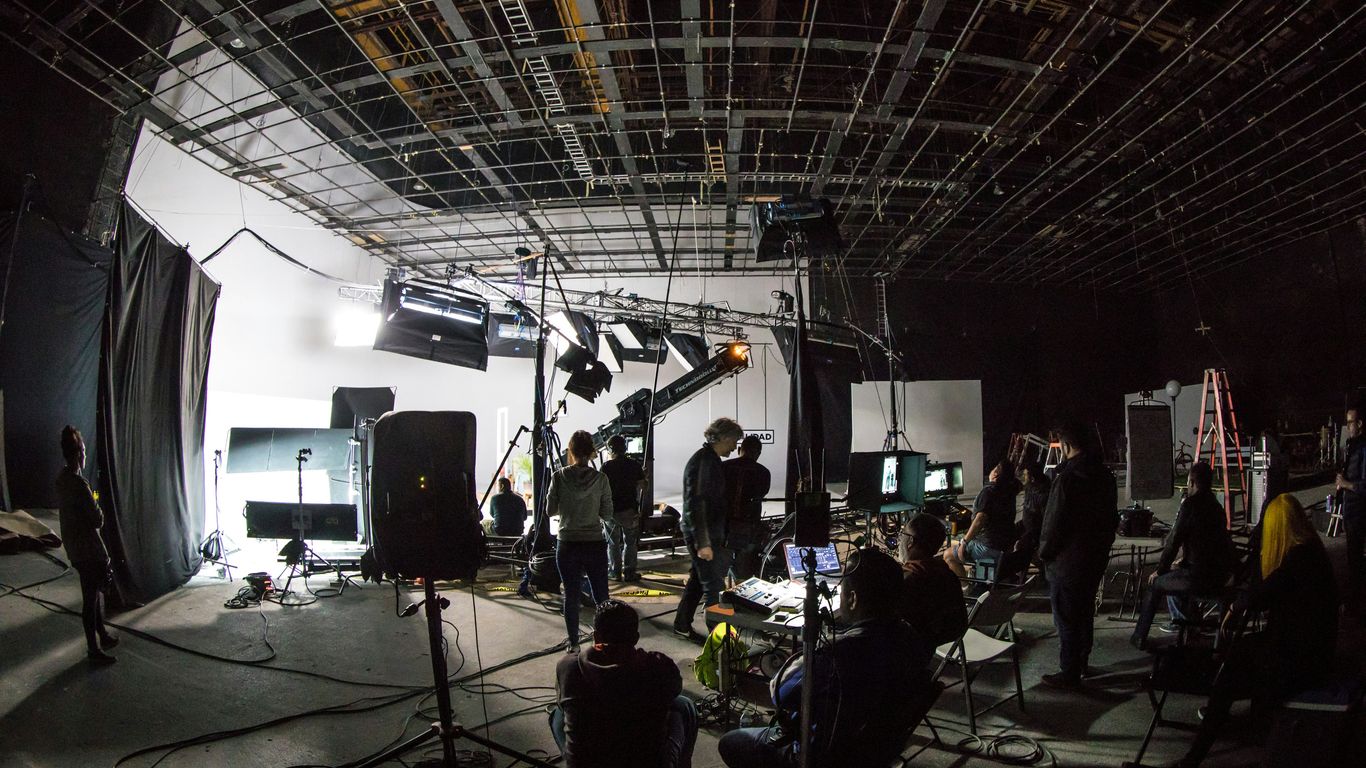
Start with the elements viewers cannot easily forgive when they are poor: clear speech, controlled exposure, and a frame that supports the subject. Check the room for echoes, appliances, traffic, air conditioning, and other distractions before recording. Lighting should shape the subject and fit the intended mood without creating avoidable inconsistencies between shots.
Record room tone and monitor audio throughout the day. A visually attractive setup still fails if dialogue is muffled or contaminated by noise. Build in time for a short test recording, because technical problems are cheaper to solve before the interview or performance begins.
Directing interviews and on-camera performances
People often sound less natural when they are asked to deliver a polished paragraph directly to camera. Give them a clear subject, listen to the answer, and follow up when they say something specific or revealing. Pauses and second takes are normal; the director’s job is to create enough comfort for the speaker to think clearly.
For scripted performances, explain the intention behind the line rather than correcting every gesture. A small adjustment in pace, eyeline, or emphasis may do more than asking for a completely different performance. Capture room between takes as well, since editors often need clean transitions.
Capturing supporting footage and brand details
Supporting footage gives the edit rhythm and helps show rather than tell. Film hands at work, spaces being used, interactions, tools, signage, textures, and small moments that reinforce the central message. These shots should be purposeful, not a random collection of attractive images.
VG Creations provides event coverage and social media visuals, services where additional context can make a finished video more useful across channels. Capture wide, medium, and close perspectives when possible, while staying attentive to permissions and the dignity of people appearing in the frame.
Editing and post-production
Post-production is where the project’s meaning becomes clear. Editors sort the material, find the strongest moments, shape the pace, and build a coherent progression from beginning to end. Good editing is not simply removing mistakes; it is deciding what the audience needs to see, hear, and feel next.
Organizing footage and creating the first cut
Begin with consistent file names, organized folders, backups, and notes about strong takes. Sync audio, group related scenes, and mark usable interview moments before trying to polish the timeline. A first cut should answer the basic storytelling questions even if the timing, graphics, and transitions are still rough.
Do not judge every shot in isolation. A technically imperfect moment may carry the most useful information, while a beautiful shot may have no role in the story. Review the cut for clarity, pace, repetition, and whether the ending gives the viewer a sensible next step.
Using color grading, sound design, and motion graphics
Color work can make footage feel consistent across cameras and locations, then establish a tone that suits the message. Sound design adds depth through clean dialogue, balanced music, room tone, and restrained effects. Motion graphics can clarify names, numbers, processes, and transitions when they support the content rather than competing with it.
VG Creations offers video editing services and describes post-production as part of its production offering. Whether the project is simple or layered, keep technical choices subordinate to comprehension. A graphic that arrives too quickly or music that overwhelms speech may look polished while making the video harder to use.
Reviewing revisions and preparing final deliverables
Set a review process before the first cut is shared. Decide who gives consolidated feedback, how notes will be documented, and which changes are essential versus optional. Specific comments such as “the explanation needs more context at 00:42” are more useful than a general request to make the piece feel better.
Final delivery should include the agreed formats, aspect ratios, captions or subtitles where needed, thumbnails or stills if requested, and clearly labeled files. Keep a master version separate from platform-specific exports. A careful handoff prevents a finished video from becoming difficult to find or reuse.
Maximizing the impact of finished videos
Publishing is not the final creative decision. A finished video can support several moments in the customer journey when it is presented with the right context and adapted thoughtfully. The goal is not to force one asset into every channel, but to extend its useful life without weakening the message.
Adapting videos for social media and digital campaigns
Short versions need a reason to exist beyond being shorter. Lead with a complete thought, preserve enough context to avoid confusion, and design for silent viewing when appropriate through captions and visual clarity. Different crops may require reframing rather than simply trimming the sides of a landscape image.
Create a small family of assets from the original production: short excerpts, still frames, quote-led clips, and behind-the-scenes material when it fits the brand. Test different openings and captions, but keep the underlying message consistent so the campaign feels connected.
Using video across websites, email, and sales content
A website video can introduce a service, answer a common question, or help a visitor understand the people behind a business. Email can use video as a reason to click, while sales teams can use focused clips to support a conversation already underway. The surrounding copy should explain why the viewer should watch and what to do afterward.
Place the video where it reduces uncertainty. A testimonial near a decision point, an event recap on a follow-up page, or an educational clip beside a complicated service can all be more useful than a video placed merely because the page has empty space. The video marketing guide provides a broader framework for matching content to goals and buyer needs.
Measuring performance and improving future productions
Review performance after the video has had enough time and distribution to produce meaningful signals. Compare retention, clicks, inquiries, assisted conversions, comments, and qualitative feedback with the original objective. Also record practical lessons: which questions produced strong interviews, which locations created noise, and which deliverables were actually used.
Treat each project as evidence for the next one. A post-project review can improve briefs, schedules, shot lists, review rules, and budgets without turning creative work into a rigid formula.
Choosing a video production partner
The right partner brings both creative judgment and production discipline. They should understand what the video needs to accomplish, ask useful questions before filming, and explain how the work will move from concept to delivery. Price matters, but it is only one part of the project’s value.
Reviewing portfolios, specialties, and production quality
Look for work that resembles your communication problem, not just work that looks visually impressive. Review interviews for audio and pacing, event work for coverage and responsiveness, and commercial pieces for clarity and brand control. Ask whether the portfolio reflects the team’s current process and the level of involvement you can expect.
Specialization can also matter. A partner experienced in corporate, testimonial, event, podcast, or educational production may already understand the practical demands of that format. Compare storytelling quality, not only camera movement or color treatment.
Evaluating communication, turnaround times, and revisions
Ask how feedback is collected, who manages the schedule, how many review rounds are included, and what happens when the scope changes. Clear communication is especially valuable when several stakeholders need to approve the work. A dependable process should make responsibilities and decisions visible rather than leaving them to scattered messages.
Turnaround should be discussed in relation to the project’s complexity. A realistic timeline is more useful than a fast promise that leaves no room for review, reshoots, captions, or alternate exports. Request examples of how the partner handled a difficult production constraint.
Preparing for a discovery call and requesting a quote
Bring the objective, audience, preferred format, target platforms, rough timing, locations, contributors, and known constraints to the discovery call. You do not need every creative answer in advance. You do need enough information for the partner to distinguish a simple shoot from a multi-location production.
Request a quote that separates production, post-production, travel, talent, location costs, revisions, and deliverables where relevant. This makes comparisons fairer and creates a shared understanding of what is included. A useful conversation should leave you with clearer choices, not just a number.
Conclusion
Video production becomes more manageable when strategy, planning, filming, editing, and distribution are treated as one connected process. Define the audience and outcome early, choose a format that serves the story, prepare carefully, and measure what the finished work helps people do. With that foundation, each production can become more than a single publishable file: it can become a useful, reusable part of the brand’s communication.
Frequently Asked Questions
What is video production?
Video production is the process of planning, filming, editing, and delivering video content for a specific audience and purpose.
What are the three stages of video production?
The three main stages are pre-production, production, and post-production. They cover planning, filming, and editing or finishing the captured material.
How long does a video production project take?
Timing depends on the concept, number of locations, contributors, filming days, editing complexity, review rounds, and final deliverables.
How much does video production cost?
Costs vary according to crew, equipment, locations, talent, travel, filming time, post-production, and the number of versions required.
What should be included in a video brief?
A brief should explain the audience, objective, key message, tone, visual direction, platforms, schedule, budget range, and expected deliverables.
How can a video be used on multiple platforms?
Plan for platform-specific versions, including different aspect ratios, lengths, captions, openings, and surrounding copy while keeping the central message consistent.
How do you measure whether a video worked?
Use metrics connected to the goal, such as qualified views, completion rate, engagement, inquiries, conversions, learning outcomes, and audience feedback.